What Is Social Proof In Marketing A Guide To Boost Conversions
Discover what is social proof in marketing and how it builds trust. Learn proven strategies to boost your SaaS conversions with real-world examples.
Ever walked down a busy street, trying to pick a place for dinner? You see two restaurants. One is packed, buzzing with conversation and laughter. The other is dead quiet, with maybe one or two lonely diners.
Which one do you choose? I’m willing to bet it's the busy one.
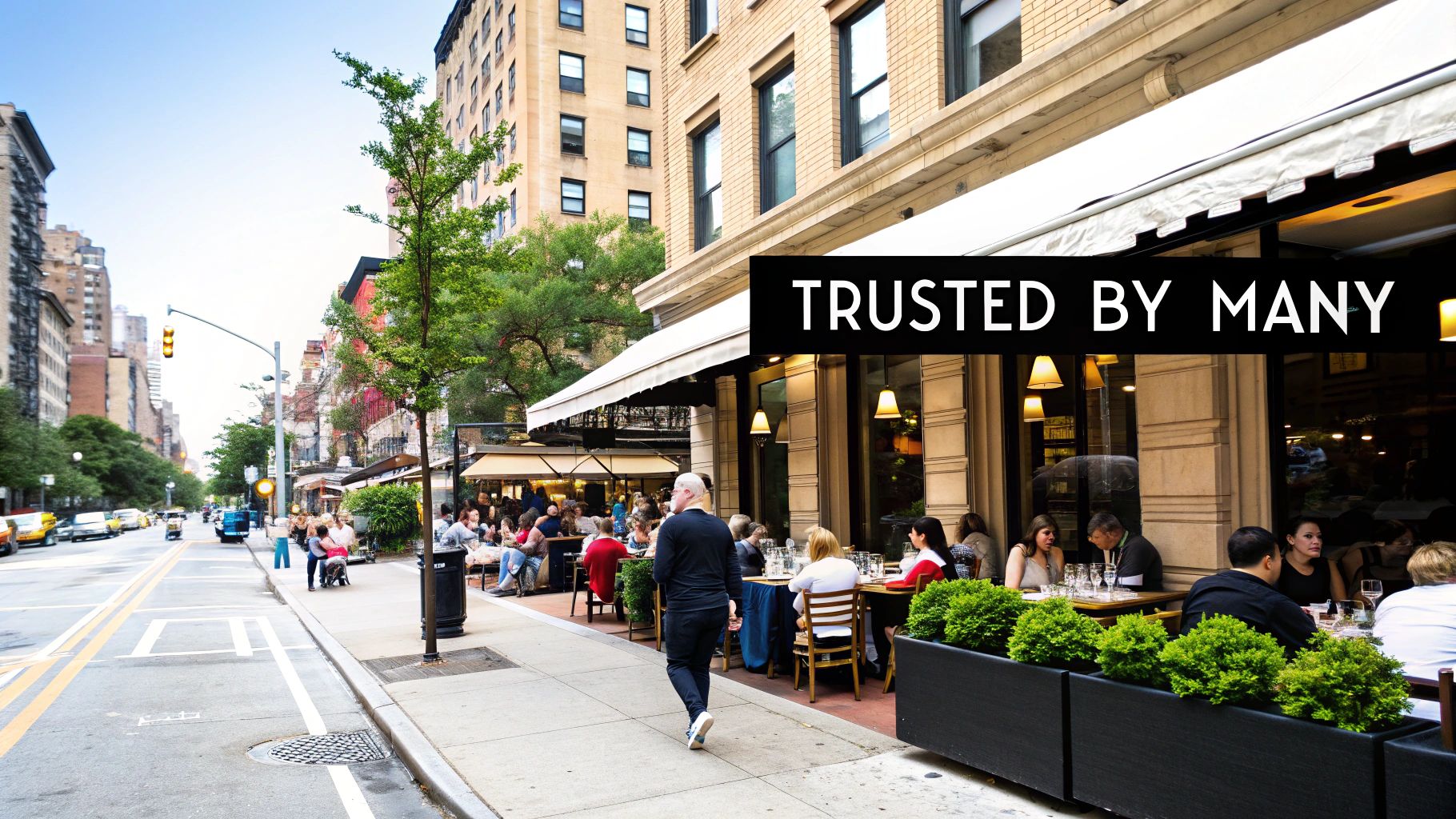
That’s social proof in a nutshell. It’s a powerful, almost subconscious shortcut our brains take. When we're not sure what to do, we look at what everyone else is doing and assume it's the right choice. It’s the simple idea that if a lot of people are doing something, it must be good.
The Foundation of Trust in Marketing
In the world of SaaS, social proof is the digital equivalent of that bustling restaurant. Potential customers can't physically see people using your software, so you have to show them. When they see others already signing up, leaving positive reviews, and getting real results, it dramatically lowers the feeling of risk.
Suddenly, choosing your product doesn't feel like a gamble anymore. It feels like a safe, smart decision.
This kind of validation from real people—your users—is infinitely more powerful than anything you could ever say about yourself. It feels genuine because it is genuine. This is a crucial piece of the puzzle when you're trying to figure out how to build brand awareness that actually sticks.
At its core, social proof taps into a few fundamental human instincts:
- We hate uncertainty. When we’re on the fence about a purchase, seeing that others have already made the leap and are happy about it makes us feel much more comfortable.
- We want to belong. It’s human nature. Choosing a popular product helps us feel like we’re part of a community and making a choice that’s accepted by our peers.
- We trust the crowd. We often operate under the assumption that if thousands of people are using a tool, they must know something we don’t. It’s the wisdom of the crowd in action.
The Six Pillars Of Social Proof
To make this concept more concrete, let's break down the main ways social proof shows up. Think of these as the six pillars you can build your marketing strategy on. Each one gives potential customers a different reason to believe in what you're offering.
Here's a quick look at how they stack up.
| Type Of Social Proof | What It Looks Like | Why It Works |
|---|---|---|
| User Reviews | Star ratings on sites like G2 or Capterra, written testimonials, user-generated content (UGC). | This is direct, unfiltered feedback from actual users. It feels incredibly authentic. |
| Expert Endorsements | A "Featured In" banner with logos from Forbes or TechCrunch, or a shout-out from an industry leader. | It borrows credibility from a trusted, authoritative source. |
| Social Signals | Your follower count on X, the number of users you have, or shares on a LinkedIn post. | Big numbers signal widespread adoption and popularity. It’s safety in numbers. |
| Case Studies | In-depth stories detailing how a customer solved a specific problem with your product. | It proves tangible results and shows a clear return on investment. |
| Trust Badges | Security seals (like Norton or McAfee), partner logos, or official certifications. | These visual cues immediately tackle security fears and signal professionalism. |
| Influencer Mentions | A creator in your niche showcases your product to their audience. | This taps into the pre-built trust and connection an influencer has with their followers. |
Each of these pillars offers a unique way to build confidence. You don't need all of them at once, but the more you can layer into your launch, the more compelling your product will become.
The Psychology Behind Why We Follow The Crowd
To really get what social proof is all about, you have to look past the marketing tactics and into the psychology that pulls our strings. It’s not a gimmick; it’s a powerful force that taps into two ancient human instincts that have kept us alive and thriving for millennia.
First up is our deep-seated desire to be correct. When we're unsure about something—like picking a new piece of software—we instinctively look around to see what everyone else is doing. We're wired to assume that if a crowd is moving in one direction, they probably know something we don't.
Think about a developer scanning GitHub for a new tool. They're almost always going to lean toward the repository with thousands of stars. Those stars aren't just for show; they're a powerful signal, a collective thumbs-up from a community of people who know their stuff.
Our Need for Validation and Belonging
The second driver is just as powerful: our fundamental need to belong. We’re social animals, and we crave acceptance from our tribe. When we copy the behavior of a group, it makes us feel like we're part of something, that our choices are socially smart and safe.
Following the herd is really just a mental shortcut. It saves us from the exhausting work of analyzing every single option from scratch. Instead, we instinctively trust the "wisdom of the crowd" to point us toward a reliable choice, essentially outsourcing the heavy lifting of decision-making.
This is exactly why we feel a pull toward a product that industry leaders are raving about. Their stamp of approval does more than just vouch for the product; it signals that using it puts us in the same camp as the successful people we admire. This idea is explored more in discussions about why crowded businesses are often seen as the best bet, where popularity often translates to perceived quality.
These two forces—the need to be right and the need to belong—are what make social proof so incredibly persuasive. They cut through the noise and answer two huge subconscious questions for any potential customer:
- Is this the right choice? (Our need to be correct)
- Is this a safe choice? (Our need to belong)
When you show people that others just like them have already made the leap and are happy they did, you give them the reassurance they're looking for. You're building the trust that turns a skeptic into a believer and a hesitant prospect into a new customer.
The Six Core Types Of Social Proof Explained
Alright, knowing what social proof is gets you in the game, but understanding its different flavors is how you win. Think of it less as a single tactic and more like a collection of specialized tools. Each one is designed for a specific job, and knowing which to use (and when) is key to building a powerful story around your SaaS product.
At their core, all these different forms tap into two fundamental human drivers: our deep-seated need to make the correct choice and our innate desire to belong.
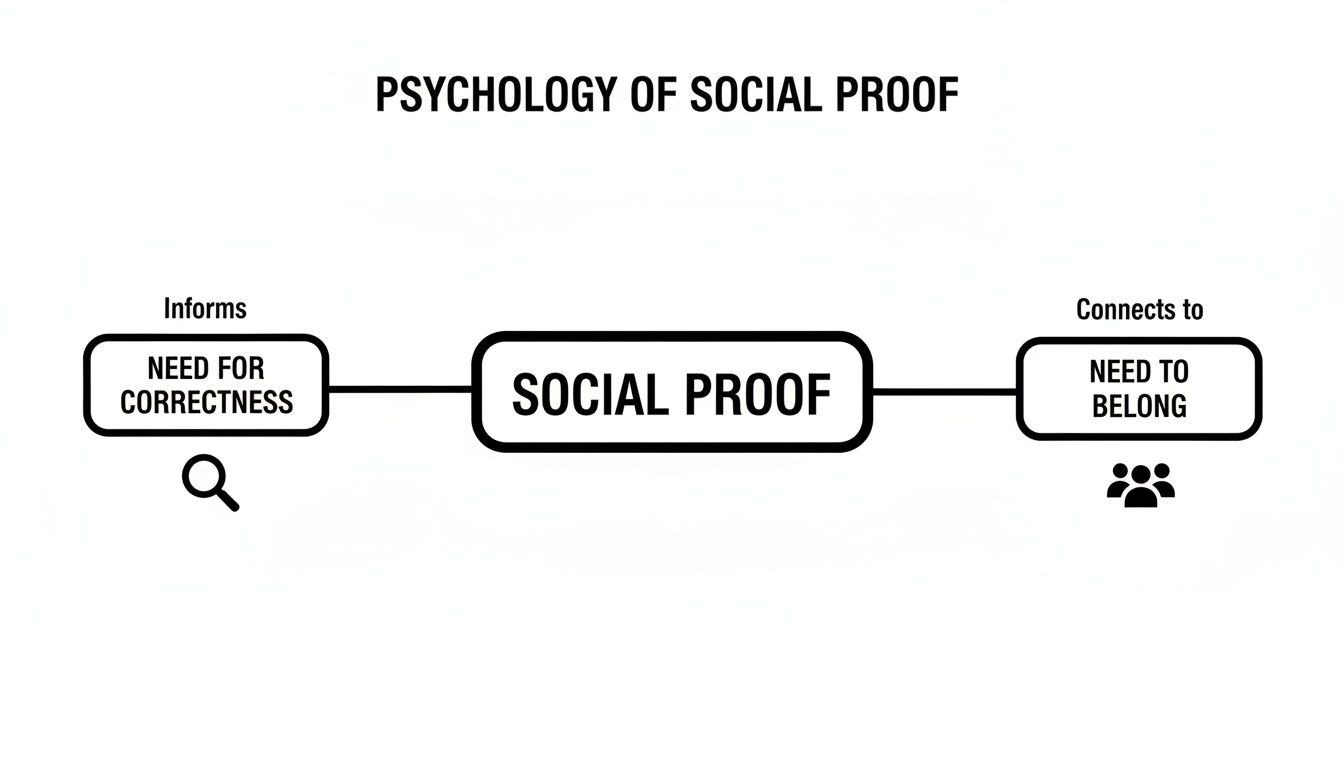
This connection is what makes social proof so potent. When we see others using and loving a product, it simultaneously satisfies our subconscious need for both accuracy ("this is a good decision") and social acceptance ("I'm part of the group").
Let’s break down the six main categories you can put to work.
1. User Proof: The Voice of Your Customers
This is social proof in its most raw and authentic form. It’s the unfiltered opinion of the people who actually use your product day in and day out. When a potential customer sees genuine praise from a peer, it cuts through the marketing noise because it feels real and unbiased.
- Customer Reviews: Think star ratings and detailed write-ups on platforms like G2 or Capterra. A high average rating is a powerful visual shortcut for quality.
- Testimonials: These are the curated highlights—powerful quotes or video clips from your happiest customers, often placed on landing pages to tackle skepticism head-on.
- User-Generated Content (UGC): This is gold. Screenshots, social media shout-outs, or Loom videos created by users showcasing how they use your product provide undeniable, real-world validation.
2. Expert and Influencer Proof: The Stamp of Approval
When a recognized authority in your space gives your product a thumbs-up, their credibility instantly rubs off on you. This type of social proof is about borrowing trust from an established source, giving your reputation an immediate lift.
Expert proof comes from respected industry analysts or well-known publications. Influencer proof, on the other hand, taps into the trust that creators have painstakingly built with their audiences. With the influencer marketing industry now a $30.8 billion powerhouse and 72% of Gen Z and Millennials following influencers, it’s a non-negotiable channel for reaching younger, tech-forward buyers. You can dig deeper into these trends and discover insights on consumer behavior at Exploding Topics.
3. Wisdom of the Crowd: The Power in Numbers
This one plays on a simple human bias: if lots of people are doing something, it must be a good idea. Big numbers create a powerful sense of safety and popularity, dramatically lowering the perceived risk for someone considering your product. It’s a clear signal that your software is tested, trusted, and widely adopted.
Displaying metrics like "Trusted by over 10,000 teams" or "50,000+ downloads" creates an immediate impression of reliability. This taps into our instinct to follow the herd, making a new user feel like they are joining a successful movement rather than taking a gamble.
4. Wisdom of Friends: The Power of Referrals
A recommendation from someone we know and trust is the holy grail of marketing. It doesn't even feel like marketing; it feels like a helpful tip from a friend. This type of social proof turns your existing user base into your most motivated and effective sales force.
Here are a couple of classic examples:
- Referral Programs: Rewarding users for bringing their friends on board, just like Dropbox's legendary "get more free space" program that fueled its early growth.
- Social Shares: When a user is so happy with a result they achieved in your app that they share it on their social media profiles for everyone to see.
5. Certifications: The Badge of Trust
Certifications are visual shortcuts that instantly communicate security, quality, and professionalism. These badges and awards save your customers from doing tedious research, reassuring them at a glance that your product meets important industry standards.
This includes things like:
- Security Badges: Logos from well-known security firms like Norton or McAfee to show you take data protection seriously.
- Industry Awards: Displaying badges like "Product of the Day" or "Best Software of 2024" from respected sources.
- Partner Logos: Showing the logos of well-known companies you integrate with, which borrows their credibility.
Your Playbook for a High-Impact SaaS Launch
It’s one thing to understand the theory, but execution is what separates a forgettable launch from one that gets noticed. A successful SaaS launch doesn’t just happen by chance; it's built on a foundation of social proof that’s been carefully collected and deployed.
This playbook breaks down exactly how to build and use social proof throughout your entire launch timeline. The goal? To turn mild curiosity into real, active momentum.
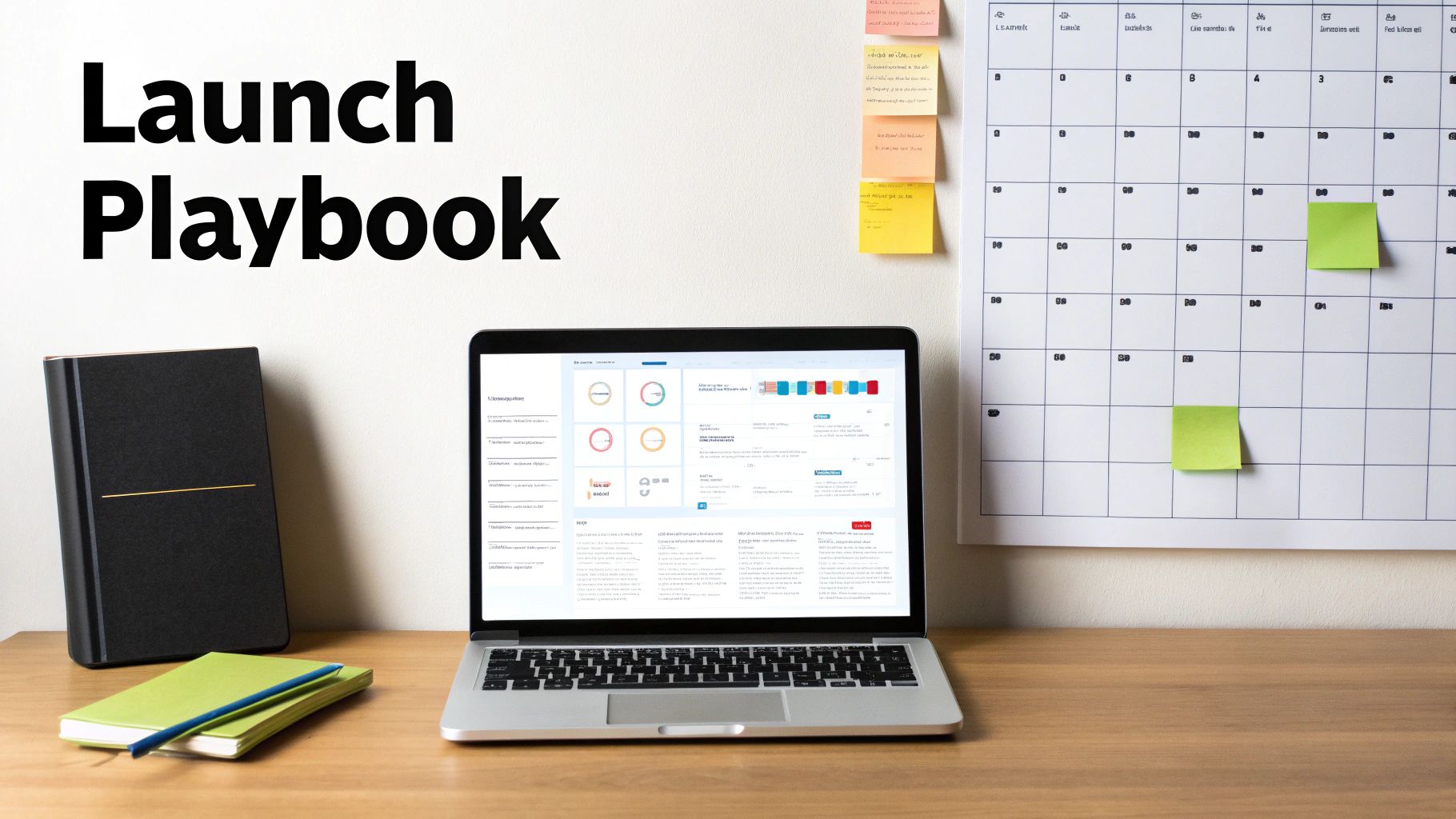
Think of your launch in three distinct phases, with a specific social proof objective for each one.
Pre-Launch: The Foundation Phase
Long before you even think about hitting the "go live" button, your job is to gather the raw materials of social proof. This is where you work with a small, hand-picked group to generate the authentic validation that will become the bedrock of your entire campaign. Your beta testers and early access users are your most valuable players here.
Your mission is to turn their initial experiences into powerful assets. Don't just ask for generic feedback. Guide them toward giving you specific, impactful testimonials that speak directly to the pain points your product solves.
- Action Item 1: Create a simple feedback form with targeted questions. Think along the lines of, "What was the biggest headache you dealt with before using our tool?" and "Which feature was the biggest time-saver for you?"
- Action Item 2: Offer a small incentive for a quick video testimonial. A short, unpolished clip from a real person often feels far more genuine and trustworthy than a slick, professionally produced video.
During Launch: The Momentum Phase
Once your launch is live, the focus shifts from gathering proof to amplifying it. The goal now is to create a tangible sense of excitement and urgency. You want newcomers to feel like they’re joining a thriving, active community, not showing up to an empty party. This is where you really tap into the "Wisdom of the Crowd."
This phase is all about making your early traction visible. Real-time social proof, like little pop-up notifications showing recent sign-ups or purchases, can be incredibly persuasive. Studies have consistently shown that these dynamic elements can give conversion rates a serious boost compared to static pages.
Just adding a few customer testimonials can make a world of difference. In fact, research shows it can increase conversion rates by 34%—a massive lift for any SaaS launch. It makes sense when you consider that 88% of consumers trust user reviews as much as brand content. Learn more about how social proof drives growth at WiserReview.
Post-Launch: The Evergreen Phase
The initial buzz of launch day will eventually quiet down, but your social proof shouldn't. This final phase is all about turning those launch-day wins into permanent, trust-building assets that work for you around the clock. Now it's time to organize and showcase your best feedback for maximum long-term impact.
Gather all the positive mentions, glowing reviews, and press clippings you received during the launch. Your task is to strategically place this content across your website and marketing channels, especially on high-stakes pages like your pricing and homepage. For a deeper dive into planning for success, check out our guide on how to launch a SaaS product.
Doing this ensures that every new visitor is immediately greeted with compelling reasons to trust you, turning that initial launch momentum into sustainable, long-term growth.
Seeing Social Proof in the Wild
It’s one thing to talk about social proof in theory, but it’s another to see it in action. The truth is, it’s everywhere—expertly woven into the websites and apps we use every day. Once you know what to look for, you'll start noticing how the biggest names in tech use these psychological nudges to build trust and guide you toward a decision.
Let's break down a few classic examples. Each one shows a different type of social proof at work and offers a lesson you can steal for your own strategy.
The Wisdom of the Crowd: Slack
Slack, the collaboration hub, is a master of showing off the "wisdom of the crowd." They don't just tell you their tool is popular; they show you with hard numbers. Their homepage is a billboard of impressive metrics, often highlighting things like “millions of daily active users” and flashing the logos of giants like IBM and Target.
This works wonders because it instantly answers the big question every B2B buyer has: "Is this a safe bet for my company?" When you see that millions of people, including some of the world's most recognizable companies, already rely on Slack, your fear of making the wrong choice evaporates. The message is simple and powerful: everyone else is already using this to succeed, so you should too.
Expert Endorsements: Product Hunt
For a new SaaS, getting that first stamp of approval is make-or-break. This is where a platform like Product Hunt becomes an incredible source of expert proof. Being voted "#1 Product of the Day" isn't just a pat on the back. It's a powerful endorsement from a discerning community of tech experts, investors, and early adopters.
That badge of honor becomes a trusted signal of quality that founders can slap right onto their own landing pages. It immediately tells potential customers that people who really know tech have vetted your product and given it a thumbs-up. It’s a perfect case study in borrowing credibility from a respected third-party platform.
This screenshot from Product Hunt shows how featuring top-voted products creates a similar effect, immediately highlighting what the community finds valuable. By showcasing 'Top Products Launching Today,' the platform uses community consensus to guide discovery and build trust in the featured tools.
The Wisdom of Friends: Dropbox
The early growth of Dropbox is the stuff of startup legend, and it was built on the "wisdom of friends." Their referral program was pure genius. By offering extra storage to both the person sharing and the person signing up, they created an irresistible win-win that turned users into evangelists.
Why was this so effective? Because a recommendation from a friend cuts through all the marketing noise. When someone you actually know and trust suggests a tool, you listen. This approach tapped directly into personal relationships to fuel explosive growth, proving that your existing users are often your most powerful marketing engine. It’s a core principle to remember when you’re putting together your sales funnel, which all starts with one of the best landing page builders.
Common Social Proof Mistakes And How To Avoid Them
Social proof can be an incredible engine for growth, but it's a double-edged sword. Get it wrong, and you won't just fail to persuade people—you could actively damage your credibility. Knowing what not to do is just as important as knowing what to do.
Let's break down some of the most common ways founders accidentally shoot themselves in the foot.
The Trap of "Negative Social Proof"
This is a classic blunder. Negative social proof happens when you try to show off a number that's actually unimpressive, accidentally highlighting your lack of traction.
Think about a blog post that proudly says, "12 people have subscribed!" What message does that really send? It suggests that very few people find the content valuable, which is the exact opposite of what you want to communicate.
Weak, Generic, and Fake Testimonials
Another pitfall is collecting weak, generic testimonials. A review that just says "Great tool!" or "Nice product!" is filler. It's forgettable. It doesn't give a potential customer any real insight into why they should care.
And the cardinal sin? Using fake or purchased reviews. In an age where authenticity is everything, getting caught faking it can destroy the trust you've worked so hard to build. The reputational damage is almost impossible to undo and far outweighs any temporary gain.
How to Turn Pitfalls Into Strengths
So, how do you sidestep these traps and build a strategy that works?
- Reframe Your Metrics: If your user count is still small, simply don't show it. Focus on a metric that is impressive. For example, you could highlight a 98% customer satisfaction score from your first 50 users. That tells a powerful story of quality over quantity.
- Guide Your Testimonials: Don't just ask for a review—ask for a story. Prompt your customers with specific questions like, "What was the biggest problem our tool solved for you?" or "Can you share how much time you're saving each week?" This nudges them toward providing the specific, impactful details that truly persuade others.
The goal isn't just to collect praise; it's to collect proof. Authentic, specific feedback that tells a compelling story will always outperform generic compliments or inflated numbers. It builds genuine trust, which is the ultimate currency.
By sidestepping these common errors and focusing on authentic, well-framed validation, you can build a social proof strategy that works for you, not against you.
Frequently Asked Questions
Even with the best game plan, you're bound to have questions. Here are some quick answers to the things we hear most often from SaaS founders trying to nail their social proof strategy.
My SaaS Is Brand New. How Can I Get Social Proof With No Users?
This is the classic chicken-or-egg problem, but it's solvable. You have to get creative.
Try offering a handful of early users a steep discount or even a lifetime deal in exchange for honest, detailed feedback and a testimonial. You could also partner with a micro-influencer in your specific niche. Their audience trusts them, so an authentic first-look review can work wonders. Another angle is to lean on expert proof—ask a respected advisor or a well-known peer who believes in your vision for a supportive quote.
What’s The Real Difference Between Social Proof And A Case Study?
It helps to think of it like a movie trailer versus the full movie.
Social proof is the trailer—it’s the short, punchy quote that grabs attention. Something like, "This tool saved us 10 hours a week." It's instantly persuasive.
A case study is the full feature film. It walks through the entire story: the customer's initial problem, how they used your product to solve it, and the concrete, data-driven results they achieved, like a +25% jump in efficiency. One gives a quick hit of trust, the other provides the in-depth evidence.
How Can I Actually Measure If My Social Proof Is Working?
You don't have to guess. Keep a close eye on the conversion rates for any page where you've recently added or updated social proof.
The most direct way is to run an A/B test on your landing page. Create one version with customer testimonials and one without, then see which one performs better. You can also track key metrics like demo sign-ups or free trial starts before and after you add a new batch of customer logos or a prominent trust badge. The data will tell you what's resonating.
Should I Focus On Getting Detailed Testimonials Or Lots Of Short Reviews?
The honest answer? You need both. A smart strategy uses a mix.
Having many short reviews creates that powerful "wisdom of the crowds" effect. It shows your product has broad appeal and that lots of people are finding value in it.
On the other hand, a few detailed testimonials or case studies provide the rich, story-driven proof that convinces more analytical buyers. These are the people who need to understand the why and how behind the results. Your best bet is to start with whichever you can get first and build out your collection over time.
Ready to build powerful social proof for your next launch? SubmitMySaas gets your product in front of thousands of early adopters, tech enthusiasts, and potential customers from day one. Launch your SaaS and start building momentum today.