By Outrank
10 Startup Directories for Founders to List and Launch
Compare 10 startup directories where founders list products and users discover new tools, with launch costs, backlink terms and limits.
On this page
Submitting to every startup directory isn't a distribution strategy. It's administrative work unless you know what each submission is supposed to achieve. The common mistake is treating every directory as the same funnel step, then pasting identical copy into every form in one afternoon.
The directory you pick depends on the week you're having. If you need people testing onboarding while you're available to answer questions, choose a launch platform. If you need buyers to discover your product while comparing alternatives, build an evergreen catalog presence.
Those are different jobs. Product Hunt, Uneed, DevHunt, Peerlist, and Show HN give you a launch window to organize around. AlternativeTo, SaaSHub, 10015.io, and BetaList are better approached as lasting discovery pages, although some also introduce products through launch-style promotion. SubmitMySaas combines launch participation with ongoing discovery.
Choose a directory for what visitors can do after clicking, not for the backlink badge beside its name.
Working products usually have the clearest proposition, but pre-launch acceptance varies. BetaList, for example, can accommodate startups that aren't publicly available yet.
Disclosure: SubmitMySaas is our platform, and it appears in this comparison. Apply the same test to it as to every other option: audience fit, actual cost, link conditions, and measurable users. Where a platform's dofollow terms or fees aren't established, treat them as unconfirmed rather than assuming favorable terms.
1. SubmitMySaas
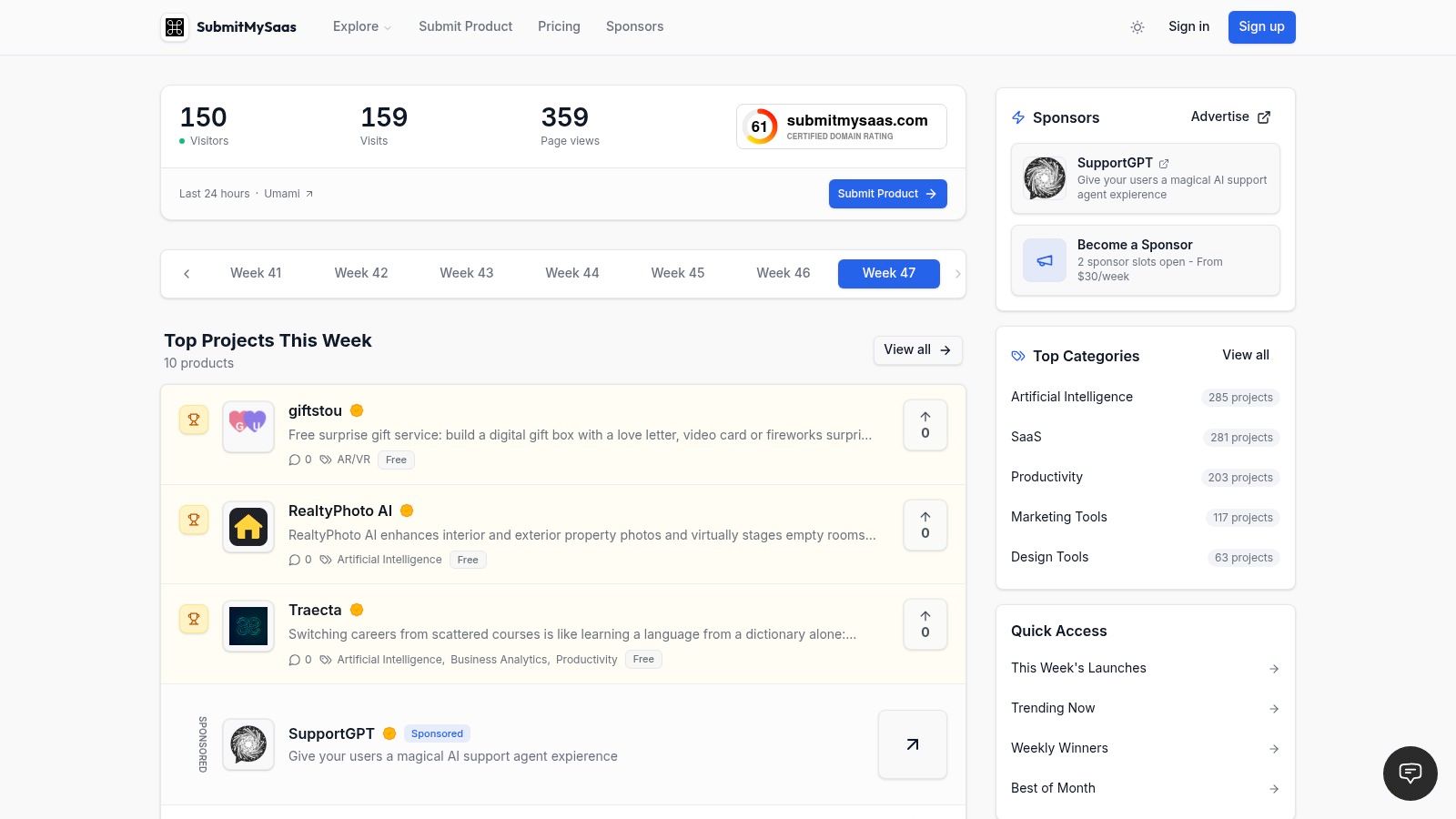
Best job: launch participation with an evergreen discovery layer. Our focus is modern tech products, particularly SaaS, AI, productivity, marketing, and design tools. Makers submit projects, while visitors browse categories and discover products through launches and curated selections.
That combination matters when your product needs more context than a launch-day tagline. A category listing can explain who the tool serves, while launch participation gives you a reason to invite feedback. We also organize recognition through Top Projects, Last Week's Best, and This Month's Best.
Make the listing useful before promoting it
Don't describe your product as another platform that saves time. Name the task, the intended user, and what someone can try immediately. For a marketing tool, explain whether it creates campaign assets, attributes conversions, or manages approvals.
- Prepare the destination: Send visitors to a page that matches the promise in your listing.
- Show the workflow: Use screenshots that demonstrate the product rather than decorative launch graphics.
- Separate outcomes: Treat visibility, feedback, referral signups, and search performance as different results.
- Avoid assumptions: Placement and recognition aren't guarantees of audience reach or customers.
Our SaaS directory listing guide is useful for preparing those materials before submission.
Who should skip it? Founders whose buyers don't browse tech-product discovery sites, or whose only objective is a guaranteed ranking improvement. A relevant category is a starting point, not proof of demand. We disclose the free and paid launch terms in the closing decision rule so you can assess the commercial trade-off directly.
2. Product Hunt
Product Hunt is a launch event first and a lasting product page second. Use Product Hunt when you can prepare the presentation, demonstrate a working product, and participate in the discussion.
Launching is free, and makers can submit their own products without recruiting a separate hunter. Homepage featuring is editorial, however, so publishing a launch doesn't guarantee prominent distribution. A scheduled launch gives you a date, not an audience commitment.
Budget attention, not just money
The practical cost is preparation and availability. Your tagline needs to explain the product without requiring visitors to decode a category you invented, and your screenshots should answer what happens after signup.
Prepare a maker comment that explains the problem, the product's distinctive approach, and the feedback you want. Then answer questions with useful details rather than repeatedly directing people to register.
- Link terms: Don't treat the launch as a guaranteed dofollow acquisition. Verify the published outbound link if that attribute affects your decision.
- Failure mode: A polished launch attracts curiosity, but visitors leave because onboarding doesn't deliver the promised result.
- Skip it when: You can't support users during the launch or explain the product to a broad tech audience.
A focused alternative may suit a technical product better. Compare Product Hunt alternatives by audience and participation requirements, not by how closely their voting interfaces resemble Product Hunt.
3. BetaList
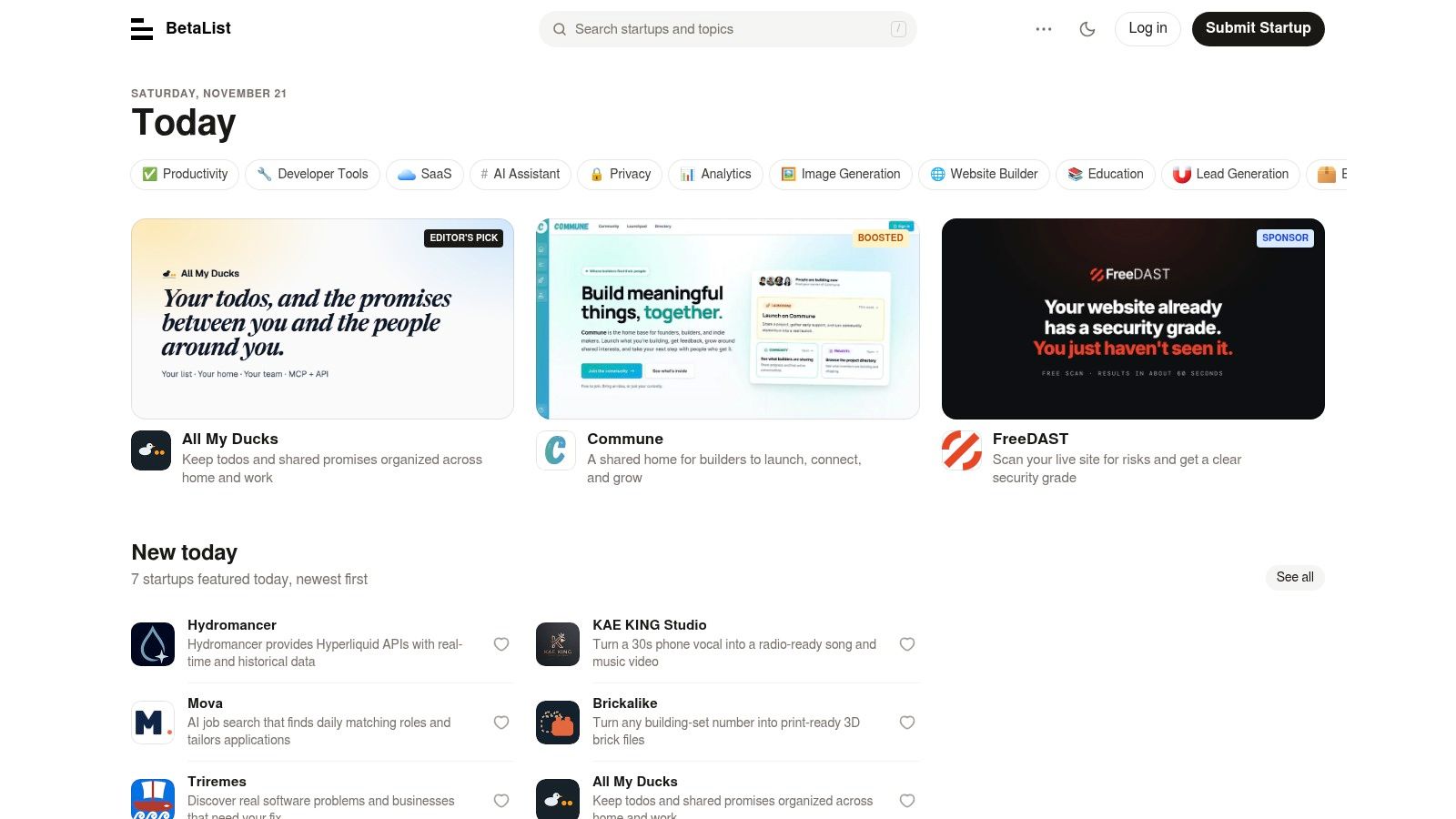
BetaList is the exception to the working-product rule. BetaList accepts pre-launch, beta, and live internet startups, provided the submission meets its expectations for a clear proposition, design, and an independent domain.
Treat it as curated early-stage discovery with a permanent listing, rather than a launch day you control. That makes it useful when your immediate conversion is an early-access request, provided you explain clearly what applicants will receive.
Submissions are paid, with the applicable plan prices displayed during submission. Acceptance still depends on editorial review, and BetaList states that rejected submissions receive automatic refunds.
What the payment does and doesn't buy
BetaList describes its featured listings as including UTM-tagged referral traffic and a dofollow backlink. Some faster options may include newsletter placement, but don't assume every submission receives the same distribution.
- Prepare for review: Use your own domain, a clear product explanation, and a credible presentation.
- Expect rejection for ineligible destinations: Free-hosting subdomains and direct app-store links aren't eligible.
- Choose it for: Early-adopter discovery when you can handle a curated, paid submission process.
- Skip it for: A free listing or a launch date you need to control precisely.
The failure mode is paying for attention before defining what happens next. If you're collecting early-access requests, send a useful confirmation and explain the next step. An unattended waitlist doesn't tell you whether people wanted the product or merely liked the premise.
4. Uneed
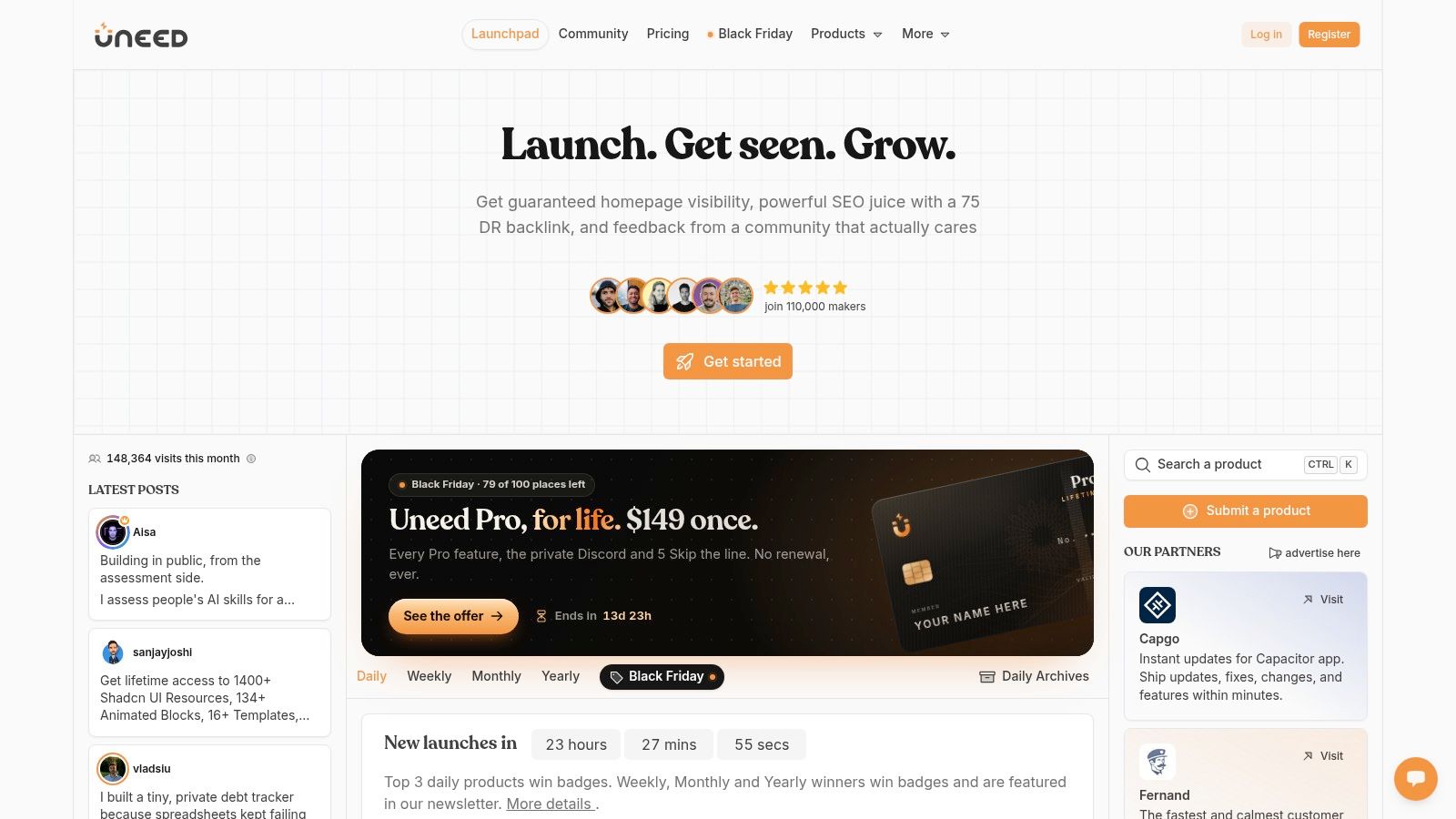
With Uneed, distinguish submitting a product from booking its launch. Submission can be free while the launch option requires payment. Don't put a date in your marketing calendar until you've reviewed the options available in the creator dashboard.
Uneed combines a discovery listing with a scheduled launch and community upvotes. Product pages can include descriptions, tags, images, and video, giving you room to show a workflow instead of relying entirely on a short pitch.
Pay for timing only when timing matters
Expedited or date-selected options can be useful if you're coordinating a release, newsletter, or founder availability. They're less compelling when you want an evergreen listing and have no reason to accelerate publication.
The submission form can auto-fill information from your website. Review that copy carefully: homepage metadata often describes a company broadly, while directory visitors need a concrete explanation of the product.
A paid launch date buys scheduling control, not proof that the audience wants your product.
Link terms and publication duration can differ by launch option. Confirm the selected package's conditions rather than assuming that payment means a permanent dofollow page.
Skip Uneed if changing queue policies would disrupt a time-sensitive campaign, or if you're unwilling to distinguish submission cost from launch cost. Its strongest practical use is a coordinated product introduction supported by a listing that remains useful afterward.
5. DevHunt
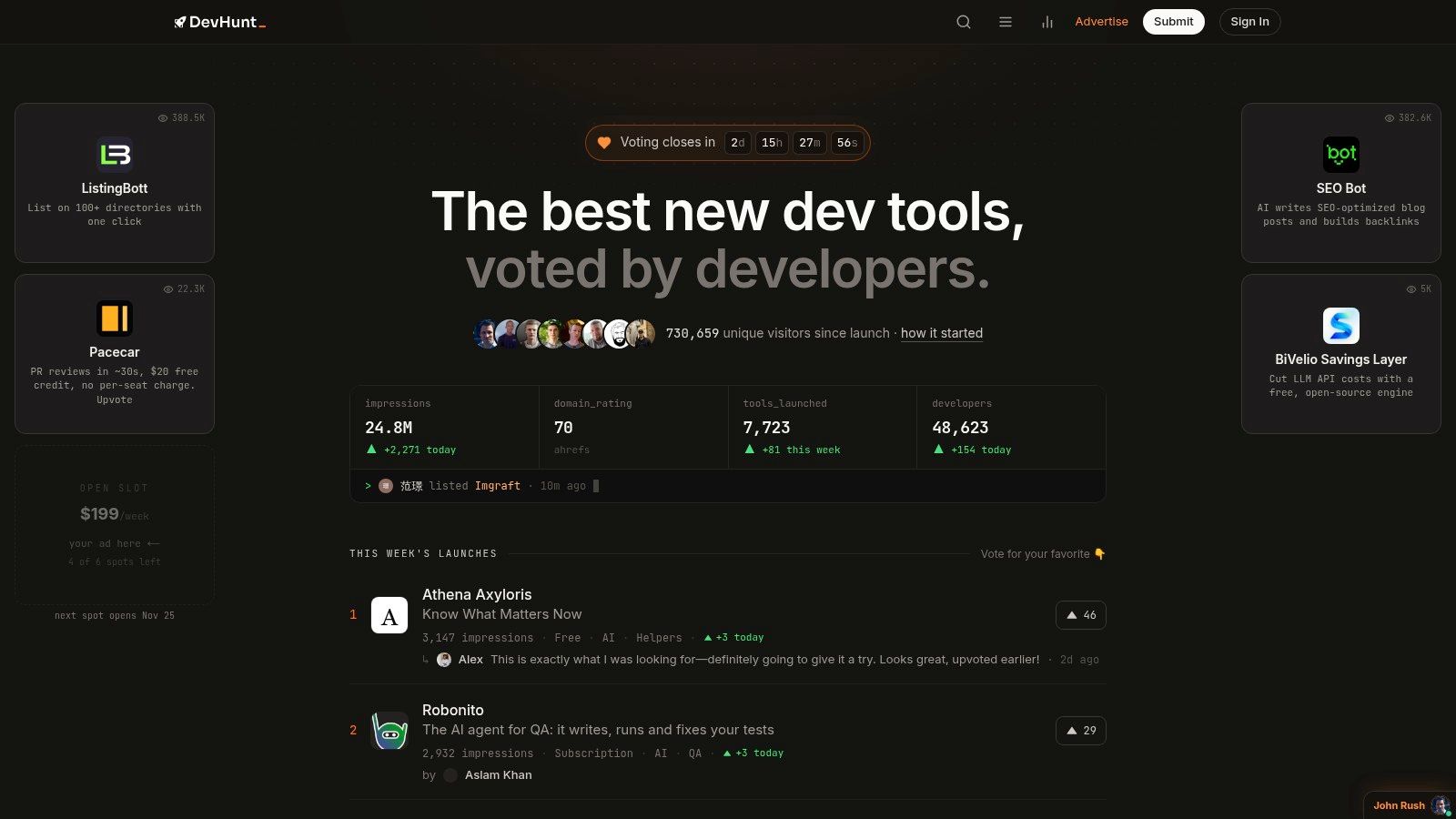
An API, SDK, testing framework, or DevOps product has a clearer reason to appear on DevHunt than a general-purpose consumer app. Audience fit is the main advantage, not the existence of another voting leaderboard.
DevHunt offers free listings separately from paid weekly launches. Product pages provide an ongoing destination, while launch participation introduces voting and the possibility of winner exposure through newsletter and social channels.
Show the developer experience
Lead with what a developer needs to evaluate: documentation, a runnable example, supported environments, and the path from installation to a useful result. If you require a sales call before anyone can understand the tool, explain that limitation rather than disguising it.
- Cost: A free listing is available; a weekly launch is a separate paid option.
- Link terms: The free listing has a nofollow link. Don't infer paid-link conditions from that.
- Visibility: Paying for a launch doesn't guarantee the most votes or a winning position.
- Fit: Products outside developer tooling should usually choose another platform.
The common failure is writing for executives in a venue where developers want implementation details. Replace broad efficiency claims with an example of the request, integration, or debugging task your product handles.
Choose DevHunt first when developer adoption is your immediate bottleneck. Skip it when developers aren't the user, evaluator, or internal champion you need to reach.
6. Peerlist Launchpad
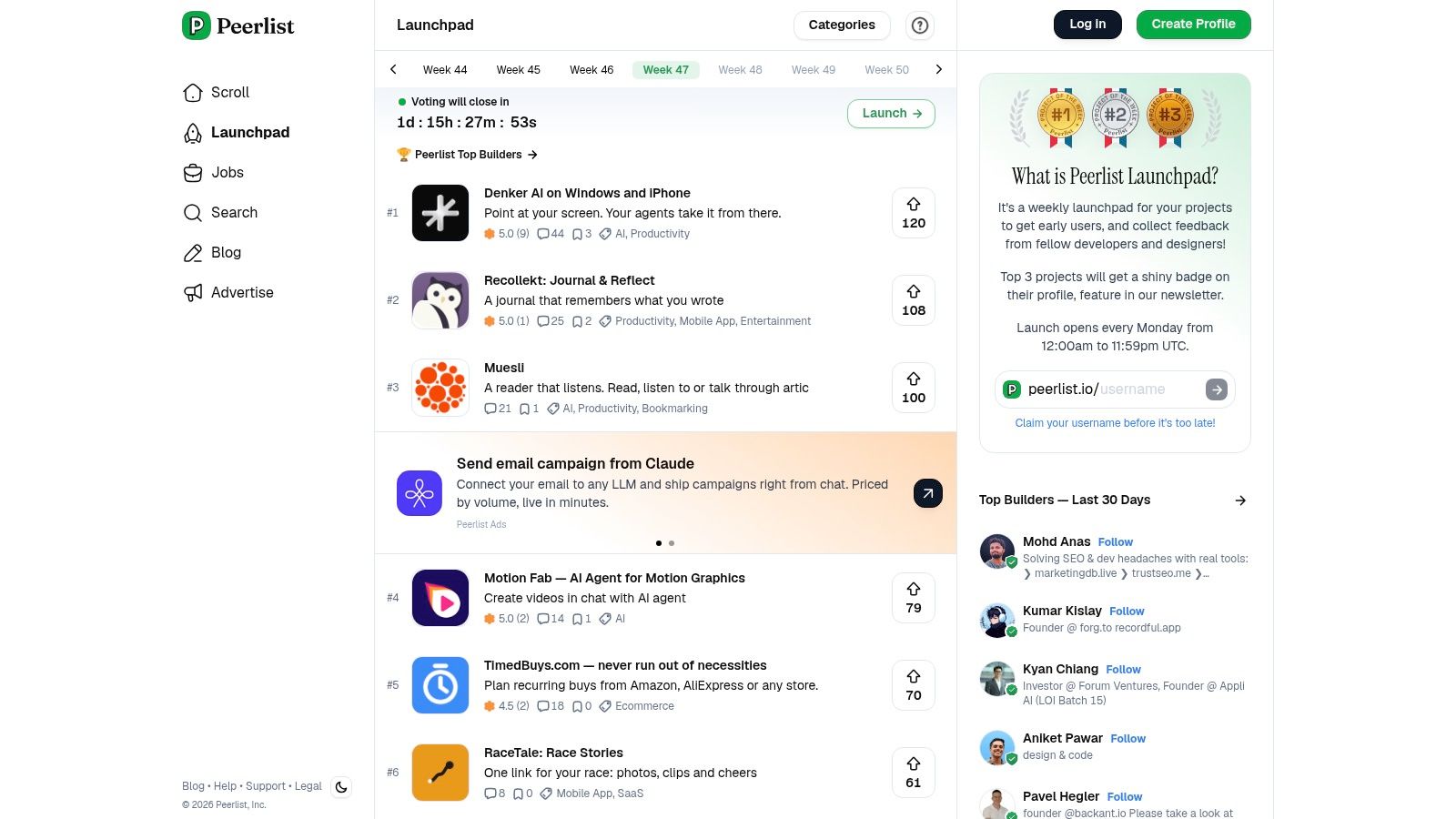
Peer feedback and buyer comparison aren't the same job. Peerlist Launchpad suits makers who want developers and designers to inspect a project, ask questions, and react to the work.
Its weekly launch format connects projects to Peerlist's professional community. Community voting determines recognition, and top projects can receive a badge and newsletter feature. That makes an existing, credible maker profile useful context, though it isn't a substitute for a good product.
Ask for a specific kind of feedback
A design tool might invite criticism of its handoff workflow. A developer utility might ask whether its setup instructions make sense. Those requests give peers something concrete to evaluate beyond whether they like your landing page.
Launch slots are limited, so don't assume your intended week is available or that every project will be accepted. Confirm eligibility and fees during submission; the terms described here don't establish a universal fee or guaranteed dofollow policy.
- Use it for: Developer or designer feedback tied to an identifiable maker.
- Don't expect: A detailed software-comparison profile or a bank of buyer reviews.
- Watch for: Votes that don't translate into completed onboarding or meaningful product use.
Skip Peerlist when you need procurement-oriented discovery rather than peer attention. A badge can support a product story, but it doesn't answer a buyer's questions about integrations, security, pricing, or operational fit.
7. AlternativeTo
Someone searching for a replacement already has a frame of reference. AlternativeTo lets you explain where your product fits against software they know, a warmer starting point than introducing a launch nobody asked for.
On AlternativeTo, users can suggest applications and propose alternatives to existing listings. Category and platform information help visitors separate products that solve a similar problem from products that merely share a broad label.
The buyer context favors you here. Buyers regularly research providers through software directories before choosing one, and a visitor reading an alternatives page already knows the incumbent's name and its weak points. Your listing needs to answer whether your product fits their requirements, plainly.
Be precise about the replacement
Say your tool replaces a team wiki but doesn't include project management. Write that boundary into the listing itself. Claiming to replace an entire workspace suite attracts visitors whose requirements you can't meet, and their quick exit does your placement no favors.
- Submission: Email verification is required to suggest an application.
- Cost and links: Don't budget around an assumed fee or guaranteed dofollow status; check the live submission terms first.
- Best fit: Software with recognizable alternatives and a defensible difference.
- Failure mode: Suggesting unrelated competitors to gain exposure.
Use the principles in product listing optimization to clarify use cases, limitations, and platform compatibility. Then make sure your profile names the specific workflow you handle better than the tools visitors are trying to leave.
Choose AlternativeTo before a launch platform when you need a permanent page that can surface in competitor searches rather than a burst of launch-week attention. Placement can hold visibility for months, though it never guarantees rankings.
8. SaaSHub
SaaSHub fits the evergreen catalog job: a released product with clear competitors can earn a page that keeps working after launch week. It combines product listings, categories, and alternatives pages, so write the submission for comparison, not applause.
Its scope covers SaaS, infrastructure and platform services, apps, and other eligible software. A landing page or waitlist alone is not enough, and products on free subdomains are not accepted.
Build a comparison-ready profile
Buyers often stall while weighing options. In G2's 2026 Buyer Behavior Report, based on more than 1,000 B2B software buyers and decision-makers, 40% considered evaluation the longest stage of the buying journey.
Make that stage shorter. State target company size, deployment model, integrations, pricing model, and security certifications you hold. Match names and core facts to your own site, because inconsistent basics make a comparison page look unreliable.
- Cost: SaaSHub mentions free promotion options, with optional paid featured listings.
- Approval: Submissions require approval, and listings may be removed.
- Link terms: Check the current submission terms before counting a listing link as dofollow.
- Paid-placement limit: Featuring does not guarantee search rankings.
Use SaaSHub when the product is usable and the competitor set is real. A narrow, truthful alternatives page can send qualified evaluators long after launch week; a broad claim that you replace everything gives them a reason to bounce.
9. Show HN
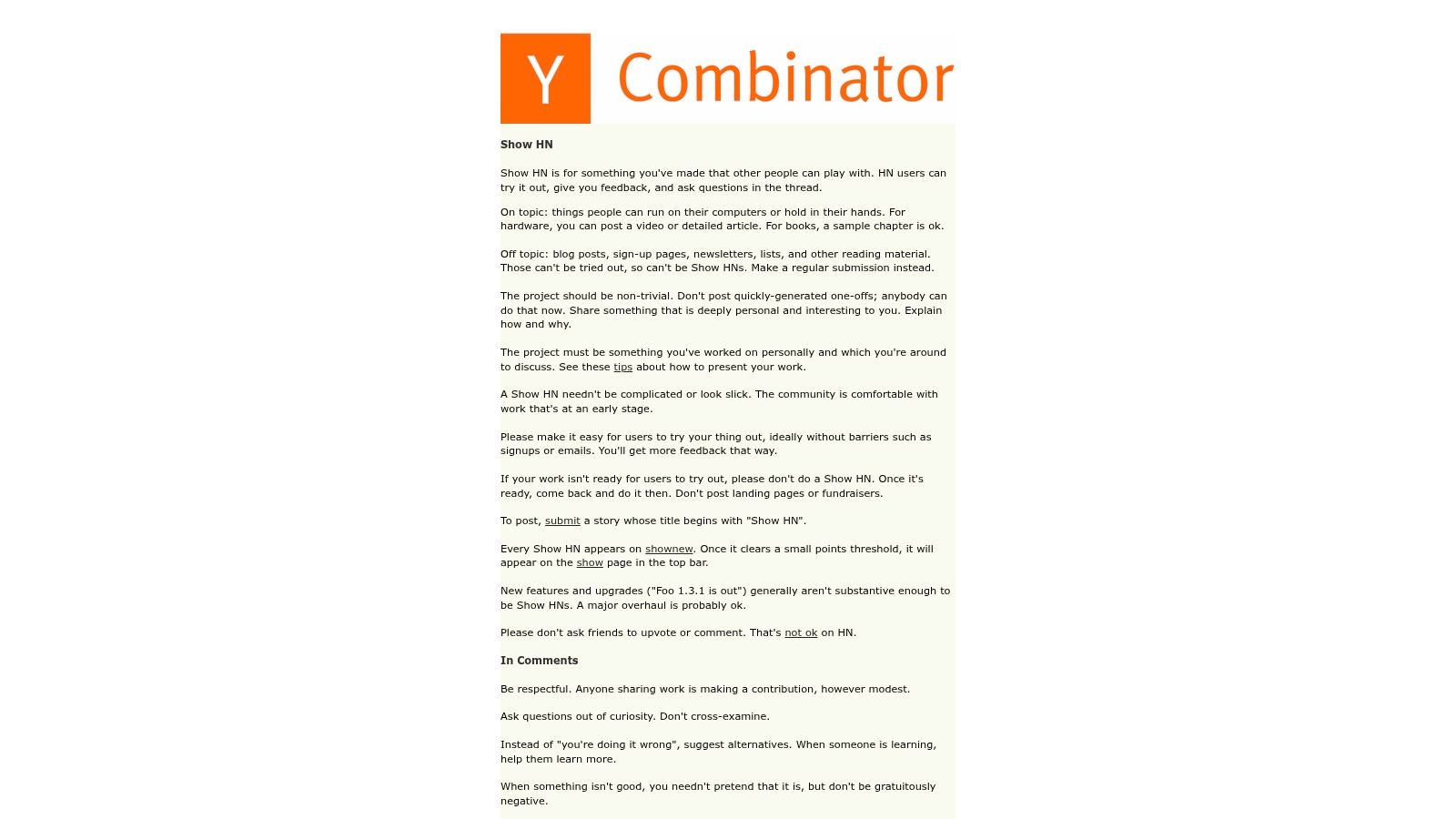
Show HN isn't a conventional startup directory. It's a community format for sharing something you personally built that people can try. Use Show HN for a working project with something worth discussing, not a signup page wrapped in a launch announcement.
Posting is free, and there's no paid launch package. You're responsible for explaining the project and participating in the discussion, including questions about limitations and technical decisions.
Put the usable thing first
Give readers a direct route to trying the project. Explain what you made, why you made it, and what's unusual about the implementation or approach. If there are access requirements, make them clear before someone invests effort.
Community rule of thumb: Explain the build and invite scrutiny. Don't turn the discussion into a request for votes.
Landing pages, waitlists, and projects people can't try are excluded from the format. Promotional language and vote requests are discouraged, and account or community restrictions can prevent posting.
Don't choose Show HN to secure a guaranteed dofollow link; that isn't an established benefit here. Choose it because technically engaged readers could give useful feedback or become users.
Skip it if the only interesting part of the announcement is that your company launched. The failure mode is bringing a press release to a discussion where readers expect a usable artifact and candid answers.
10. 10015.io Product Finder
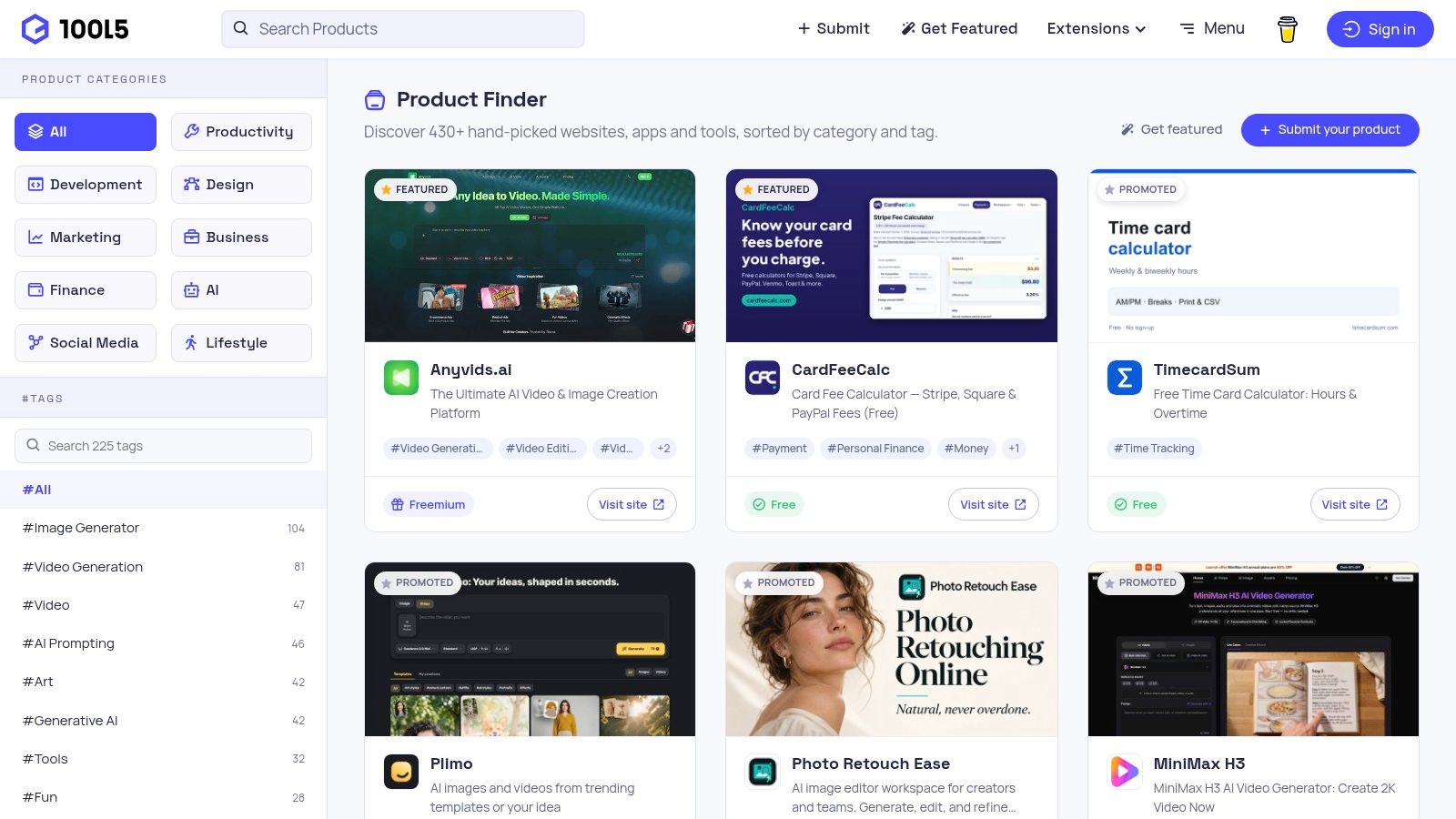
A browser extension or desktop utility doesn't need to pretend it's enterprise SaaS to fit 10015.io Product Finder. Its broader catalog covers tools, SaaS, mobile and desktop apps, extensions, and add-ons.
Use it for an additional evergreen product page, especially when your software fits a clear development, design, productivity, marketing, or AI category. Submissions receive manual review, and published products get an individual listing.
Separate publication from upgrades
Free submission is available, but there's no stated publication date for that route. Optional upgrades cover priority review, featured placement, and a permanent dofollow backlink.
- Free-link terms: Free-listing links are nofollow according to the submission page.
- Paid-link terms: Dofollow links cost extra; inspect the selected upgrade before purchase.
- Timing: Don't make a coordinated launch depend on an unspecified free-review schedule.
- Review: Submission isn't the same as acceptance or publication.
The useful trade-off is straightforward: submit freely if timing is flexible, then assess whether faster review or added visibility solves a real problem. Don't buy an upgrade merely because the free link is nofollow.
Skip it as your primary launch channel when you need a defined event and active community discussion. It fits better as a maintained catalog presence alongside a more focused acquisition channel, with screenshots and descriptions that stay accurate after the initial release.
Head-to-head on cost, link type, launch boost and best-fit product
Pick the row by job. Launch platforms buy you a burst of attention and feedback; evergreen catalogs buy you a page that can keep matching competitor searches long after launch week.
| Item | Cost to submit | Link type | Launch-day boost | Best for |
|---|---|---|---|---|
| SubmitMySaas | Free Launch is $0 per launch; Premium Launch is $19 per launch | Free: dofollow only if you rank top 3 weekly and display the badge; Premium: guaranteed high-authority dofollow | Monday launch slots; Premium gets queue priority, priority weekly placement, and homepage featuring; ranked weekly and monthly | SaaS, AI, productivity, marketing, and design tools that want discovery plus a credible backlink path |
| Product Hunt | Free | Product page links to your site; do not count it as an SEO asset | Community launch, rankings, and potential homepage feature | Founders ready to actively engage on launch day |
| BetaList | Paid; plan prices shown during submission | Do-follow backlink for featured startups | Curated exposure; some plans may include newsletter placement | Pre-launch, beta, and early-stage startups |
| Uneed | Free to submit; launching may require payment | Link terms vary by launch option | Scheduled launch with community upvotes; paid timing options | Makers seeking a launch event and feedback |
| DevHunt | Free listing; paid launch option | Free listing has a nofollow link | Weekly voting; winning tools may get newsletter and social exposure | Developer tools seeking a focused audience |
| Peerlist Launchpad | Fees and eligibility should be confirmed | Launch post/profile link; check a published launch before relying on SEO value | Weekly voting; top projects may receive a badge and newsletter feature | Developer and designer makers active on Peerlist |
| AlternativeTo | No fee stated | Links to official product website | No dedicated launch-day boost | Software offering an alternative to established products |
| SaaSHub | Free promotion mentioned; optional paid featuring | Catalog listing links to the product site; check whether it is followed | No dedicated launch-day boost | Released software with identifiable competitors |
| Show HN | Free | Link to a working project | Community discussion and feedback; no paid boost | Technically interesting products people can try |
| 10015.io Product Finder | Free submission; paid upgrades available | Free links are nofollow; paid upgrade offers do-follow backlink | Optional paid priority review and featured placement | Software and apps seeking a directory listing |
If you need signups this week, choose one launch row and treat any link as a bonus. If you need durable discovery, choose one catalog row where your competitor fit is obvious, then keep screenshots, pricing, and positioning current. For SubmitMySaas specifically, the decision is simple: use Free Launch when timing is flexible and you can earn the conditional link, or pay $19 when the guaranteed dofollow and priority placement are worth more than waiting for a free slot.
Pick Two This Week, Not Ten in One Afternoon
Choose a launch platform and an evergreen catalog. Send a developer tool to DevHunt, a project needing design or developer peer feedback to Peerlist, and broadly accessible consumer tech to Product Hunt. Consider Uneed when scheduling control matters, or Show HN when the working project and technical story justify a discussion.
For ongoing comparison discovery, start with AlternativeTo or SaaSHub. Choose according to eligibility and actual competitor fit, not the hope that a directory's reputation will make your listing rank. If your product is pre-launch, BetaList deserves a separate assessment because its acceptance model accommodates that stage.
Run a five-minute triage
- Public usability: Can a visitor try the product now? If not, does the platform explicitly accept pre-launch submissions?
- Link conditions: Is the actual outbound link dofollow, nofollow, or conditional? Inspect a published example and the package terms.
- Acceptance: Is publication reviewed, automatic, or subject to launch-slot availability?
- Real cost: Include payment, preparation, launch-day participation, and any separate featuring charge.
- Conversion path: Does the destination match the listing and offer a clear next action?
Then measure discovery separately from SEO. The BacklinkScan directory-backlink guide highlights the distinction between useful referral outcomes and backlink-led promises, including the risks associated with low-quality directories and links intended to manipulate rankings. A domain-rating badge isn't evidence that buyers will arrive.
Add directory-specific UTM tags, record publication dates, and compare referral cohorts by signup and meaningful activation. Check your own landing pages in Search Console, and check whether the public directory listing appears in search without assuming that publication guarantees indexing. Keep pricing, screenshots, integrations, and availability current.
A launch spike without a useful follow-up page leaves interested visitors with nowhere convincing to go next.
Directories shouldn't be your only distribution channel. The relationship-building principles behind referral strategies for creative businesses offer another route: give satisfied users a clear reason and an easy way to recommend you.
As an optional third step, our Free Launch costs $0 per launch, includes the standard queue, and lets you choose an available Monday with standard placement. There are 10 free slots each week; a free launch receives a dofollow backlink only if it ranks in the top 3 weekly and displays our badge. Premium Launch costs $19 per launch, skips the free queue, adds priority weekly and homepage placement for an available Monday, and includes a guaranteed high-authority dofollow backlink. Judge that upgrade by the placement and link conditions, not an assumed ranking or signup result.
SubmitMySaas offers product launches, category-based discovery, and ongoing visibility through trending selections and best-product roundups. Visit SubmitMySaas to submit your product, choose the launch option that fits your needs, and give visitors a clear route to trying what you've built.