12 Best Payment Processing Software Options for 2026
Discover the 12 best payment processing software solutions for your business. Compare fees, features, and use cases to find the perfect fit in 2026.
Your payment processor is more than just a tool for accepting money; it's the financial engine of your entire operation. The right software can boost conversion rates, simplify global expansion, and slash operational overhead. The wrong one can lead to lost revenue, frustrated customers, and compliance nightmares that stifle growth before it even begins. Choosing the best payment processing software is a critical decision that directly impacts your bottom line and customer experience.
This guide cuts through the marketing noise to deliver a practical, in-depth analysis of the top 12 payment solutions available today. We’ll move beyond generic feature lists to provide you with the specific insights needed to make an informed choice. You will find detailed profiles on each platform, including Stripe, Adyen, Paddle, and Square, complete with screenshots, direct links, and honest assessments of their limitations. We examine each solution's ideal use case, core strengths, and critical weaknesses to help you match the right technology to your business model.
Whether you're a SaaS founder navigating recurring billing, an e-commerce brand scaling internationally, or a developer building a complex marketplace, this resource is designed for you. We'll explore the strategic differences between payment gateways and full-stack processors, and for those ready to get technical, we even touch on implementation details. Understanding the foundational concepts of how these systems connect to your product is key, which is why a practical guide on how to integrate a payment gateway can provide essential context for your development team. This comprehensive roundup will equip you with the knowledge to select a financial partner that not only meets your current needs but can also scale with your ambition.
1. Stripe
Stripe is a full-stack payments infrastructure revered for its developer-first approach, making it an exceptional choice for SaaS platforms, online marketplaces, and technology-forward businesses. It provides a unified API and prebuilt UI components that allow for the creation of completely custom payment experiences. This flexibility is why it’s often considered the best payment processing software for companies that plan to scale globally and require deep integration capabilities.
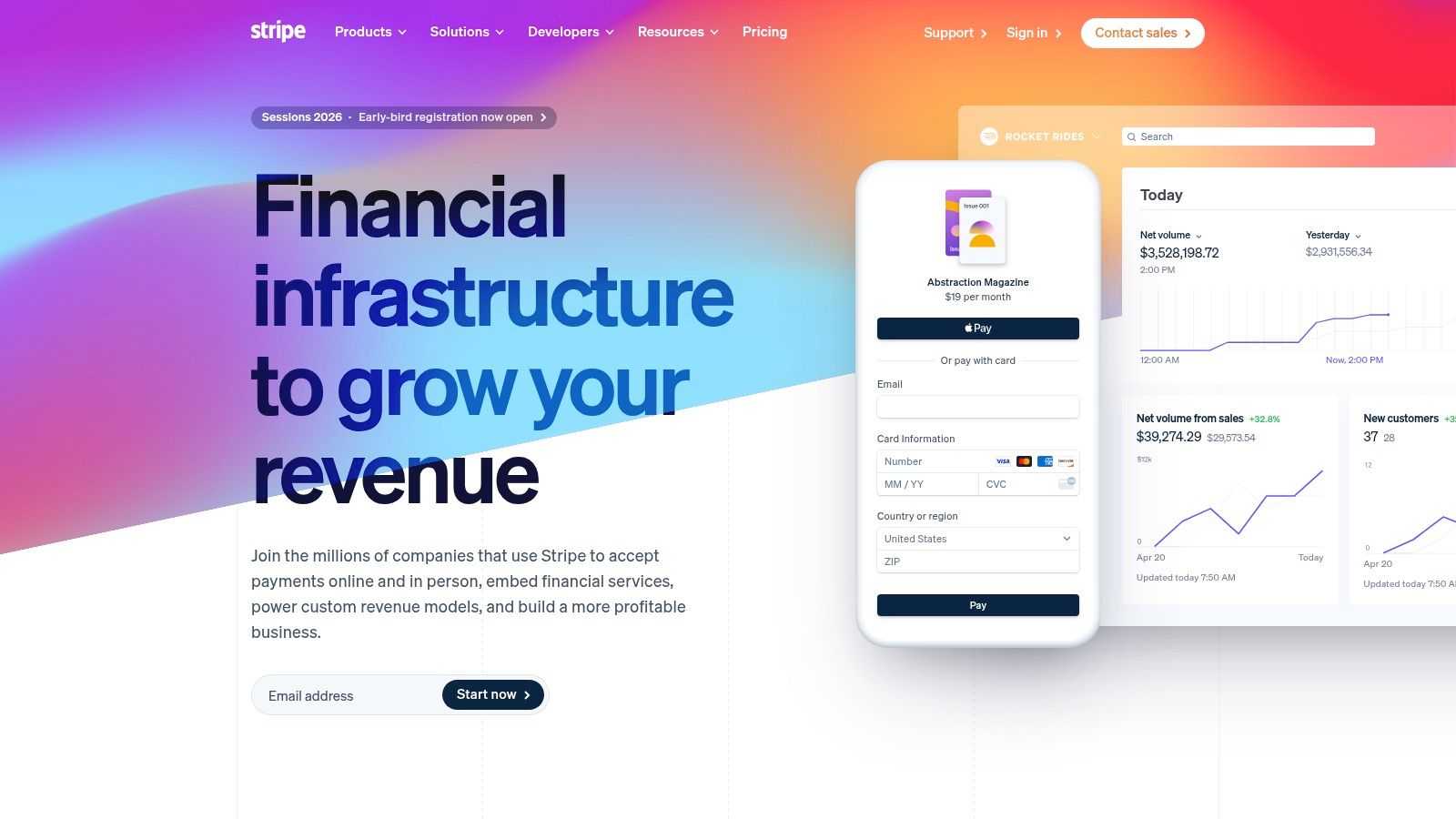
What sets Stripe apart is its comprehensive ecosystem. Beyond simple card processing, it offers powerful tools for subscription billing, invoicing, fraud prevention (Radar), and identity verification. Its extensive documentation and SDKs are considered the industry gold standard, significantly reducing development time and complexity.
Key Details & Use Cases
- Best For: SaaS companies, marketplaces, and businesses needing custom payment flows.
- Pricing: Standard pricing is 2.9% + 30¢ per successful card charge for online transactions. Custom pricing is available for high-volume businesses, but this requires direct negotiation.
- Key Features: Global support for over 100 payment methods, Stripe Billing for recurring revenue, Connect for complex marketplace payouts, and Stripe Terminal for in-person payments.
- Implementation Tip: For SaaS businesses, leveraging Stripe Billing can automate complex subscription logic. Mastering its features is a key part of building effective SaaS pricing strategies.
Pros:
- Superior developer experience and documentation.
- Scalable ecosystem with tools for billing, tax, and fraud.
- Extensive third-party integrations.
Cons:
- Add-on fees for international cards and currency conversion can increase costs.
- Volume discounts are not self-service and require sales engagement.
Website: https://stripe.com
2. PayPal for Business
PayPal for Business is a globally recognized payment platform that excels at leveraging its massive consumer network to boost checkout conversions. By offering familiar payment options like PayPal, Venmo, and Pay Later, it taps into user trust, making it an excellent choice for e-commerce stores and consumer-facing businesses. It functions both as a primary processor for standard card payments and as a powerful supplementary option alongside other gateways.
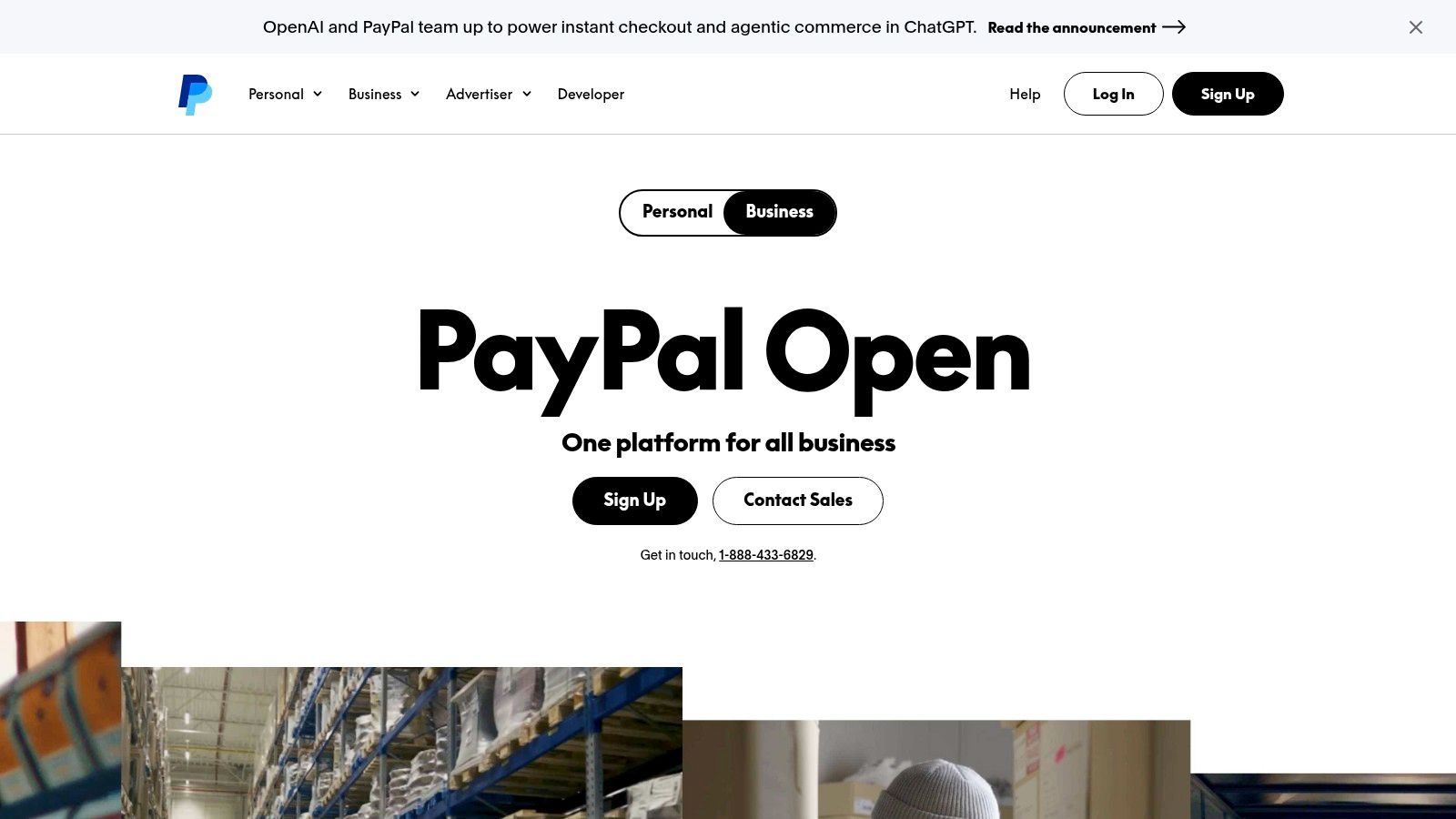
What sets PayPal for Business apart is its focus on the end-consumer experience and merchant security. The platform's strong brand recognition can reduce cart abandonment, while its robust seller protection policies and dispute resolution tools provide a safety net for merchants. This makes it one of the best payment processing software options for businesses prioritizing conversion rates and risk management.
Key Details & Use Cases
- Best For: E-commerce businesses, consumer-focused services, and merchants wanting to add trusted payment options.
- Pricing: Standard pricing for online card payments is 2.99% + 49¢ per transaction. Other rates apply for PayPal Digital Payments, Venmo, and in-person transactions.
- Key Features: Accepts PayPal, Venmo, Pay Later, and major credit/debit cards. Offers seller protection on eligible transactions, POS and Tap to Pay hardware, and easy integration with major e-commerce platforms.
- Implementation Tip: Carefully review PayPal's complex fee structure across different payment types. Understanding the cost variations can be simplified by using a payment gateway fee calculator.
Pros:
- Adds consumer trust and can lift checkout conversion.
- Simple to add alongside other processors.
- Strong fraud and risk tooling.
Cons:
- Fee schedule is more complex across payment types.
- Some merchants report higher effective costs vs flat-rate competitors.
Website: https://www.paypal.com/business
3. Square (Block) Payments
Square offers an end-to-end payments platform that excels at unifying online and in-person commerce, making it a top contender for retail, service businesses, and mixed-channel operations. Known for its simplicity and powerful Point of Sale (POS) hardware, it allows businesses to start accepting payments quickly with minimal setup. This integrated ecosystem is a key reason it’s considered one of the best payment processing software options for companies that need a seamless connection between their physical and digital storefronts.

What sets Square apart is its accessibility and comprehensive suite of small business tools. Beyond payments, the platform provides invoicing, payment links, a virtual terminal, and developer APIs for custom integrations. Its transparent, flat-rate pricing and fast deposit options, including instant transfers, make it particularly appealing for new businesses that prioritize straightforward financial management and immediate cash flow.
Key Details & Use Cases
- Best For: Retail businesses, service providers, and companies with both online and physical sales channels.
- Pricing: Standard pricing for online transactions is 2.9% + 30¢ per transaction. In-person rates are typically lower.
- Key Features: POS apps and hardware with Tap to Pay, unified online checkout and payment links, robust invoicing and virtual terminal, and developer SDKs for custom payment solutions.
- Implementation Tip: For service businesses, leveraging Square Invoices can streamline billing and get you paid faster. This is a critical step when you are first figuring out how to launch a SaaS product and need to establish reliable revenue collection.
Pros:
- Extremely fast to set up with no required monthly fees.
- Unified stack for POS, storefront, and online payments.
- Transparent pricing and excellent small-business tools.
Cons:
- Flat-rate fees can become more expensive than interchange-plus models at high volumes.
- Access to certain advanced features may require subscribing to paid plan tiers.
Website: https://squareup.com
4. Braintree (by PayPal)
Braintree, a PayPal service, operates as a comprehensive payment gateway and processor, excelling in providing a unified platform for cards, wallets, and alternative payment methods. It is particularly well-suited for businesses, including SaaS and marketplaces, that require flexible integrations and native access to PayPal and Venmo's massive user bases. Its mature vaulting and tokenization technology make it a strong contender among the best payment processing software for companies managing recurring payments or needing to migrate payment data securely.
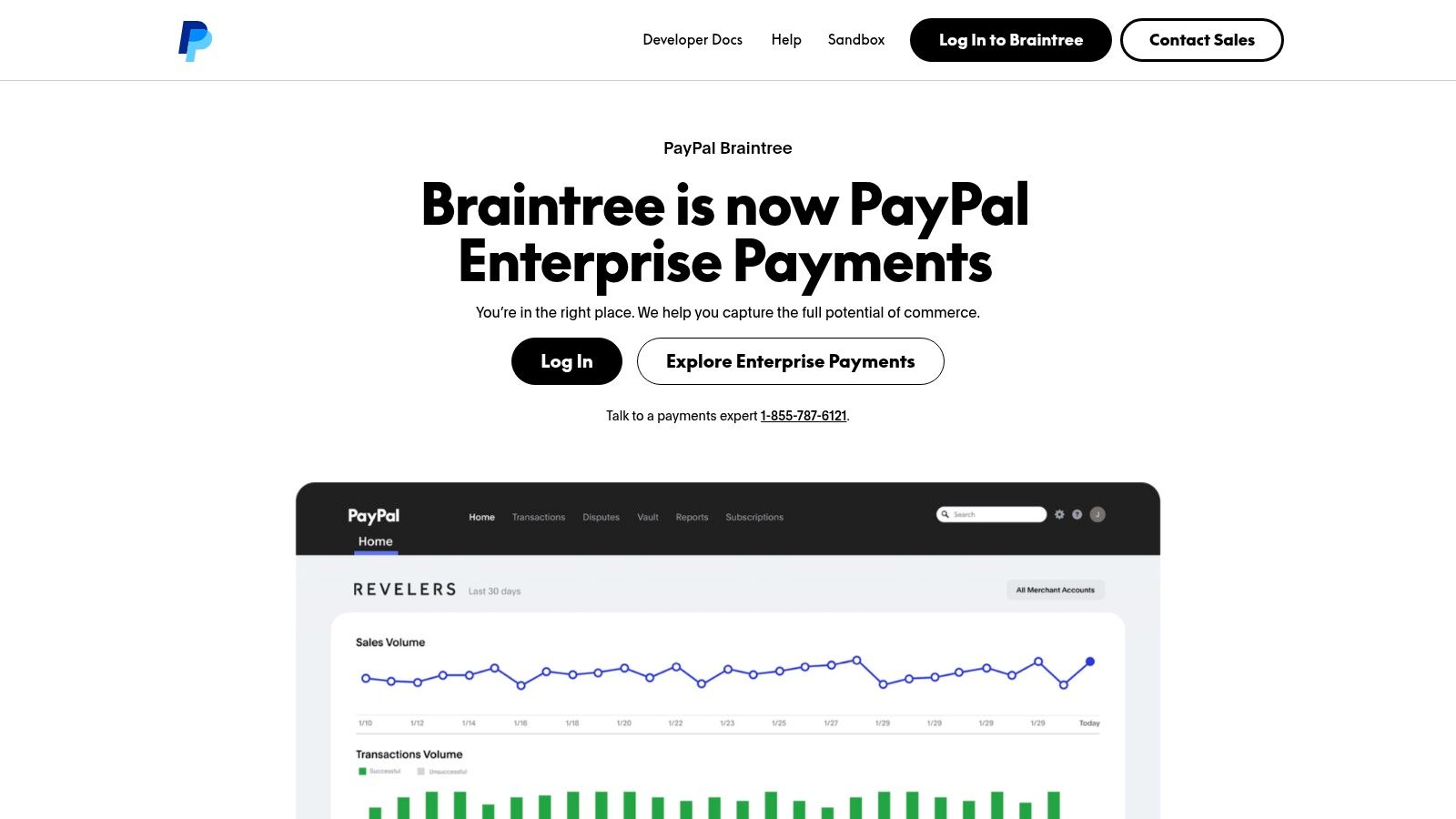
What distinguishes Braintree is its ability to combine traditional card processing with deep digital wallet coverage in a single integration. This simplifies the tech stack for merchants aiming to offer diverse payment options. Features like its advanced fraud tools, marketplace payouts via Hyperwallet integration, and support for recurring billing provide a robust, enterprise-grade foundation without a mandatory monthly fee for standard processing.
Key Details & Use Cases
- Best For: E-commerce stores, marketplaces, and subscription businesses wanting seamless PayPal/Venmo integration.
- Pricing: Standard pricing is 2.59% + 49¢ per card or digital wallet transaction. Custom and interchange-plus pricing are available for businesses with high processing volumes.
- Key Features: Secure data vault with card tokenization, native support for PayPal, Venmo, cards, and ACH Direct Debit, recurring billing, and advanced fraud management tools.
- Implementation Tip: Leverage Braintree's Drop-in UI for a fast and secure way to accept multiple payment types. For marketplaces, explore the Hyperwallet integration early to plan your payout and commission-splitting logic.
Pros:
- Deep wallet coverage (PayPal/Venmo) plus cards in one integration.
- Mature vaulting technology with reliable migration support.
- Enterprise-level features are accessible without fixed monthly fees.
Cons:
- Pricing details can vary significantly by payment method and region.
- Accessing the best enterprise features often requires sales engagement and custom terms.
Website: https://www.braintreepayments.com
5. Adyen
Adyen is an enterprise-grade, unified commerce platform designed for global businesses that require a single integration for both online and in-store payments. It’s favored by scaling companies and international marketplaces for its direct connections to card schemes, which boosts authorization rates and provides deep data insights. This makes it a strong contender for the best payment processing software for large, multinational corporations seeking to optimize revenue.
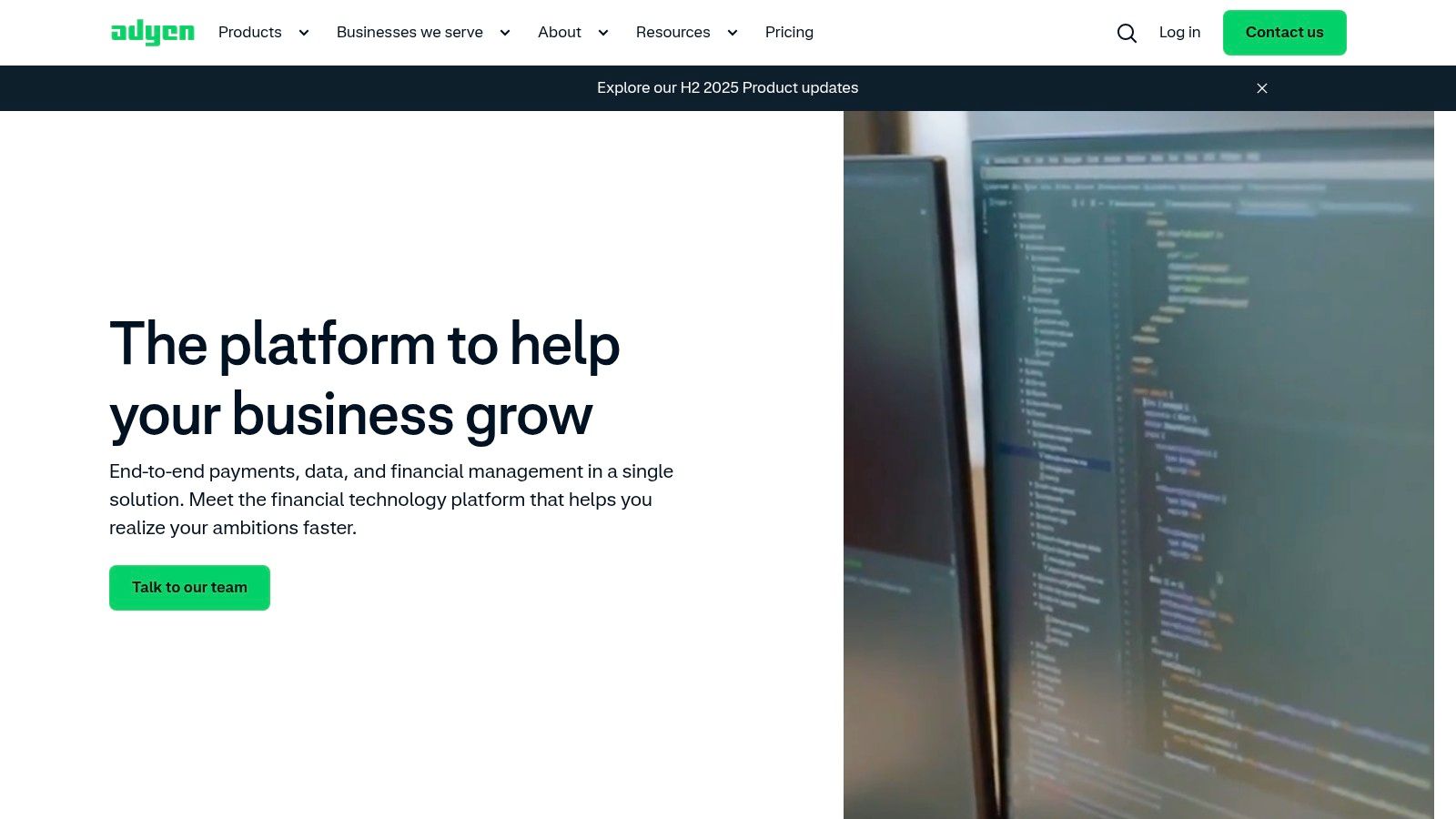
What sets Adyen apart is its all-in-one infrastructure that combines a payment gateway, risk management, and acquiring services. This unified approach simplifies global operations, reduces payment failures, and gives businesses a complete view of the customer journey across all sales channels. Its powerful risk management tools and data-driven optimization are key differentiators for high-volume merchants.
Key Details & Use Cases
- Best For: Enterprise-level businesses, multinational retailers, and marketplaces with significant international transaction volume.
- Pricing: Follows an Interchange++ model. This transparent pricing consists of the interchange fee, scheme fee, and a fixed processing fee per transaction. Custom quotes are required and minimum processing volumes apply.
- Key Features: Global acquiring in over 150 currencies, a single integration for online and Point-of-Sale (POS), advanced risk controls with RevenueProtect, and local payment method support worldwide.
- Implementation Tip: For global e-commerce brands, leveraging Adyen's local acquiring capabilities can significantly improve payment authorization rates in new markets, directly impacting revenue.
Pros:
- Superior payment authorization optimization at scale.
- Truly unified commerce for online and POS on a single platform.
- Excellent global coverage with extensive reporting and analytics.
Cons:
- Primarily suited for mid-market and enterprise clients with strict onboarding minimums.
- Pricing structure is complex and requires direct sales engagement for a custom quote.
Website: https://www.adyen.com
6. Checkout.com
Checkout.com is a modern global acquiring platform that provides businesses with a unified API for payments, rich data reporting, and advanced fraud prevention tools. It is particularly well-suited for high-growth digital commerce companies and platforms that require granular fee transparency and detailed analytics. Its direct acquiring licenses in major markets allow it to offer more competitive and transparent pricing structures.
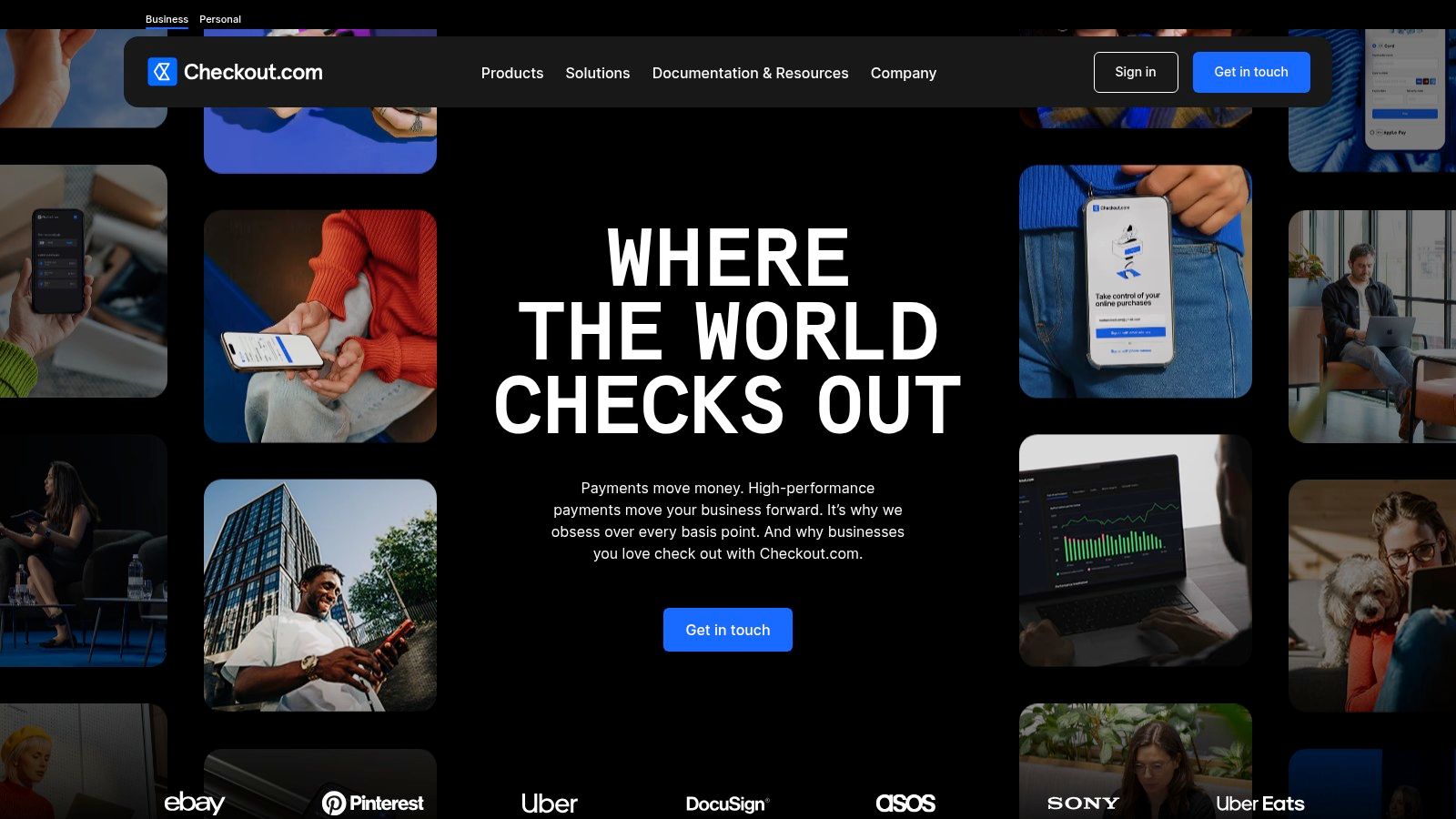
What sets Checkout.com apart is its flexible pricing and deep focus on data. Unlike many competitors that only offer a flat-rate model, it provides a choice between blended or interchange++ pricing. This transparency, combined with its powerful reconciliation and reporting tools, makes it an excellent choice for finance teams needing to optimize costs and manage revenue with precision.
Key Details & Use Cases
- Best For: Enterprise e-commerce, global platforms, and businesses needing detailed reporting and fee transparency.
- Pricing: Pricing is bespoke and not publicly listed. It offers flexible models like interchange++ or custom flat-rate, requiring engagement with their sales team.
- Key Features: Global coverage with 150+ currencies and domestic acquiring in over 45 countries, advanced fraud and risk tooling, and comprehensive analytics with granular fee reporting.
- Implementation Tip: Engage with their team early to discuss your volume and transaction profile. This will help you secure the most favorable interchange++ pricing model for your business.
Pros:
- Flexible pricing models and detailed cost transparency.
- Strong data and reconciliation reports for finance teams.
- Hands-on integration support for growth and enterprise clients.
Cons:
- Self-serve signup is not always available; sales engagement is common.
- A public price list is not posted, as all fees are bespoke.
Website: https://www.checkout.com
7. Authorize.net
Authorize.net is one of the most established and widely recognized payment gateways, offering a reliable bridge between your website and your payment processor. It's an excellent choice for businesses that already have a merchant account or prefer the flexibility of choosing one separately. This gateway-centric model provides broad compatibility with a vast range of US-based merchant accounts and shopping carts, making it a dependable part of any payment stack.
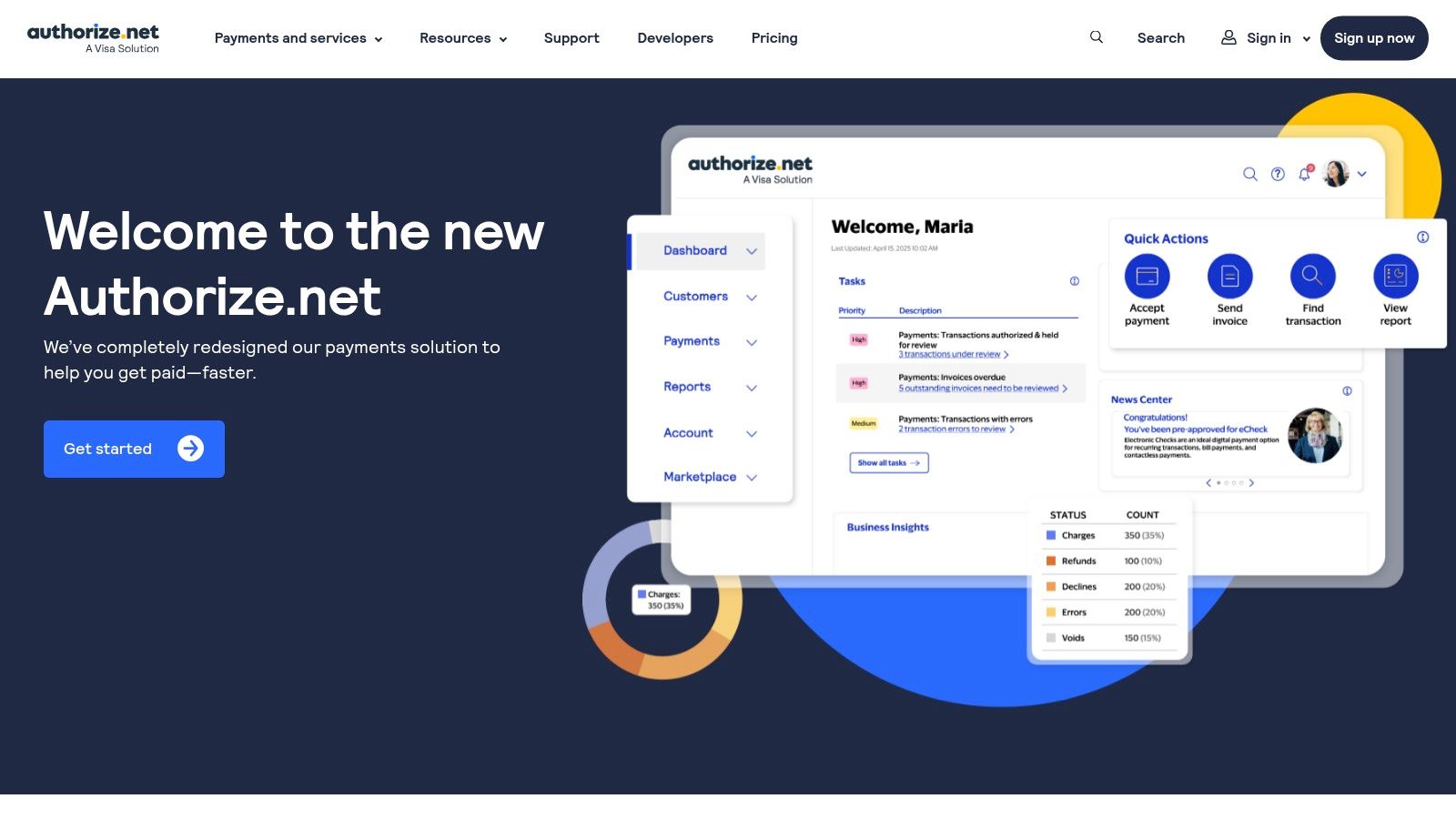
What sets Authorize.net apart is its sheer ubiquity and stability in the e-commerce world. It provides robust tools like a secure customer information manager (token vault), recurring billing, invoicing, and a virtual terminal for manual order entry. While its developer experience may feel dated compared to newer APIs, its long-standing presence means it has extensive support resources and proven reliability, positioning it as a safe choice for merchants prioritizing compatibility over cutting-edge features.
Key Details & Use Cases
- Best For: Merchants who want to use a separate merchant account or need broad compatibility with existing e-commerce platforms.
- Pricing: The all-in-one option is 2.9% + 30¢ per transaction with a $25 monthly gateway fee. A gateway-only plan is also available for those with their own merchant account.
- Key Features: Advanced fraud detection suite, customer information manager (CIM) for tokenization, automated recurring billing, invoicing, and eCheck (ACH) processing support.
- Implementation Tip: Use the Customer Information Manager feature to securely store customer payment data. This enables streamlined checkouts for returning customers and simplifies setting up recurring billing plans without handling sensitive data directly.
Pros:
- Highly compatible with a wide range of US merchant accounts and shopping carts.
- Established reputation for reliability and security.
- Includes valuable features like a virtual terminal and recurring billing.
Cons:
- Monthly gateway fee adds to the overall cost structure.
- The user interface and developer APIs can feel less modern than competitors like Stripe.
Website: https://www.authorize.net
8. Helcim
Helcim stands out in the payment processing space with its unwavering commitment to transparency and affordability, making it an excellent choice for small-to-medium-sized businesses (SMBs) seeking predictable costs. It operates on an Interchange-plus pricing model, clearly separating the wholesale interchange rates from its own margin. This approach eliminates hidden fees and ensures merchants understand exactly what they’re paying for each transaction.
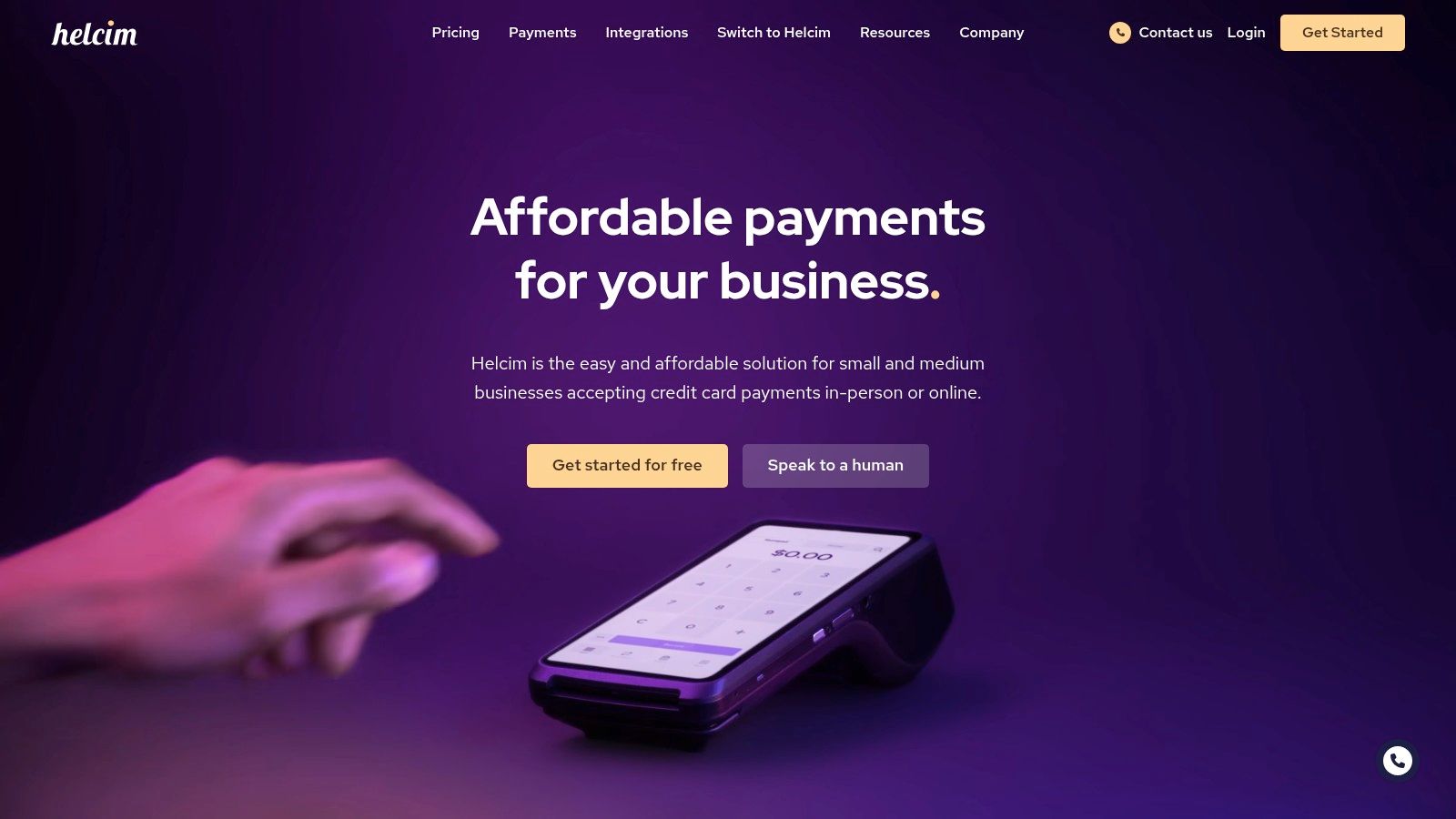
What makes Helcim particularly appealing is its automatic volume-based discounts. As your processing volume increases, your margin rate automatically drops to a lower tier, a feature rarely seen with other providers. This built-in scalability makes it a strong contender for the best payment processing software for businesses on a growth trajectory that want to avoid renegotiating rates. The platform also includes a comprehensive suite of business tools at no extra monthly cost.
Key Details & Use Cases
- Best For: SMBs, retailers, and service businesses looking for transparent, no-contract Interchange-plus pricing.
- Pricing: Custom Interchange-plus pricing based on volume, with published margin tiers that decrease automatically as sales grow. There are no monthly fees, setup fees, or cancellation fees.
- Key Features: Interchange+ pricing, automatic volume discounts, Level 2/3 data optimization for B2B savings, and an all-in-one platform with a virtual terminal, invoicing, subscriptions, and hosted payment pages.
- Implementation Tip: Businesses that handle B2B transactions should ensure they provide all necessary line-item data to take full advantage of Helcim’s automatic Level 2/3 processing, which can significantly lower interchange fees on corporate cards.
Pros:
- Highly transparent Interchange-plus pricing model.
- Savings improve automatically with higher volume.
- No monthly fees, contracts, or hidden charges.
- Good included toolset for SMBs and SaaS.
Cons:
- Not as many enterprise-level features as global acquirers.
- Hardware costs apply if you need in-person terminals.
Website: https://www.helcim.com
9. Stax Payments
Stax Payments offers a unique subscription-based model that disrupts traditional flat-rate pricing, making it a powerful contender for businesses with significant processing volume. Instead of charging a percentage markup on transactions, Stax provides direct access to interchange rates for a fixed monthly fee, which can lead to substantial savings. This approach makes it one of the best payment processing software options for established businesses seeking predictable costs and transparency.
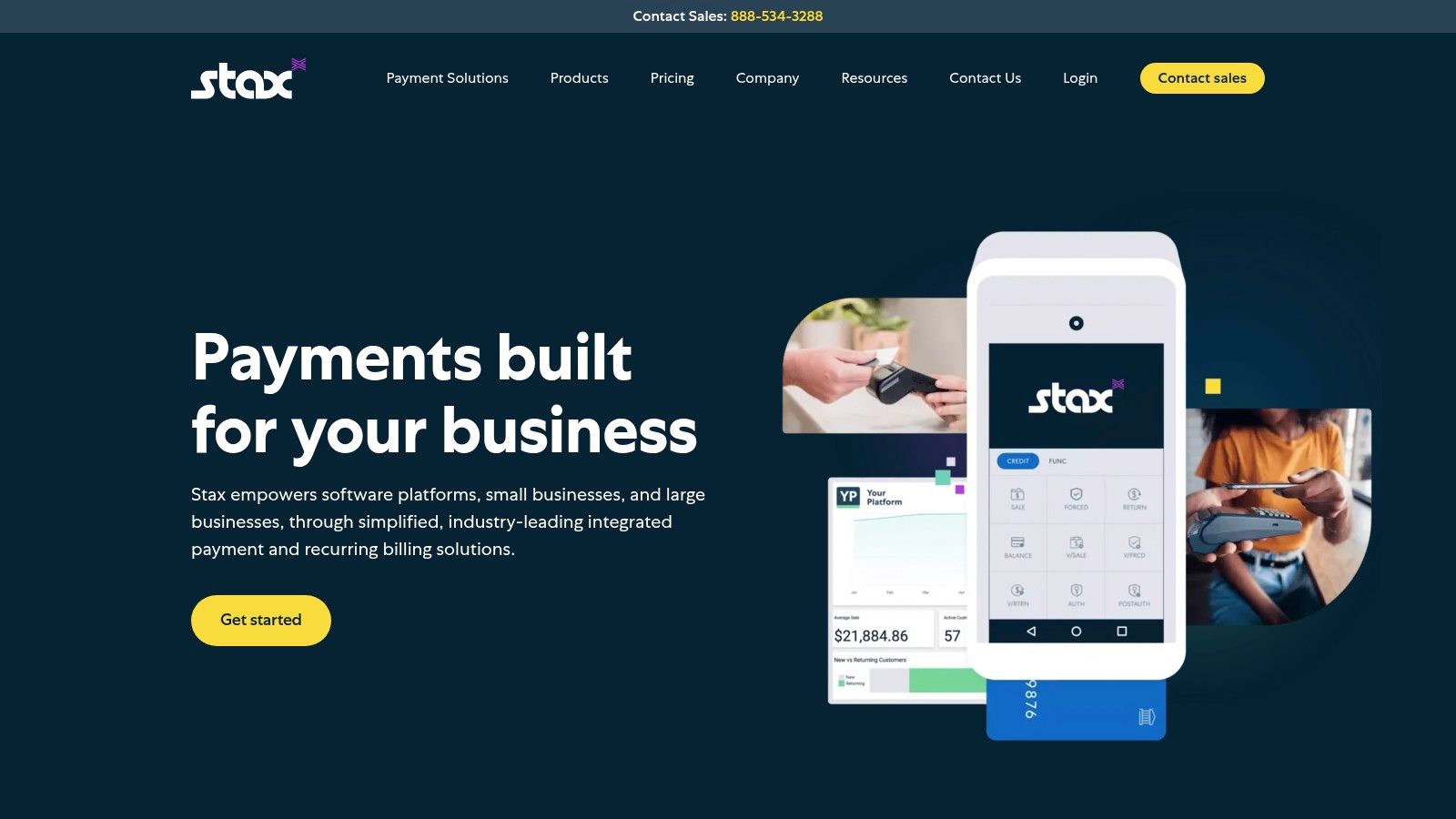
What sets Stax apart is its all-in-one platform philosophy. The monthly subscription includes a comprehensive suite of tools like invoicing, payment links, recurring billing, and hosted payment pages at no extra cost. This bundled value proposition simplifies the tech stack for businesses that need more than just basic card processing, consolidating functionality that often requires multiple services and fees elsewhere.
Key Details & Use Cases
- Best For: Mid-to-high-volume businesses, professional services, and merchants looking to minimize percentage-based fees.
- Pricing: Subscription-based model starting at $99/month, which provides direct access to interchange rates plus a small per-transaction fee (e.g., 10¢). Custom plans are available for larger enterprises.
- Key Features: 0% markup over interchange, optional credit card surcharging technology (CardX), robust developer APIs and an ISV program (Stax Connect), and a full suite of included payment tools.
- Implementation Tip: Calculate your current total processing fees. If they significantly exceed the annual cost of a Stax subscription, the switch could yield immediate savings, especially if your average transaction size is high.
Pros:
- Significant cost savings for higher-volume merchants compared to flat-rate models.
- Predictable monthly billing simplifies financial forecasting.
- Many platform features (invoicing, recurring payments) are included in the subscription.
Cons:
- The monthly subscription fee is not cost-effective for very low-volume or new businesses.
- Specific per-transaction costs and add-on fees can require a custom quote.
Website: https://staxpayments.com
10. Shopify Payments
Shopify Payments is the native, fully integrated payment processing solution built directly into the Shopify ecosystem. It is the default choice for merchants on the platform, designed to simplify the entire commerce process from checkout to reconciliation. By eliminating the need for a third-party gateway, it offers one-click activation, handles all PCI compliance, and provides a unified dashboard for managing orders, payments, and payouts.
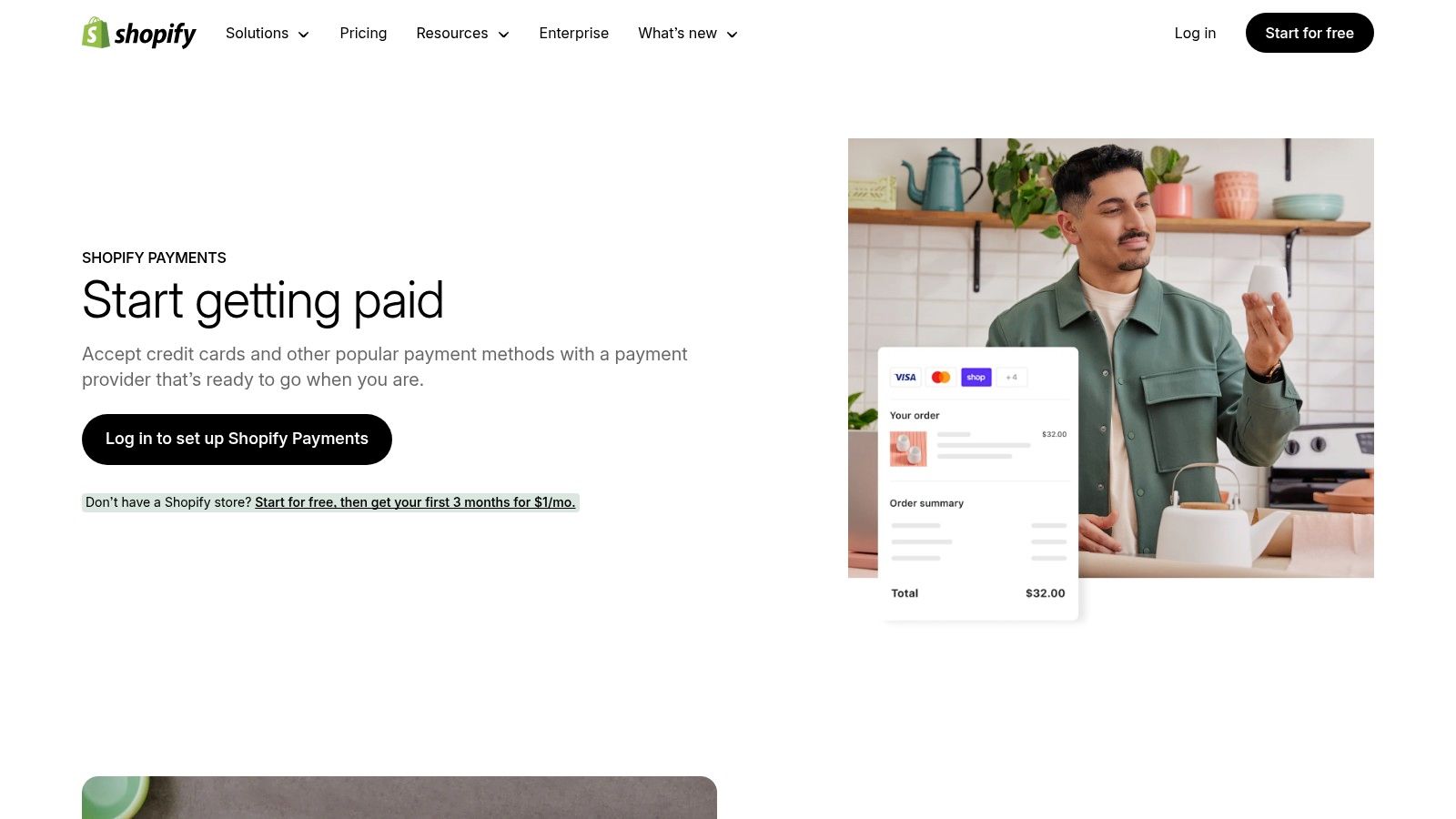
What makes Shopify Payments a standout choice is its seamless integration with Shop Pay, a highly effective accelerated checkout that significantly boosts conversion rates. The real advantage, however, lies in its pricing model. Using Shopify Payments removes the additional transaction fees that Shopify otherwise charges for using external gateways, making it the most cost-effective option for anyone selling on the platform.
Key Details & Use Cases
- Best For: Any e-commerce business operating on the Shopify platform.
- Pricing: Rates are tied to your Shopify plan, starting at 2.9% + 30¢ for the Basic Shopify plan and decreasing for higher-tier plans. There are no monthly fees or setup fees for Shopify Payments itself.
- Key Features: One-click activation, integrated dispute handling, support for Shop Pay and Shop Pay Installments, and unified analytics within the Shopify admin.
- Implementation Tip: Activating Shopify Payments is the first step any new store owner should take. It not only saves money by eliminating extra platform fees but also unlocks access to Shop Pay, which is a major driver of customer loyalty and conversion.
Pros:
- Easiest possible setup for Shopify merchants.
- Competitive rates that improve as your store grows and upgrades plans.
- Simplifies financial reconciliation by combining sales and payment data.
Cons:
- Exclusively available for stores using the Shopify platform.
- If you choose to use an external gateway alongside it, Shopify still applies its own transaction fees.
Website: https://www.shopify.com/payments
11. Paddle
Paddle is a Merchant of Record (MoR) platform designed specifically for SaaS and digital product companies. It operates differently from traditional payment processors by acting as the legal reseller of your software, completely offloading the complexities of global sales tax, VAT collection, and compliance. This makes it a standout choice for businesses that want to sell internationally without building an in-house finance and compliance team.
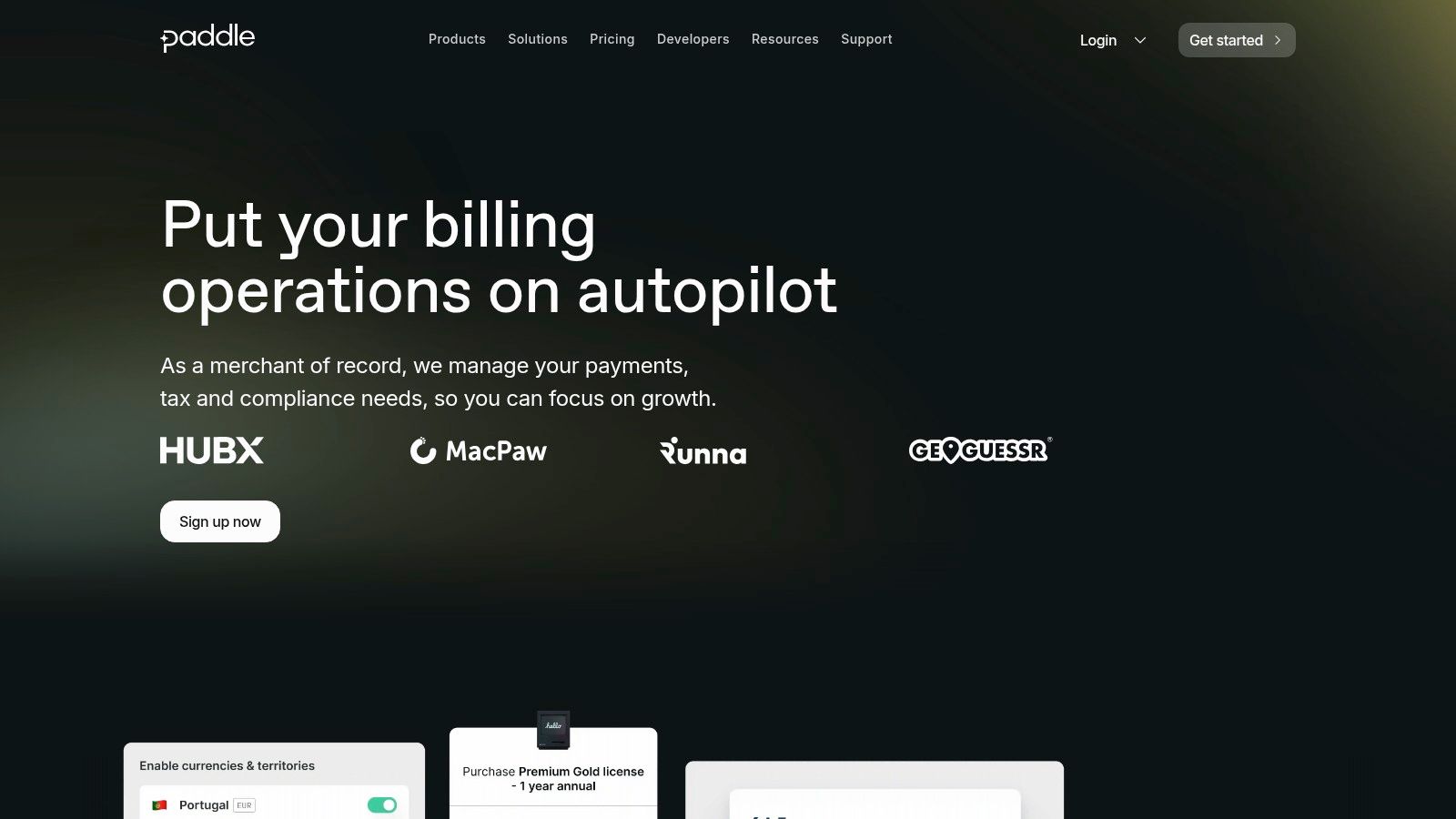
What truly sets Paddle apart is its all-in-one approach. It consolidates payments, subscription management, invoicing, global tax remittance, chargeback handling, and even buyer support into a single, unified system. For founders and small teams, this consolidation dramatically reduces the operational overhead associated with global expansion, making it one of the best payment processing software solutions for simplifying international commerce.
Key Details & Use Cases
- Best For: SaaS companies and digital product sellers who want to offload global tax and compliance obligations.
- Pricing: Pay-as-you-go pricing is 5% + 50¢ per transaction. Custom pricing is available for businesses with high-volume or unique needs.
- Key Features: All-inclusive Merchant of Record model, handles global sales tax and VAT, integrated subscription billing, fraud and chargeback defense, and localized payment methods.
- Implementation Tip: Ensure your product catalog and billing logic align with Paddle's MoR structure from the start. This model means Paddle is the seller, which simplifies your operations but requires you to work within their framework for product setup and invoicing.
Pros:
- Eliminates the complexity of managing global sales tax and VAT.
- Transparent, all-inclusive pricing simplifies cost forecasting.
- Reduces operational burden by handling payments, billing, and compliance.
Cons:
- Revenue share model can become more expensive than direct processors at very high volumes.
- The MoR model offers less flexibility in how products are structured compared to a direct processor.
Website: https://www.paddle.com
12. FastSpring
FastSpring operates as a Merchant of Record (MoR) platform, specifically designed for companies selling software, SaaS, and other digital goods globally. It goes beyond standard payment processing by handling sales tax, VAT, compliance, and fraud detection on behalf of the seller. This makes it an excellent choice for businesses that want to outsource the complexities of international tax and regulatory compliance, allowing them to focus on product development rather than administrative overhead.
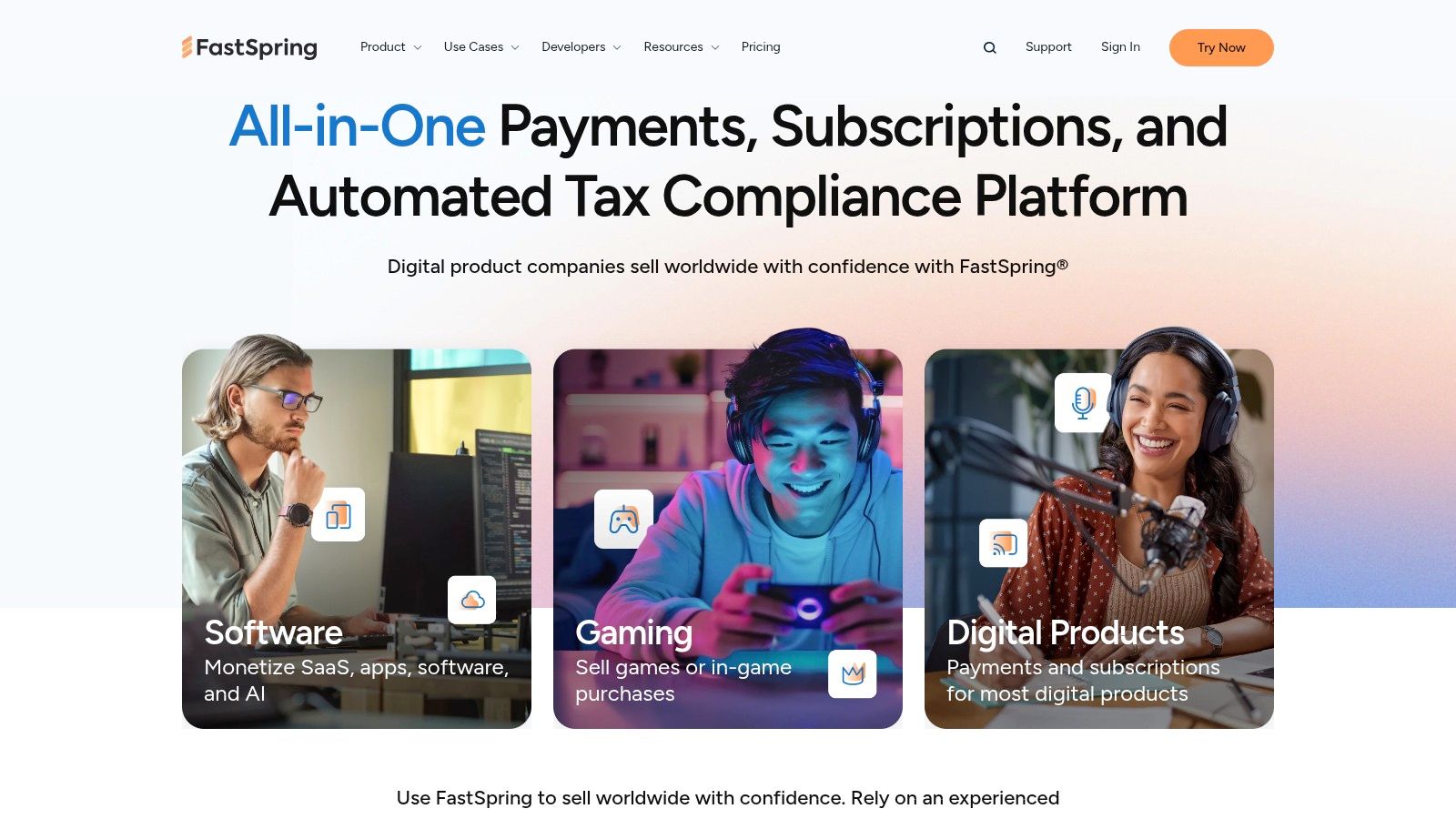
What truly differentiates FastSpring is its all-in-one approach to digital commerce. By acting as the MoR, FastSpring essentially becomes the reseller of your product, which absolves you of the responsibility for calculating, collecting, and remitting taxes in various jurisdictions worldwide. This model is a powerful solution for SaaS and software companies aiming for a global audience from day one without building a dedicated finance and compliance team.
Key Details & Use Cases
- Best For: Global SaaS, software, and digital product companies that need to offload tax and compliance management.
- Pricing: Custom pricing is provided after a consultation. Rates are typically a percentage of revenue and are not publicly listed, requiring engagement with their sales team.
- Key Features: Global tax and VAT collection/remittance, subscription management with localized checkouts, fraud prevention, and extensive catalog/pricing configurations (e.g., tiered, volume, coupons).
- Implementation Tip: Use FastSpring's localized checkout capabilities to display prices in local currencies and offer regional payment methods. This can significantly improve conversion rates in international markets.
Pros:
- Greatly minimizes in-house tax and compliance overhead for global sales.
- Rich pricing and localization features built for digital goods.
- Offers hands-on migration and dedicated support options.
Cons:
- Pricing is not transparent and requires a sales call.
- The revenue share model may be more expensive than a traditional processor at a very large scale.
Website: https://fastspring.com
Top 12 Payment Processors — Features & Pricing
| Provider | Core features | 👥 Target audience | 🏆 Standout strength | ✨ Unique/Notable feature | 💰 Pricing / Value ★ |
|---|---|---|---|---|---|
| Stripe | Cards, wallets, subscriptions, invoicing, fraud, global payouts, APIs | Developers, SaaS startups | Best‑in‑class dev experience & extensibility | Link checkout, prebuilt UIs, revenue recovery | 💰 Pay‑as‑you‑go; add‑on intl fees — ★★★★★ |
| PayPal for Business | PayPal, Venmo, Pay Later, guest checkout, POS, dispute tools | Consumer‑facing merchants, SMBs | Consumer trust → higher conversion | Branded PayPal/Venmo checkout flows | 💰 Complex fee mix; can be costly — ★★★ |
| Square (Block) Payments | POS hardware, Tap to Pay, online checkout, invoices, APIs | Retail & service SMBs with hybrid sales | Fast launch + unified online+in‑store stack | Integrated hardware + simple POS apps | 💰 Flat rates; simple but can be higher at scale — ★★★ |
| Braintree (by PayPal) | Gateway+processor, tokenization, subscriptions, marketplace payouts | Marketplaces, SaaS needing vaulting | Strong wallet support + mature vault | Vaulted cards + account updater, PayPal/Venmo native | 💰 Interchange‑plus / custom at scale — ★★★ |
| Adyen | Global acquiring, unified commerce, risk tools, 150+ currencies | Mid‑market / enterprise with international scale | Outstanding authorization optimization | Global acquiring + one integration for many markets | 💰 Custom quotes; onboarding mins — ★★★★ |
| Checkout.com | Global acquiring, analytics, fraud, reporting, flexible pricing | Digital commerce & platforms | Detailed fee transparency & analytics | Choice of flat/blended or interchange++ pricing | 💰 Bespoke pricing; strong finance tooling — ★★★★ |
| Authorize.net | Gateway, virtual terminal, recurring billing, ACH, token vault | Merchants wanting gateway compatibility/legacy stacks | Reliable, widely compatible gateway | Broad processor/cart compatibility | 💰 Monthly gateway fee + per‑tx fees — ★★★ |
| Helcim | Interchange+ pricing, online/in‑person, invoicing, subscriptions | SMBs seeking transparent fees | Automatic volume discounts; no contract | Published margin tiers; included tools | 💰 Transparent, cost‑saving as you scale — ★★★★ |
| Stax Payments | Subscription tiers, interchange passthrough, invoicing, surcharging | Mid/high‑volume merchants & ISVs | Predictable billing & lower markup at scale | 0% markup tiers; CardX surcharging option | 💰 Monthly plans (from ~$99); good at scale — ★★★ |
| Shopify Payments | Native Shopify processor, Shop Pay, payouts, disputes | Shopify stores | Easiest activation; removes extra Shopify gateway fees | Deep Shop Pay integration & PCI handled | 💰 Rates tied to Shopify plan — ★★★★ |
| Paddle | Merchant of Record: payments, subscriptions, tax/VAT, support | SaaS teams wanting to offload tax & compliance | Fully offloads tax, remittance & compliance | MoR model: global tax handling + support | 💰 Revenue‑share model; simpler but pricier at scale — ★★ |
| FastSpring | MoR for software/digital goods, localized checkout, tax & compliance | Software/SaaS & digital sellers | Strong localization & pricing controls | Rich catalog/pricing, localized checkout & remittance | 💰 MoR revenue share; sales‑led pricing — ★★ |
Making the Right Choice for Your Business Growth
Choosing the right payment processing software is more than a simple transaction; it's a foundational decision that directly impacts your revenue, customer experience, and operational scalability. Throughout this guide, we've navigated the complex landscape of payment solutions, from developer-centric powerhouses to all-in-one e-commerce platforms. The journey from idea to a scalable business is paved with critical infrastructure choices, and your payment processor is one of the most important stones in that path.
The key takeaway is that there is no single "best payment processing software" for everyone. The ideal choice is deeply contextual, hinging on your specific business model, technical capabilities, transaction volume, and global ambitions. What works for a bootstrapped SaaS startup will differ significantly from the needs of a high-volume marketplace or a D2C brand on Shopify.
Synthesizing Your Options: Key Decision Pathways
Let's distill our findings into actionable pathways. Reflect on your business's current stage and future goals to see which category resonates most.
For the Developer-Focused Startup (SaaS, APIs, Platforms): If your team lives and breathes code, values API flexibility, and needs a robust ecosystem that grows with you, Stripe is often the default, and for good reason. Its documentation, powerful APIs, and extensive tooling (from Billing to Radar) create a comprehensive platform for building sophisticated payment logic. Braintree also offers a strong, developer-friendly alternative, especially if offering PayPal as a primary checkout option is a strategic priority.
For the E-commerce & Retail Entrepreneur: If you're building a brand on a specific platform, integrated solutions offer unmatched simplicity. Shopify Payments is the clear winner for anyone within the Shopify ecosystem, eliminating friction and centralizing operations. Similarly, Square provides a powerful, cohesive system for businesses that need to unify online sales with in-person POS transactions, making it a go-to for retailers, restaurants, and service providers.
For High-Volume & Cost-Conscious Businesses: Once your transaction volume climbs, the flat-rate fees of Stripe or PayPal can start to eat into your margins. This is the inflection point where interchange-plus pricing models from providers like Helcim and Stax Payments become incredibly compelling. While their feature sets might not be as expansive as Stripe's, the potential for significant cost savings on processing fees at scale is a powerful incentive for mature businesses.
For the Global-First SaaS or Digital Product Seller: Managing international payments, sales tax, VAT, and regulatory compliance is a massive operational burden. This is where a Merchant of Record (MoR) becomes a strategic game-changer. Paddle and FastSpring take on this complexity for you, acting as the reseller of your product. This simplifies your operations immensely, allowing you to focus on product development and marketing while they handle the financial and legal intricacies of selling globally.
Final Implementation Checklist
Before you commit, run through this final checklist. A hasty decision now can lead to costly migrations later.
- Calculate Your True Costs: Don't just look at the sticker price. Model your costs based on your average transaction size, volume, and the prevalence of international payments. Factor in monthly fees, chargeback fees, and costs for any add-on services you'll need.
- Evaluate the Developer and User Experience: If you have a development team, have them review the API documentation and SDKs of your top contenders. For your non-technical team members, assess the dashboard's usability for handling refunds, disputes, and reporting.
- Plan for Scalability: Your chosen solution should not only meet today's needs but also support your three-year plan. Will it handle subscriptions if you pivot to a SaaS model? Does it support the international markets you plan to enter? Can it handle the transaction volume you aspire to achieve?
Ultimately, selecting the best payment processing software is an investment in your business's future. It’s the engine that powers your revenue and a critical touchpoint in your customer's journey. Use this guide to narrow your choices, conduct your due diligence, and choose a partner that will empower your growth for years to come.
Now that you've chosen your payment processor and are ready to launch, the next challenge is getting your SaaS product in front of the right audience. Boost your initial traction and get discovered by early adopters and tech directories with SubmitMySaas. We handle the time-consuming process of submitting your product to over 40 relevant platforms, so you can focus on building a great product. Visit SubmitMySaas to start your launch campaign today.