By Outrank
10 SEO Backlinks Submission Sites Worth Your Time in 2026
Compare 10 SEO backlinks submission sites by DR, dofollow status, and fit, plus submission tips and penalty risks to avoid.
On this page
A directory row is not a vote. Treating every SEO backlink submission site as the same kind of endorsement wastes a morning. A listing is a page on someone else's domain. A followed link an editor placed because the product earned the mention is a different asset.
Google's link model started with PageRank. Larry Page, Sergey Brin, Rajeev Motwani, and Terry Winograd described it in a Stanford technical report published on November 11, 1999. They modeled the web as a network and compared the calculation to an "idealized random Web surfer." The source and structure of a link mattered. A raw count of hyperlinks did not. PageRank was an early ranking idea, and link analysis has grown well past that single calculation. I treat domain rating as a rough filter for whether a site is big enough to inspect, not as proof your listing will move a keyword.
Surveyed SEO specialists have named digital PR the most effective link-building tactic, according to Editorial.Link. Directories can still deliver a mention, a click, or a citation. They rarely replace a story someone chose to publish.
Read each site below on four questions. Is the link followed, and only after you view the live HTML? Is submission free, paid, or free until you want placement? Is the reader a buyer comparing tools, or an early adopter hunting launches? Is the backlink unconditional, or does it depend on a badge, a rank, or a paid plan? Match the site to the job. Discovery traffic and a ranking signal are different jobs.
1. SubmitMySaas
SubmitMySaas is a launch and discovery platform, not a static software catalog you forget after one form. Makers submit a product, and the site surfaces SaaS, AI, productivity, marketing, and design tools through daily launches, trending lists, and monthly roundups. The audience skews toward founders, indie makers, and people actively looking for new tools. That is early-adopter traffic, not a procurement committee filling a vendor shortlist.
The category shelf is concrete. The Top Categories section lists 268 projects under Artificial Intelligence, 268 under SaaS, 191 under Productivity, 112 under Marketing Tools, and 61 under Design Tools. A weekly Top Projects list shows 10 products, and the This Month's Best list shows 5. Products are also ranked weekly under Top Projects and Last Week's Best, and monthly under This Month's Best. If your tool does not fit those shelves, the listing will sit in a room that is not shopping for it.
What you are actually submitting
Use Submit Project in the main navigation. You can submit the project itself, and users can also submit comments and other content. You keep ownership of what you post, and you are responsible for having the right to share it. The platform can remove content that violates the terms or looks likely to harm the platform, users, or other people. The terms were last updated on October 25, 2026, and the service is provided "as is" without a promise that it will be uninterrupted or error-free. Questions about the terms go to support@submitmysaas.com. You also need to be at least 13 to use the site.
Practical rule: Count a launch listing as exposure first. Open the live page and confirm the link attribute before you put it in a ranking report.
A followed link on the free path is not something you should book as guaranteed equity on day one. Placement, audience fit, and how the product performs after launch all change what you get back. I would use this site when you want makers and early users to see the product during a real launch window, then judge it on referral sessions, comments, and whether the linking page stays indexed. Do not treat a badge or a domain-rating label as a substitute for that check.
Clear categories and highlighted features make browsing faster than a dump of identical blurbs. That helps users. It also forces you to write a description that matches the product you ship. Outdated pricing or feature claims on a launch page create a second, conflicting version of your product, which is a branding problem even when the link is clean.
2. Product Hunt
Product Hunt is a launch community. Makers introduce products to early adopters, founders, and tech people who show up to upvote, comment, and argue. Launching is free. The product page can remain after launch day. Homepage featuring is not guaranteed, and a quiet Tuesday will not look like a featured launch no matter how polished the gallery is.
A launch, not a link order
You get daily launches, comments, upvotes, and a leaderboard. Makers submit on personal accounts. Company accounts cannot submit the launch. Optional paid advertising sits apart from launch-day ranking, so buying ads is not the same action as earning a place on the board.
Best fit: SaaS, AI, productivity, marketing, and design products with a story people can try. Weak fit: A product that is not ready for public feedback, or a team that will post and disappear. Link reality: Treat any backlink as a side effect of a permanent product page. Verify the attribute on that page. Do not buy the launch as if it were a followed link.
Traffic follows participation. A maker who replies to comments all day will see a different curve than a maker who posts the link and leaves.
Preparation is the cost people underestimate. You need a clear first screen, a reason to upvote, and people who already care enough to show up. I recommend Product Hunt when the goal is launch-day discovery and blunt feedback. I would not recommend it as the backbone of an SEO backlink program. The audience is early adopters, not buyers running a formal comparison. If nobody engages, the listing still exists and the ranking impact does not magically appear.
3. SaaSHub
SaaSHub is a software-discovery and alternatives directory. Owners submit eligible released products, then verify and manage the listing. The useful surface is not only your own card. Alternative and competitor pages put the product next to tools people already know, which is how a lot of software research starts.
Submission is free. Approval is not automatic. Featured placement is a separate paid option, and the site does not promise a particular search ranking. Products still in a waitlist, or living only on a free subdomain, are not accepted. You need a released product.
Buyer context: Someone comparing "X alternative" is closer to a buying motion than a launch-day lurker. Verification: Verifying the product can improve submission priority. It does not create reviews by itself. What to measure: Indexed alternative pages, referral sessions, and branded searches, not a domain-rating screenshot.
Say a founder of a support inbox tool submits after the public release. The standalone listing is a business card. The alternatives page is the aisle. If your competitors are named clearly, a researcher can land on you without ever searching your brand. If your category is fuzzy, that aisle does not exist yet, and the listing stays a lonely profile.
I would submit here once the product is shipped and the competitor set is honest. Skip it for a pre-launch waitlist. Paid featuring is optional exposure, not evidence that the free link is stronger.
4. BetaList
BetaList shows early-stage internet startups to early adopters. It accepts products that are pre-launch, in beta, or already live, which makes it a better match for teams hunting first users than for teams hunting a directory backlink.
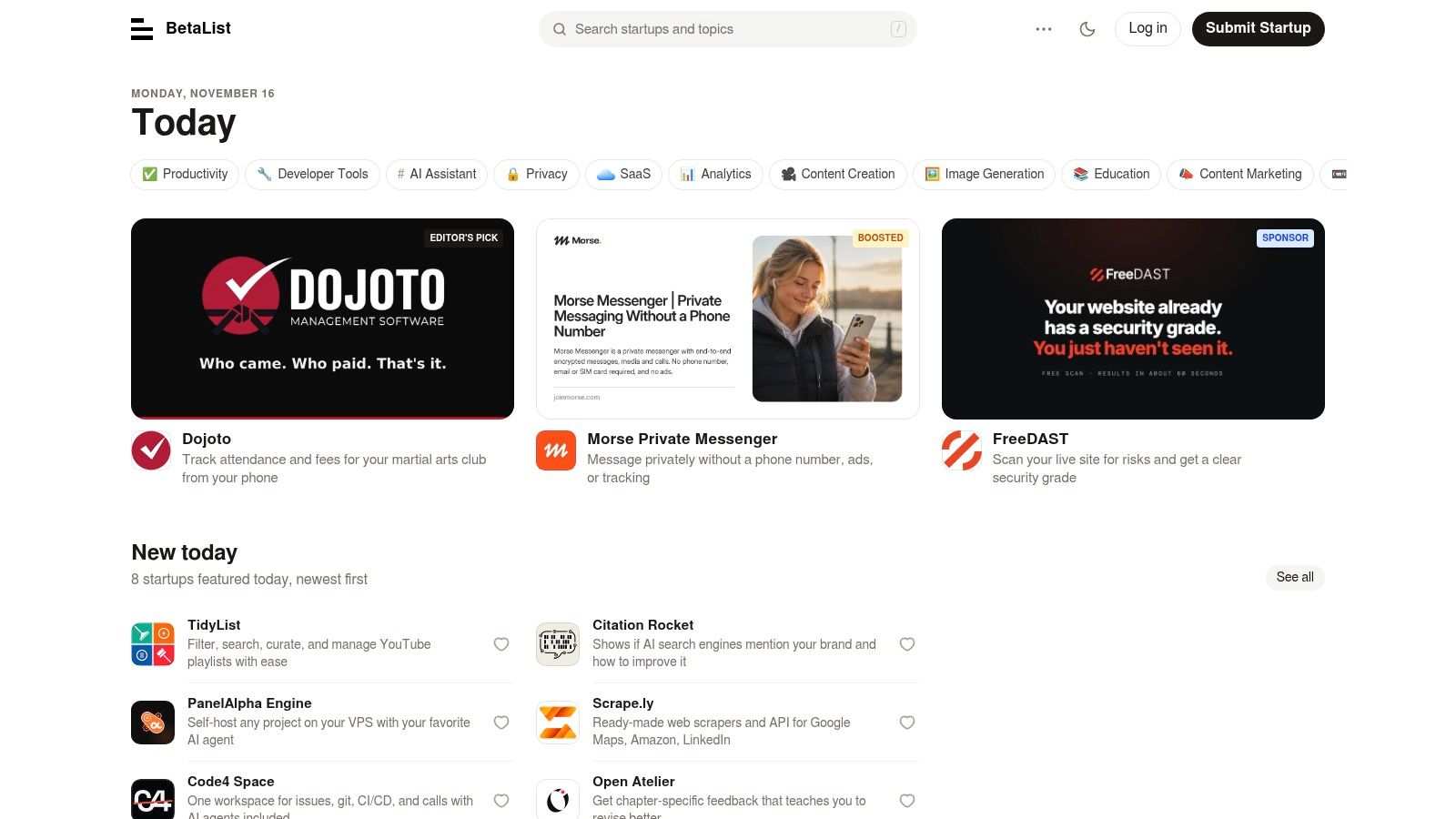
Submission is paid. The current fee sits in the submission flow, so check it before you start, because it can change. Submissions are reviewed. Acceptance is not guaranteed. Rejected submissions are stated to be eligible for a full refund, which is a cleaner deal than a link marketplace that keeps the money either way.
In 2024, the average cost of a paid link was reported as $83, based on a survey summarized by Embryo. BetaList is not that product. You are paying for a reviewed shot at an early-adopter audience. You are not purchasing a guaranteed ranking placement, and you should not describe it that way internally.
Who should pay
Pay if you need strangers to try an early product and you can handle a no. Do not pay if the only success metric is a followed link from a startup directory. Exposure depends on being selected and on whether that day's readers care. The editorial focus fits founders and makers. It fits poorly as a substitute for a customer story, a comparison page, or a journalist mention.
Confirm the live link attribute after publication. A paid review and a dofollow equity pass are different contracts. If the fee is the whole marketing budget for the month, spend it only when early users are the scarce resource.
5. G2
G2 is a software-review and buyer-research platform. It fits established B2B SaaS, not a weekend prototype. Vendors can claim and maintain an eligible free profile. Reviews and comparison pages support how buyers shortlist tools. Paid plans add vendor marketing and profile features. The primary value is reputation and buyer discovery, not a promised backlink.
G2 does not accept B2C products, and it does not accept products still in alpha or beta. Eligibility and category placement are reviewed. A profile does not generate reviews by itself. If you have no customers willing to write, the page stays thin, and thin pages do not persuade a buying committee.
Buyers, not launch crowds
Profile: Claim it, keep the category honest, and match the feature list to what the product does this quarter. Reviews: Ask real users. Do not stuff the profile and hope the social proof appears. Link check: Open the public profile and see how the website link is marked. Assume nothing from a vendor sales page.
A listing here earns its keep when a researcher is already comparing vendors. It earns little when you are still looking for the first ten users. I would claim the free profile once you can support it with real product detail, then treat reviews as a separate program. Do not report the profile as an SEO win until you have checked indexation and the link attribute yourself.
6. AlternativeTo
AlternativeTo helps people find substitutes for apps they already use. That intent is specific. Someone arrives with a product they want to leave, a platform, and a job to be done. Established software with a clear use case, a license model, and a recognizable comparison set belongs here. A brand-new tool with no peers does not.
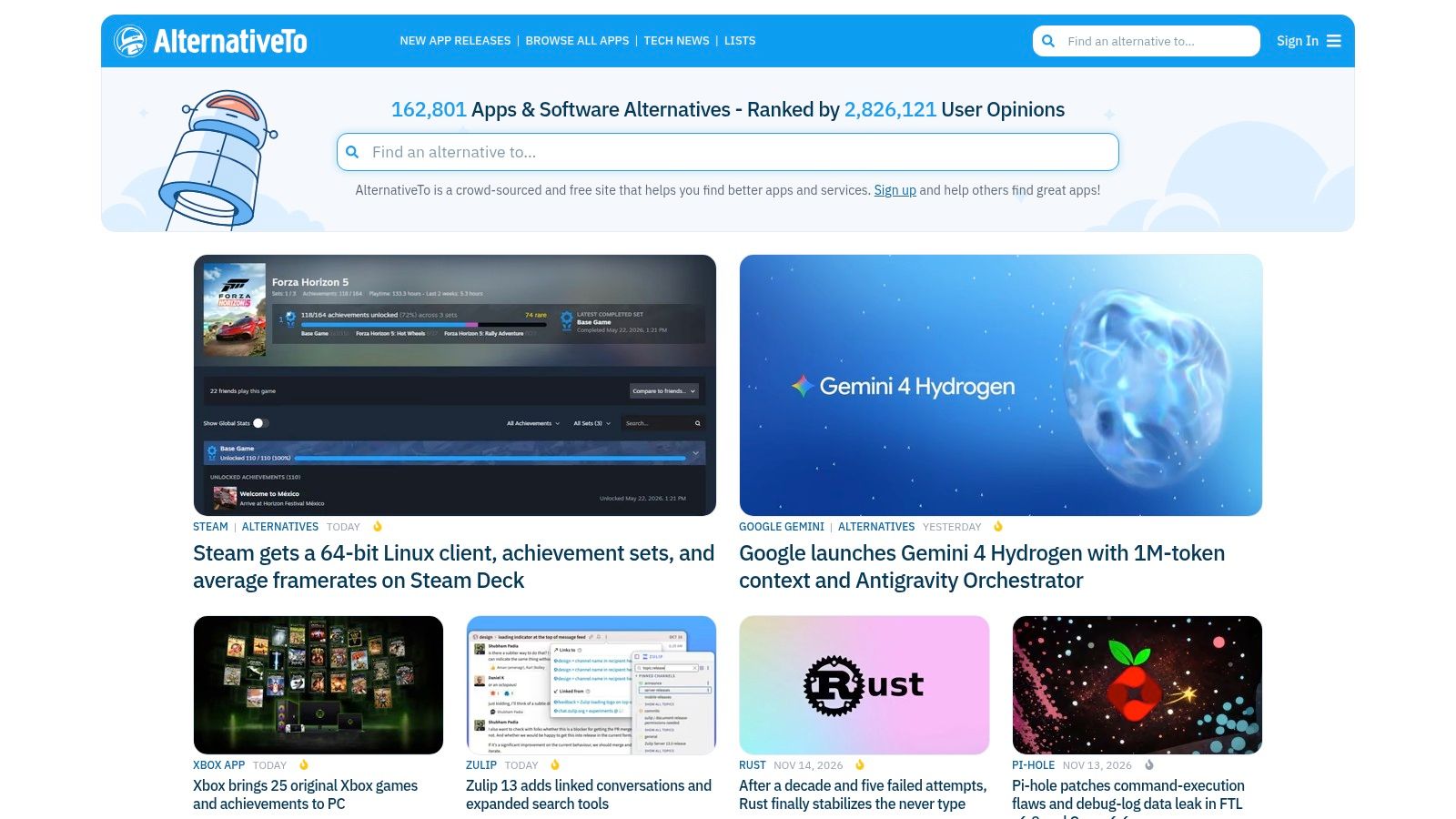
Product pages can carry a description, platforms, licensing, tags, and links. Developers can request access to maintain a listed app, which matters because outdated platform or pricing fields send switchers away. This is a discovery resource for desktop, web, and mobile software. It is not a launch-day promotion service, and it will not manufacture a crowd on the morning you ship.
A BrightLocal analysis of 1.9 million citations across 116,670 domains found that AI systems draw on Google Business Profile, major directories, industry sites, and business websites. The work is about local businesses, not SaaS, so do not borrow it as a ranking promise. It does support a narrower habit. Accurate, consistent listings are easier for an answer engine to repeat than a pile of contradictory blurbs. The same analysis identified 415 directories cited at least occasionally, with Google Business Profile representing 28.5% of observed citations.
Keep the record consistent
Use the same product name, URL, and feature categories you use everywhere else. If AlternativeTo says one price and your site says another, you created a conflict, not a citation. Listing and link attributes should be checked on the product page after you get developer access. I would invest time here when users can already name the app you replace. I would skip it when you cannot finish the sentence "people switch to us from."
7. Uneed
Uneed is a product-launch platform for makers and entrepreneurs. It mixes discovery with launch activity, so it behaves more like a campaign than a phone book. The overlap is indie makers, early-stage products, and people who browse new SaaS and other digital tools on purpose.
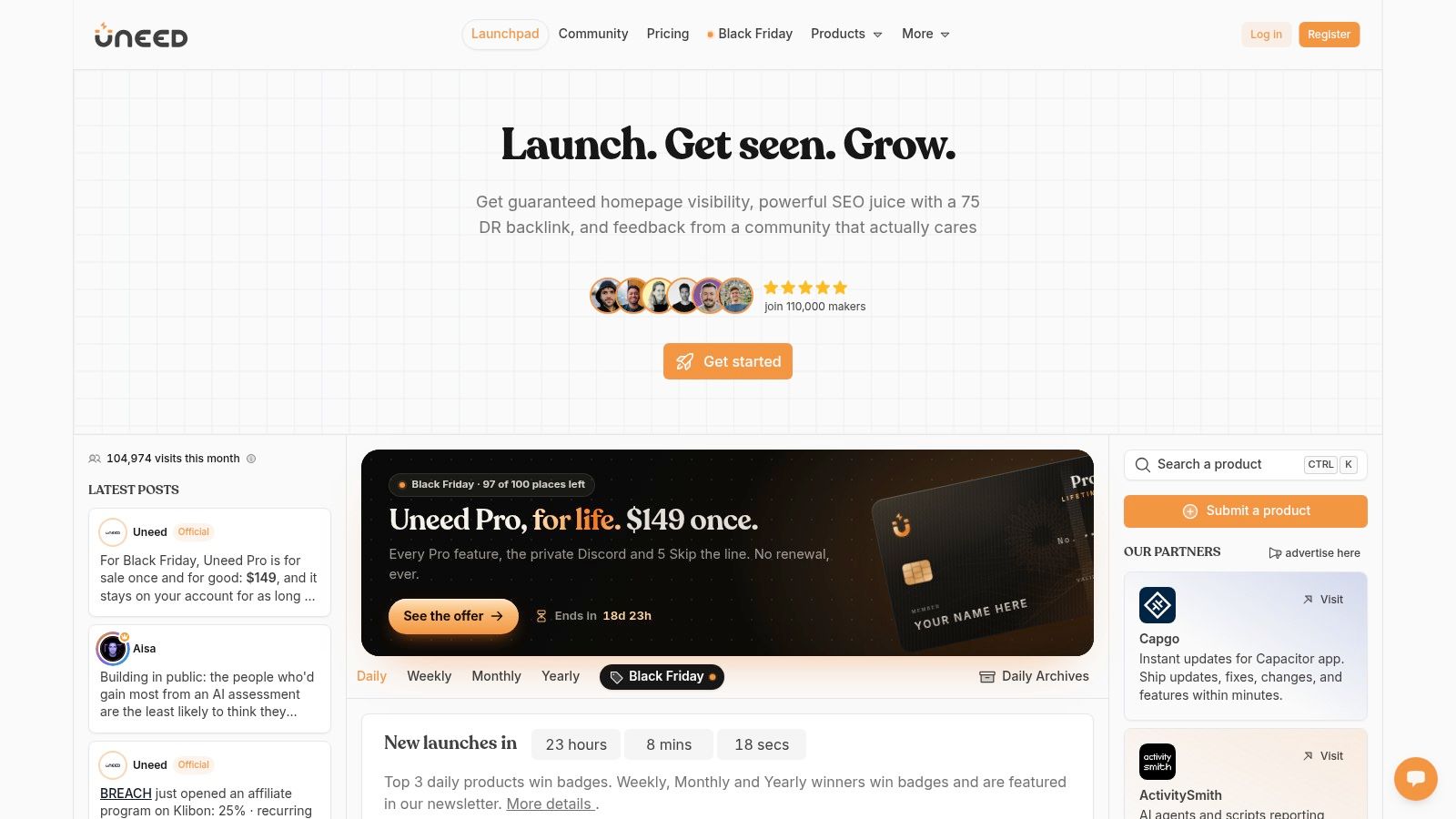
Plans can differ on timing and promotion. Some teams will be fine with a standard submission. Others will look at a paid option because they want a faster or more visible slot. Results still depend on whether that community cares about the product that week. A paid clock does not create interest.
Before you submit, open the current pricing page and the plan details. Confirm whether the plan you are buying includes a followed link, a nofollow link, or no special link promise at all. Link terms move. A screenshot from a Twitter thread is not a contract.
Prepare the launch: Write a short pitch, a real screenshot, and a URL that lands on the product rather than a coming-soon wall. Show up: Reply if the community comments. A silent launch wastes the slot. Report it: Referral sessions and signups beat a domain-rating claim in the recap you send your co-founder.
I like Uneed when you already have a launch narrative and you want another early-adopter room. I would not add it only to inflate a link spreadsheet. If the plan's link attribute is unclear, do not count the link.
8. SaaSLineup
SaaSLineup organizes software by business function, including marketing, analytics, productivity, AI, design, and operations. That structure suits a lot of SaaS products that can name the job they do. Submission does not require an account, and the submit page states plan differences, which is more transparent than a directory that hides the link rules in a checkout modal.
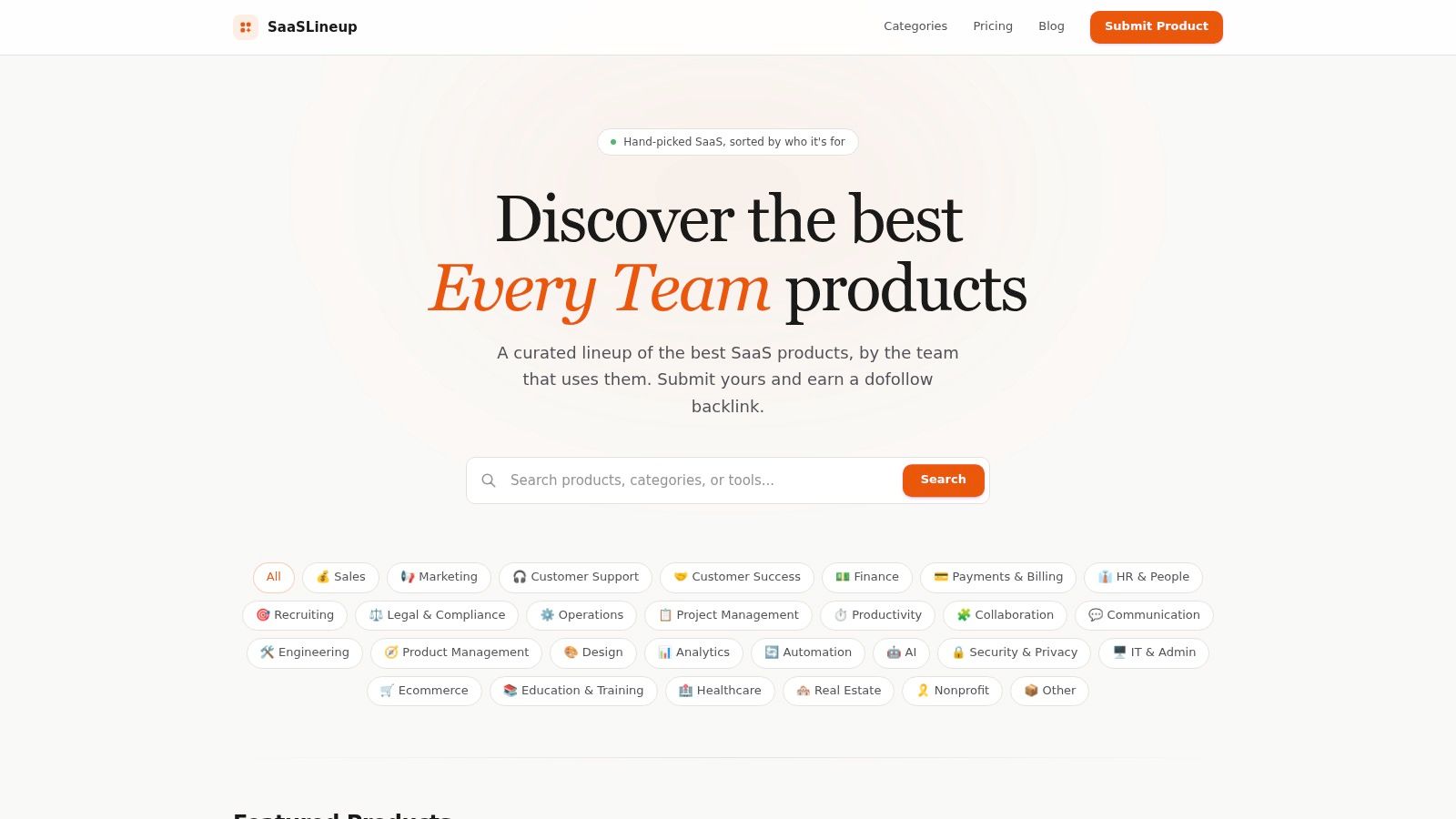
The free plan includes one dofollow link with a badge requirement. You add their badge to your site to get that link. Paid plans add featured placement and additional links. Read that trade carefully. A dofollow label is a technical attribute. It does not, by itself, establish ranking impact. The page still has to be crawled, indexed, and relevant to a real query.
The badge is the condition
Free path: One dofollow link, if you place the badge. Paid path: Featured placement and more links, at the prices printed on the submit page. Limit: Directory exposure can be modest. A badge on your homepage is a design and brand decision, not a free footnote.
If your site already carries a row of launch badges, one more may be cheap. If you are trying to keep the marketing site quiet, the free plan is not free. I would use the free plan only when the badge is acceptable and the category is an obvious fit. I would not buy extra links here to compensate for a thin product page on your own domain. Check the published link after it goes live, including whether it is sitewide, repeated, or sitting in a footer pattern you would rather not scale.
9. Microlaunch
Microlaunch is a startup launch platform with product submissions and campaign options. It suits indie founders who want a launch-oriented venue rather than another static directory profile. The submission process describes manual posting after pitch confirmation, so a human step sits between your form and the public page.
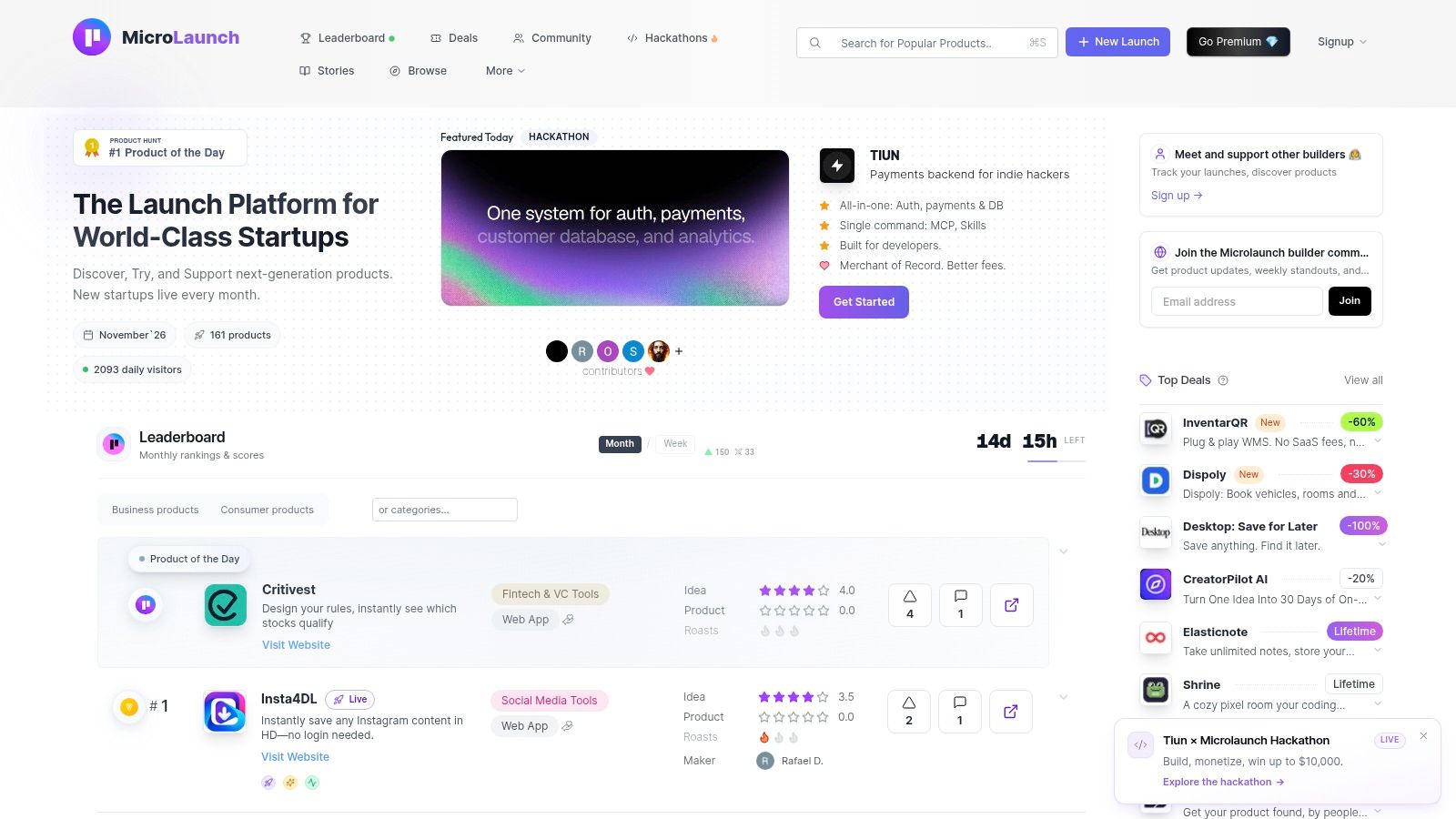
The current route might be a free listing or a paid campaign. Verify that before you invest the afternoon. Campaign-style promotion can structure a launch week. It can also turn into a fee for placement that your audience never sees. Visibility still depends on where the campaign sits and whether people respond.
Confirm deliverables: Ask which page goes live, how long it stays up, and what the link attribute is for the plan you picked. Write the pitch for a person: Manual review means a vague one-liner can stall you. Separate goals: A launch venue can bring makers. It does not replace a customer proof page.
I would shortlist Microlaunch when you want a small, launch-shaped room and you have time to confirm the plan in writing. I would walk away if the deliverable is "SEO backlinks" with no URL, no attribute, and no sample page. Early-stage products fit better than a mature suite that needs buyer reviews.
10. SaaSHub Submit
A free checklist of launch sites is easy to treat as a to-do list. SaaSHub Submit is a free research tool, separate from a SaaSHub product listing. It gathers submission destinations so you can plan a wider pass. You need a product submitted and verified on SaaSHub before the workflow opens. The tool does not place you on those other sites, and it does not promise a backlink from any of them. Each destination still sets its own rules, review, audience, and link policy.
Before you fill a form, judge what that destination delivers: the link attribute, whether the slot is free, whether the readers are buyers or early adopters, and whether any backlink is conditional. Some entries send discovery traffic to makers and almost no SEO value. Others are directory pages that might pass a link and never send a visitor. Match the site to the goal, then leave the rest unchecked.
How to use the checklist without spamming it
Pick a handful: Choose destinations whose readers match buyers or early adopters, then stop. Rewrite the blurb: Identical descriptions and templated anchors across many forms look mechanical. Track domains: Count newly discovered referring domains, indexed linking pages, and referral sessions. Ignore a score that no one on the destination site controls.
Independent ranking research from Backlinko indicates that referring-domain diversity is more informative than raw backlink volume. Top-ranking pages tend to receive links from more unique websites, and the number of linking domains shows a substantial association with rankings. That is a benchmark, not a causal claim that a checklist of directories produced the rankings. Content, intent, internal links, authority, and brand demand still sit in the mix.
I would use a list like this as a map. A free checklist cuts search time. It also makes volume tempting, and volume is the failure mode. If a destination is dead, off-niche, or unwilling to show the link attribute, leave it unchecked.
How the 10 Submission Sites Compare on Cost, Audience, and Link Terms
A listing can bring discovery without providing a useful SEO link. Compare each site by who it reaches, what it costs, and whether its link is conditional.
| Item | Best For | Free Listing | Paid Option | Link Notes |
|---|---|---|---|---|
| SubmitMySaas | SaaS and tech launches seeking discovery and feedback | Free Launch; a dofollow backlink is conditional on ranking in the weekly top 3 and displaying the badge | Premium Launch includes priority access and placement, homepage featuring, and a guaranteed high-authority dofollow backlink; advertising costs $79 per product for a month | The free backlink depends on both the ranking and badge conditions. |
| Product Hunt | Launches seeking early-adopter feedback and discovery | Free to launch | Optional paid advertising, separate from rankings | Homepage featuring is not guaranteed. |
| SaaSHub | Released software seeking directory and alternatives discovery | Free submission, subject to approval | Paid featured placement | No particular search ranking is promised. |
| BetaList | Early-stage startups seeking potential early users | Submissions are paid | Paid submission; fee shown in the submission flow | Rejected submissions are eligible for a full refund. |
| G2 | Established B2B SaaS seeking buyer research and reviews | Free profile access, subject to eligibility | Paid vendor marketing and profile features | Focuses on buyer discovery and reputation; backlink benefits are not guaranteed. |
| AlternativeTo | Established software with clear alternatives and use cases | Listing terms are not stated here | Pricing is not stated here | Check the product-page link attributes. |
| Uneed | Makers seeking launch discovery and feedback | Plans and terms vary | Paid plans may offer faster placement or promotion | Check the plan's pricing and link attributes before submitting. |
| SaaSLineup | SaaS products across business categories | One dofollow link with a badge requirement | Featured placement and additional links | A dofollow label does not establish SEO impact. |
| Microlaunch | Indie and early-stage product launches | Free listing availability varies | Campaign-style promotion options | Check the plan's deliverables and link attributes. |
| SaaSHub Submit | Founders researching directories and communities | Free research tool, not a listing | No paid option stated | Lists 110 destinations; access to the workflow requires an approved and verified SaaSHub product. |
Treat launch exposure, buyer research, and backlink terms as separate outcomes. Product Hunt and launch directories are oriented toward discovery and feedback; review and alternatives platforms are more suited to buyer research. A dofollow link can still be conditional, as with SubmitMySaas Free Launch, or require a badge, as with SaaSLineup. Check the specific terms before choosing a site for SEO value.
Build a Link Profile That Holds Up Over Time
Pick two or three SEO backlinks submission sites that match the people you need. A pre-launch tool wants early adopters on a launch platform. A shipped B2B product wants buyers on a review or alternatives site. Submitting to all ten because a list said "high authority" is how teams collect pages nobody visits.
Verify every link on the live page. Look at the rel value, the anchor, and whether the URL is the canonical product domain. A plan named "dofollow" in a checkout screen can still render as nofollow, sponsored, or a redirect chain. If the free path requires a badge or a weekly rank, write that condition into your tracker before you celebrate the link. On our Free Launch, a dofollow backlink applies only if the product ranks in the top 3 weekly and displays the SubmitMySaas badge on its site. Confirm that before you count the link. Premium is a different offer, and advertising a product costs $79 per product for a month, with skip-the-free-queue priority, priority weekly placement, featured homepage placement, and a guaranteed high-authority dofollow backlink on Premium Launch. Those are commercial terms, not a ranking forecast.
Google's spam policies separate ordinary links from links created mainly to manipulate rankings. The policy calls out buying or selling links for ranking purposes, excessive reciprocal exchanges, automated link creation, and optimized anchor text dropped into sponsored or guest content. Paid placements should use rel="sponsored". Forum and comment links fit rel="ugc". rel="nofollow" is there when a site does not want Google to associate it with the destination. Sites that violate the policies may rank lower or disappear from results. When spam systems neutralize bad links, the ranking benefit those links once gave is lost, and it may not come back.
That is why bulk submission to low-quality directories adds risk without adding a durable asset. A batch of identical blurbs, repeated sitewide links, and anchors stuffed with your main keyword is a pattern, not a portfolio. Keep the name, URL, description, pricing claims, and feature categories consistent with the product you sell today. An outdated listing is a second source of truth, and it can contradict you in search and in conversations with buyers.
Measure the work at the domain and the landing page. Watch newly discovered referring domains, whether the linking URL is indexed, referral sessions, branded-search impressions, assisted conversions, and non-branded rankings against a baseline you set before the submissions. Give it a defined window. A launch week and a quiet month tell different stories. Do not let a domain-rating column replace those numbers.
A link you cannot find in a browser, on an indexed page, from a site a real person might open, is not part of the profile yet.
Digital PR, customer stories, and pages you control still do the heavy lifting. Directories are a supporting shelf. Use them when the audience is real, the link rules are visible, and you can explain the page to a teammate without hand-waving. Skip them when the pitch is a pile of links, a guaranteed position, or a package that will not show you the URL.
If you are lining up a launch and you want makers to see the product while you keep the link story honest, start with a single relevant submission, watch the live page, and only then decide whether a second site earns a place on the list.
SubmitMySaas is where makers submit a SaaS, AI, productivity, marketing, or design launch for daily features, trending lists, and monthly roundups, plus a badge and 35+ DR backlinks meant to support visibility and credibility. If you are choosing SEO backlinks submission sites for a real release, not a bulk blast, put the product in front of people who are already looking for new tools. Visit SubmitMySaas and submit the project when the product, the pitch, and the badge decision are ready.