The 12 Best Competitor Analysis Tools for SaaS Founders in 2026
Discover the 12 best competitor analysis tools to gain a strategic edge. Compare features, pricing, and use cases for SEO, content, and market research.

In the crowded SaaS landscape, understanding your competitors isn't just a good idea; it's a fundamental requirement for survival and growth. Without a clear view of their strategies, product features, and market positioning, you're flying blind. The right tools transform guesswork into a strategic advantage, revealing opportunities to differentiate your product, refine your marketing, and ultimately win over customers. This guide cuts through the noise to rank and review the 12 best competitor analysis tools available today, breaking down which platform is best for specific tasks, from uncovering SEO gaps to tracking technology stacks.
We'll explore how to choose the right solution for your stage and budget, ensuring you invest in insights, not just data. To truly find your edge, leveraging robust data is paramount; many modern competitor analysis tools integrate advanced functionalities like AI-powered data extraction engines to gather crucial insights efficiently.
This comprehensive resource is designed for SaaS founders, marketers, and product teams who need actionable intelligence, not just a list of names. Each entry includes:
- A concise summary of what the tool does best.
- Key features and ideal use-case scenarios.
- Honest pros and cons based on real-world application.
- Current pricing information to help you budget.
- Screenshots and a direct link to explore the platform yourself.
Our goal is to help you move beyond surface-level tracking and build a repeatable process for competitive intelligence. Whether you're a startup preparing for launch or an established company defending its market share, the right tool is your co-pilot. Let's dive into the platforms that can give you that critical edge.
1. Semrush
Semrush stands out as a powerful, all-in-one digital marketing suite, making it one of the best competitor analysis tools for teams that need a single source of truth for SEO, PPC, and market research. Its primary strength lies in its comprehensive toolkit that allows you to deconstruct a competitor's entire online strategy from multiple angles.
The platform excels at direct domain-vs-domain comparisons, instantly revealing keyword gaps, backlink profiles, and estimated traffic value. This holistic view is invaluable for benchmarking your performance. Beyond simply identifying competitors, tools like Semrush are indispensable for effective keyword research that actually drives results, uncovering both competitor strategies and untapped opportunities. For SaaS founders, the Market Explorer and Traffic Analytics modules provide a high-level view of market share and audience overlap, crucial for strategic positioning.
Key Features & Use Cases
- Keyword & Domain Analytics: Pinpoint the exact organic and paid keywords your rivals rank for and discover new terms you've overlooked.
- Backlink Gap Analysis: Find websites linking to your competitors but not to you, creating a targeted list for outreach campaigns.
- Traffic Analytics: Estimate any website's traffic sources, audience demographics, and on-site engagement to model their customer acquisition strategy.
- AI-Assisted Content Tools: Use ContentShake AI to generate content ideas and briefs based on top-ranking competitor articles.
| Best For | Pricing | Learning Curve |
|---|---|---|
| Teams needing an integrated SEO and market suite | Starts at $129.95/month | Moderate to High |
Pros:
- Reduces the need for multiple specialized tools.
- Extensive data for deep-dive organic and paid research.
- Strong team management and integration features.
Cons:
- Pricing can become expensive with add-ons.
- The sheer number of features can be overwhelming for new users.
Website: https://semrush.com
2. Ahrefs
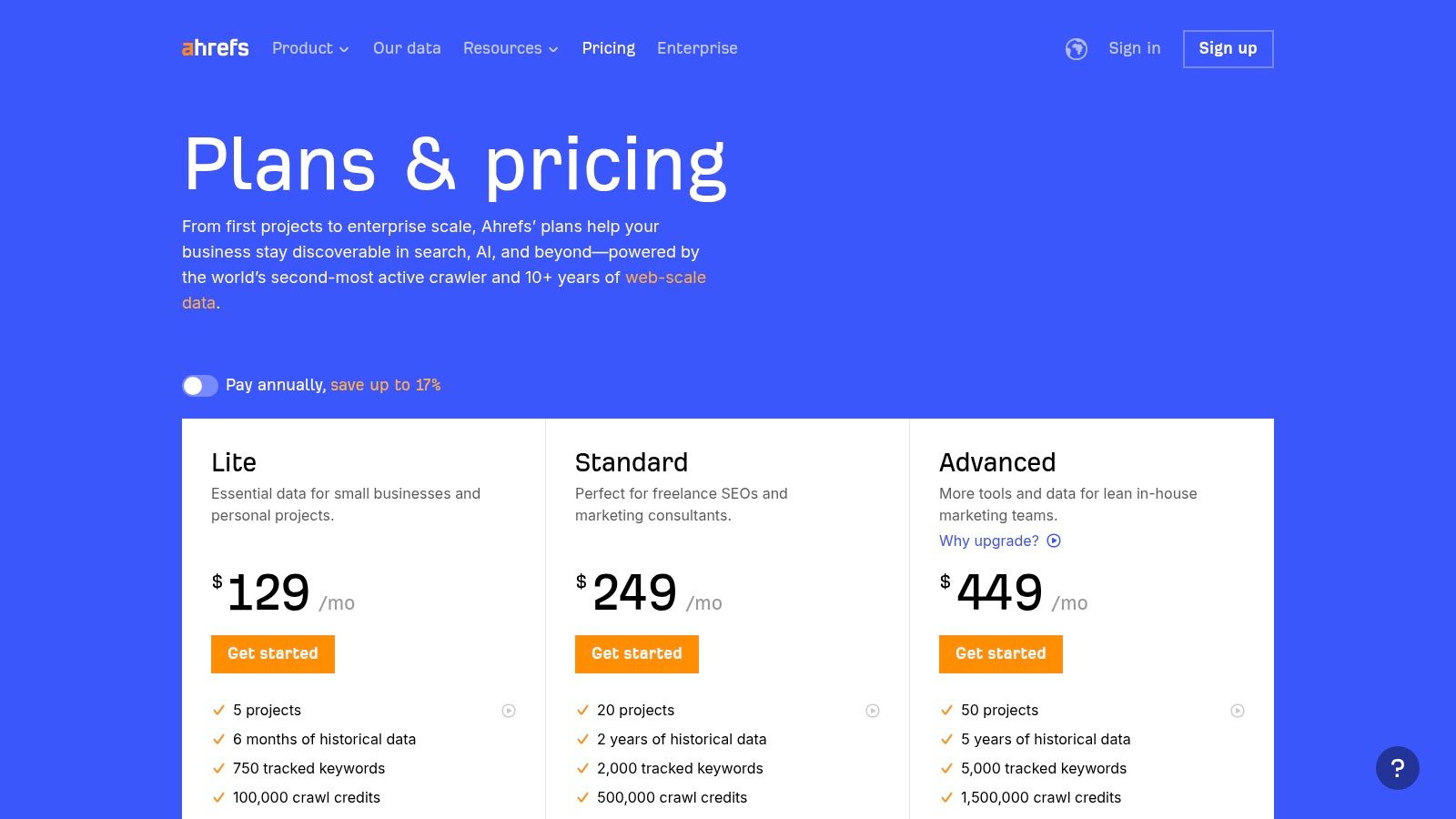
Ahrefs is renowned for its industry-leading backlink index, making it one of the best competitor analysis tools for brands focused on link-building and content authority. Its core strength is providing granular, actionable data on where your competitors get their authority and traffic from, allowing you to reverse-engineer their most successful SEO and content marketing strategies.
The platform's Site Explorer is exceptional for dissecting a competitor’s domain, revealing top-performing pages, organic keywords, and a complete backlink profile with incredible speed and clarity. For SaaS marketers, this means you can quickly identify the exact content formats and link-building tactics that resonate in your niche. The interface is clean and fast, prioritizing data visualization that helps you spot trends and opportunities without getting bogged down in complexity.
Key Features & Use Cases
- Site Explorer: Get a complete overview of any competitor's organic traffic, backlink profile, paid keywords, and top pages in one dashboard.
- Content Explorer: Discover the most shared and linked-to content for any topic, helping you ideate articles that have a proven track record of success.
- Keywords Explorer: Analyze keyword difficulty and traffic potential with industry-trusted metrics to find keyword gaps your competitors are missing.
- Rank Tracker & Site Audit: Monitor your keyword rankings against competitors and run technical SEO audits to find and fix on-site issues.
| Best For | Pricing | Learning Curve |
|---|---|---|
| SEO-focused teams prioritizing link & content data | Starts at $99/month | Moderate |
Pros:
- Strong backlink and keyword datasets trusted in the industry.
- Clear, fast interface for deep competitive analysis.
- Excellent for content ideation and link-building strategies.
Cons:
- Pricing varies by region/currency and can increase with higher limits.
- Daily rank updates may require add-ons on lower tiers.
Website: https://ahrefs.com/pricing
3. Similarweb
Similarweb offers a powerful digital intelligence platform that specializes in high-level market and competitor analysis. Its core strength is providing a top-down view of the digital landscape, making it one of the best competitor analysis tools for understanding market share, traffic distribution, and audience behavior across entire industries, not just head-to-head domains.
The platform excels at benchmarking your performance against the broader market by analyzing traffic sources, engagement metrics, and audience demographics. For founders and marketers, this is invaluable for sizing a market, identifying key acquisition channels driving a category, and understanding the overall digital footprint of major players. Similarweb's ability to reveal a competitor's channel mix, such as their reliance on direct, search, or social traffic, provides a strategic roadmap for allocating your own marketing resources.
Key Features & Use Cases
- Competitive Intelligence: Analyze any website's traffic, engagement rates, audience geography, and demographics to model their digital strategy.
- Channel Mix Benchmarking: See the exact percentage of traffic a competitor gets from organic search, paid ads, social media, and referrals.
- Market & Category Analysis: Zoom out to see share-of-voice and trends across an entire industry or product category, not just specific domains.
- Historical Data & Alerts: Track competitor performance and market shifts over time to identify emerging threats or opportunities.
| Best For | Pricing | Learning Curve |
|---|---|---|
| High-level market share and traffic analysis | Packages from $125/month | Low to Moderate |
Pros:
- Excellent for top-down market and category-level insights.
- Strong at visualizing traffic sources and channel mix.
- Intuitive interface for investor-style competitive views.
Cons:
- Lower-tier plans have limited historical data access.
- Granular keyword and backlink data require higher-tier plans.
Website: https://www.similarweb.com/packages
4. SpyFu
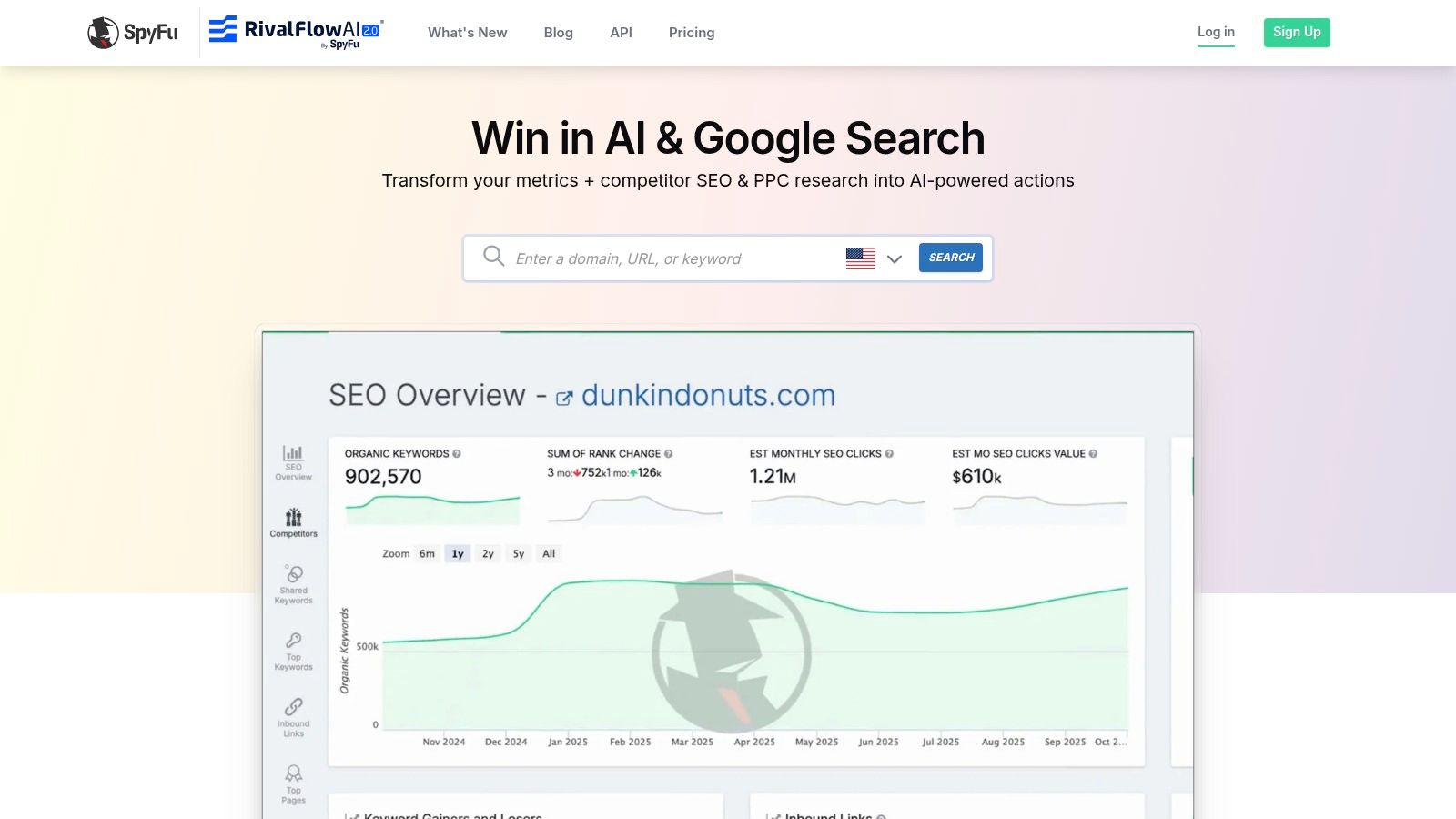
SpyFu carves out its niche by focusing intensely on the historical advertising and keyword data of your competitors, making it one of the best competitor analysis tools for paid search strategists and budget-conscious startups. Its core strength is its massive 17-year database, allowing you to effectively time-travel and see every Google Ad a competitor has run and every keyword they've ranked for. This makes it exceptionally valuable for reverse-engineering successful campaigns.
The platform is designed for actionable insights, quickly revealing a competitor’s most profitable keywords and ad copy. Instead of offering a broad suite of marketing tools, SpyFu hones in on the specific task of PPC and SEO reconnaissance. For teams looking to understand the evolution of a competitor's paid strategy or identify long-standing keyword targets, this historical perspective provides a unique and powerful advantage without the enterprise-level price tag.
Key Features & Use Cases
- PPC Competitor Research: Uncover your rivals' complete Google Ads history, including ad variations, spend estimates, and keyword groups.
- SEO Keyword Insights: Identify the core organic keywords driving traffic to competitors and track their ranking history over time.
- Domain & URL Comparisons: Directly compare your SEO or PPC footprint against multiple competitors to spot strategic gaps and opportunities.
- AI Content Helpers: Utilize AI-powered tools to generate content briefs and ideas based on competitor keyword and content performance.
| Best For | Pricing | Learning Curve |
|---|---|---|
| Startups and SMBs focused on PPC/SEO research | Starts at $39/month | Low to Moderate |
Pros:
- Affordable pricing makes it accessible for smaller teams.
- Powerful historical data for long-term campaign analysis.
- Strong focus on actionable PPC and keyword intelligence.
Cons:
- Less comprehensive than all-in-one market intelligence suites.
- The interface can feel dense and may require some exploration to master.
Website: https://www.spyfu.com
5. BuzzSumo
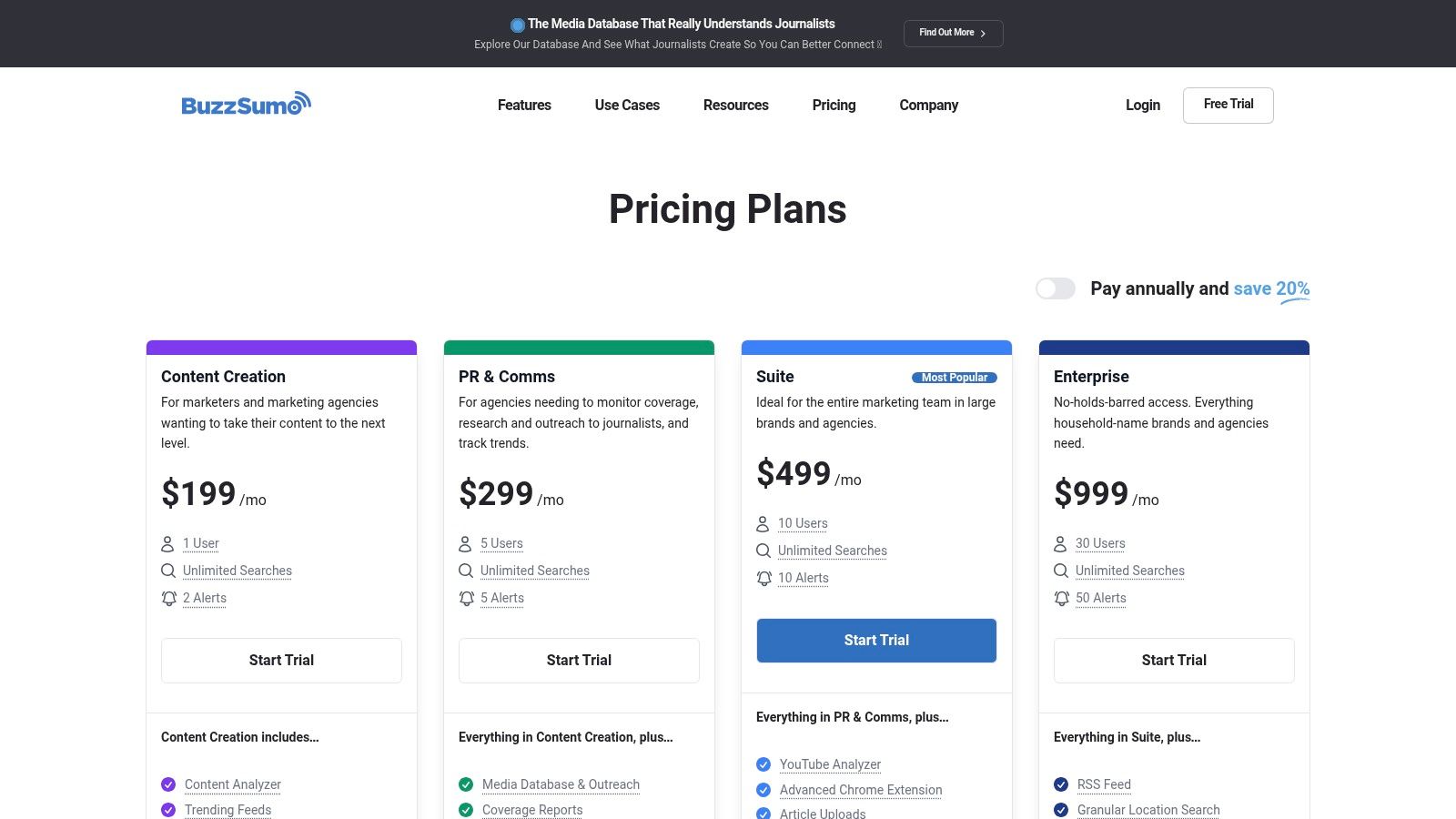
BuzzSumo operates as a specialized intelligence platform focused on content and PR, making it one of the best competitor analysis tools for understanding what resonates with audiences. Its core value lies in quickly identifying top-performing content across any topic or competitor, allowing you to reverse-engineer their content marketing and media strategies. By analyzing what gets shared and linked to, you can benchmark your own efforts and spot content gaps.
The platform moves beyond simple keyword analysis, offering insights into the formats, headlines, and networks that drive engagement for your rivals. For SaaS companies, this is invaluable for planning a content calendar that directly challenges a competitor's narrative or capitalizes on trending topics they've missed. It effectively answers the question, "What content should we create to capture attention in our market?"
Key Features & Use Cases
- Content Analyzer: Discover the most shared and linked-to content for any competitor domain or keyword to identify successful formats and topics.
- Question & Topical Research: Find popular questions people are asking on forums and Q&A sites related to your niche, fueling your FAQ and blog post ideas.
- Mention & Backlink Alerts: Set up real-time alerts to monitor when a competitor is mentioned in the media or acquires a new backlink, enabling rapid response.
- Journalist & Influencer Discovery: Identify key authors and influencers covering your competitors to build targeted outreach lists for your own PR campaigns.
| Best For | Pricing | Learning Curve |
|---|---|---|
| Content marketers and PR teams | Starts at $199/month | Low to Moderate |
Pros:
- Excellent for fast competitor content discovery and trend spotting.
- Powerful monitoring features for brand and competitor mentions.
- Scales well for PR and content teams with multi-seat options.
Cons:
- Entry-level pricing is higher than more lightweight tools.
- Focus is primarily on content and PR, not a full SEO suite.
- Refunds are generally not offered on active subscriptions.
Website: https://buzzsumo.com
6. BuiltWith
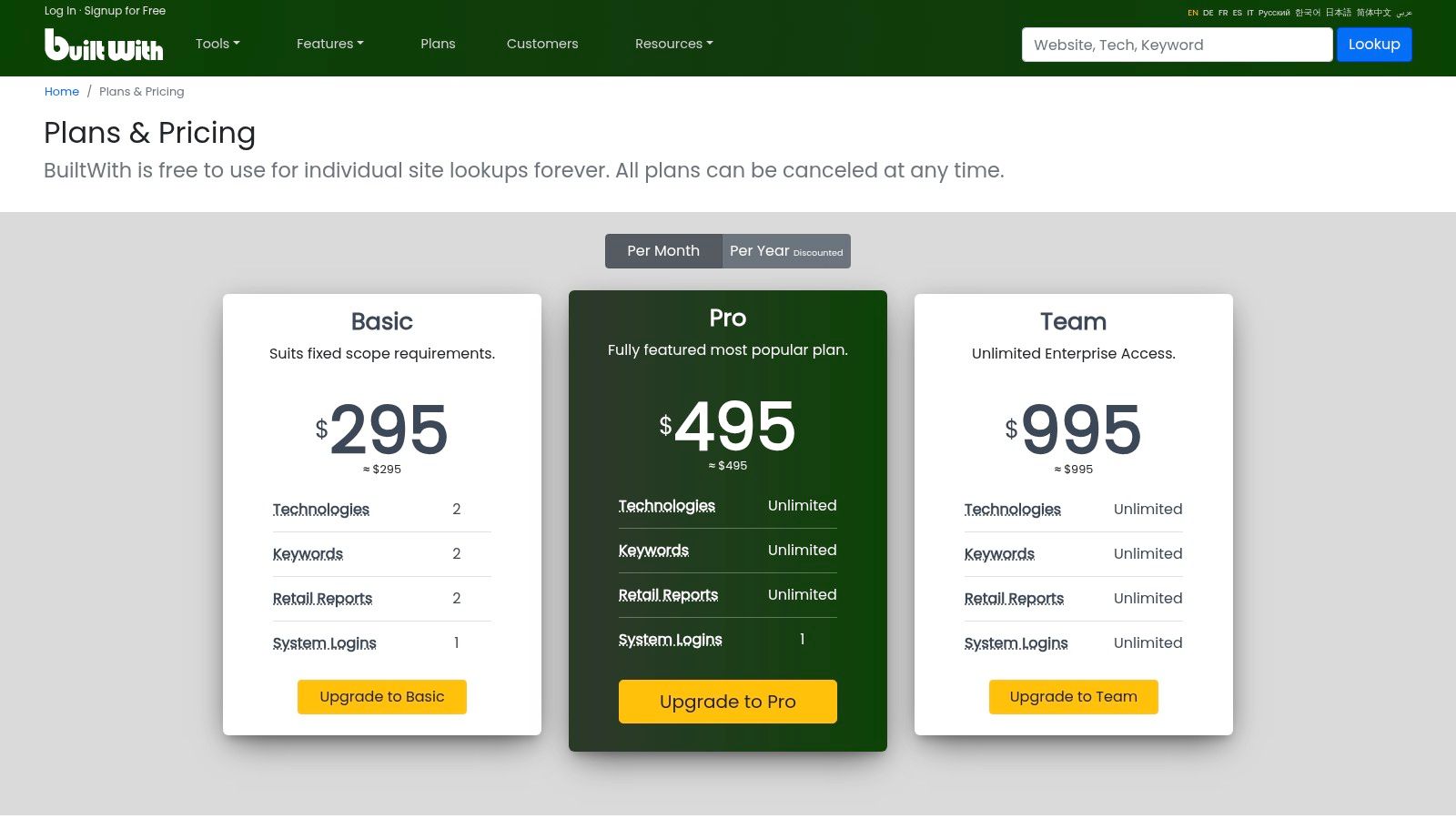
BuiltWith offers a unique angle on competitive analysis by focusing entirely on the technology stack powering a website. It’s less about keywords and backlinks and more about deconstructing the technical and operational infrastructure of your competitors. This makes it one of the best competitor analysis tools for SaaS companies, developers, and sales teams who need to understand what software, plugins, and frameworks their rivals rely on to run their business.
The platform's power lies in its massive database, which tracks the adoption of thousands of web technologies across millions of active websites. You can instantly see if a competitor is using HubSpot for marketing automation, Stripe for payments, or Intercom for customer support. For B2B SaaS companies, this data is a goldmine for identifying qualified leads who already use complementary technologies, making it an invaluable tool for strategic go-to-market planning.
Key Features & Use Cases
- Technology Lookups: Identify the complete technology profile of any website, including analytics, advertising, CRM, and e-commerce platforms.
- Market Share & Trends: Analyze technology adoption trends to see which tools are gaining or losing market share within a specific vertical.
- Lead Generation: Build targeted lists of websites based on the specific technologies they use, perfect for sales and partnership outreach.
- "Switchers" Alerts: Get notified when a competitor or prospect adds or removes a key technology, signaling a potential opportunity or threat.
| Best For | Pricing | Learning Curve |
|---|---|---|
| SaaS sales teams and tech-focused marketers | Starts at $295/month (Basic Plan) | Low to Moderate |
Pros:
- Unparalleled insight into a competitor's technology stack.
- Excellent for building highly targeted lead lists for B2B SaaS.
- Provides clear signals on market trends and tech adoption rates.
Cons:
- Pricing is premium, geared more towards teams than solo users.
- Highly specialized; doesn't cover SEO, PPC, or content analysis.
Website: https://builtwith.com/plans
7. Owler
Owler operates as a crowdsourced competitive intelligence platform, offering a unique approach to tracking both public and private companies. Its core strength lies in its community-driven data model, which provides real-time news alerts, funding updates, and leadership changes that are often harder to find through traditional SEO or market research tools. This makes it one of the best competitor analysis tools for sales, M&A, and strategic teams focused on company-level signals rather than just digital marketing performance.
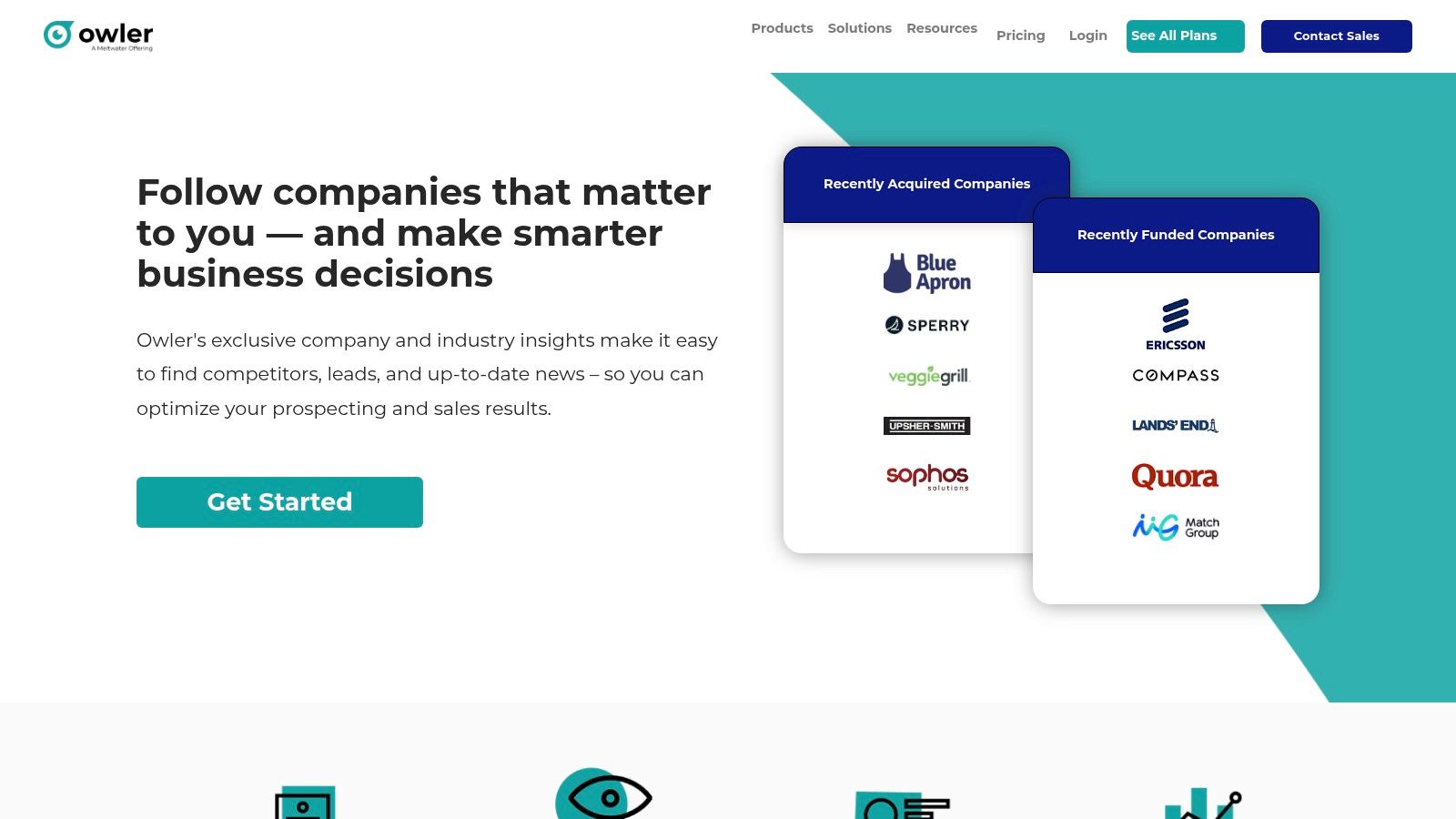
The platform is particularly valuable for building detailed company profiles, complete with revenue estimates, employee counts, and a "competitor graph" that visually maps out direct and indirect rivals. For founders and investors, setting up a watchlist on Owler provides a steady stream of curated intelligence, ensuring you never miss a competitor's key funding announcement, acquisition, or major product launch. The daily or weekly email digests make it easy to stay informed without constantly logging into a complex dashboard.
Key Features & Use Cases
- Competitor Graph: Visually discover a company's closest competitors, partners, and customers to understand the broader market ecosystem.
- Real-Time News & Alerts: Set up notifications for specific companies to track funding rounds, acquisitions, leadership changes, and major news mentions.
- Company Profiles: Access detailed summaries of public and private companies, including estimated revenue, employee numbers, and top executives.
- Chrome Extension: Get quick company insights directly in your browser while visiting a prospect's or competitor's website.
| Best For | Pricing | Learning Curve |
|---|---|---|
| Sales and strategy teams tracking private companies | Free plan available; Pro at $49/mo | Low |
Pros:
- Excellent source of intelligence on private companies that are hard to track elsewhere.
- Simple and effective alert system keeps you updated with minimal effort.
- The free community tier provides significant value for basic monitoring.
Cons:
- Data is crowdsourced and can sometimes lack the precision of financial data providers.
- Deep integrations (e.g., Salesforce, Slack) are locked behind higher-priced tiers.
Website: https://www.owler.com/
8. Crayon
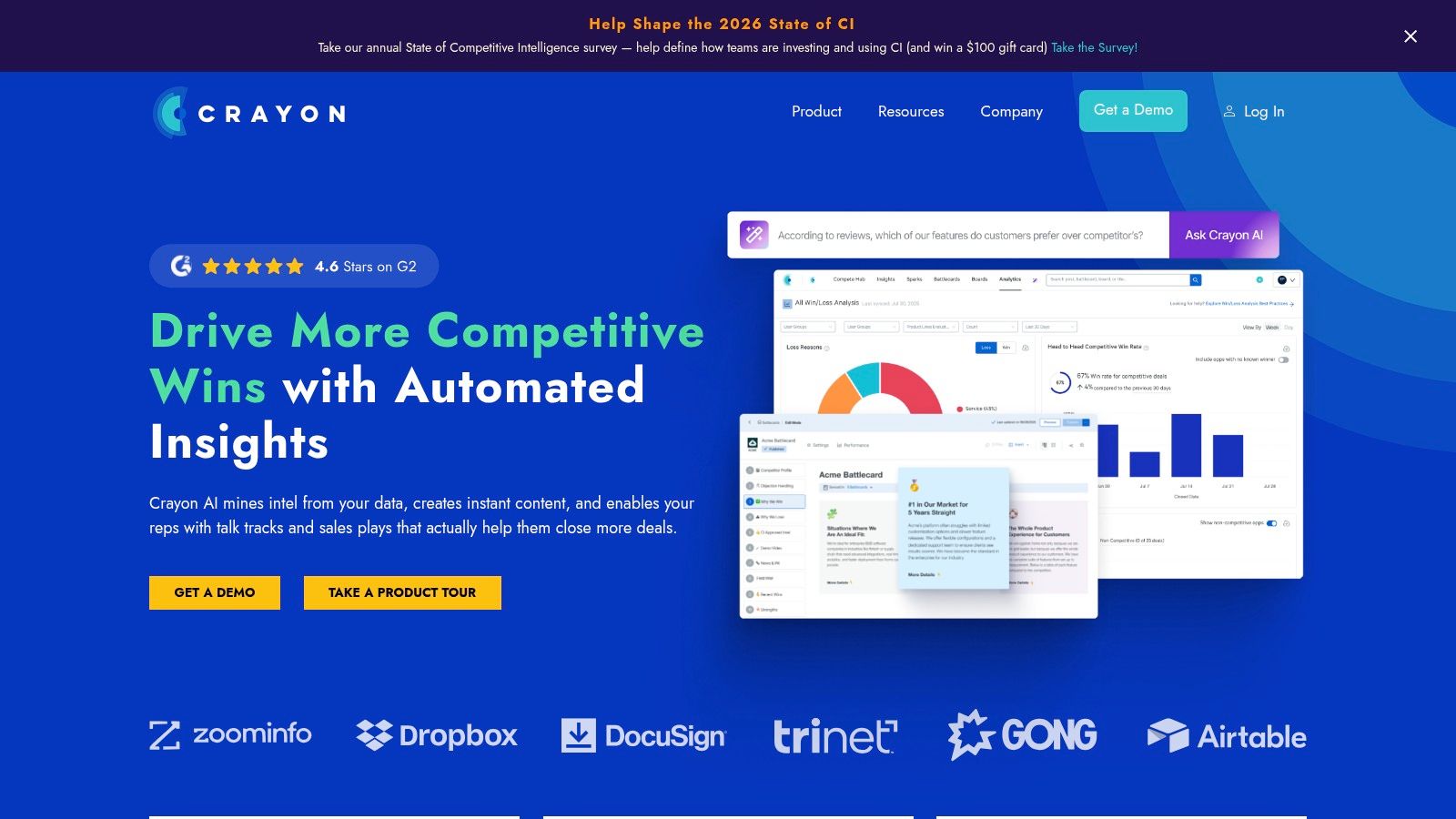
Crayon shifts the focus of competitor analysis from broad market research to actionable competitive intelligence (CI) designed for sales and marketing teams. It stands out as a purpose-built platform for centralizing, automating, and distributing intel that directly impacts revenue. Instead of just monitoring SEO keywords, Crayon tracks a competitor's entire digital footprint, including website changes, pricing updates, and customer reviews.
This specialization makes it one of the best competitor analysis tools for organizations that need to equip their sales teams with timely, relevant information to win deals. The platform excels at creating and managing dynamic battlecards, which are crucial for a strong SaaS product marketing strategy that empowers sellers. Crayon's core value is transforming raw competitive data into organized insights that drive measurable win-rate improvements.
Key Features & Use Cases
- Automated Intelligence Collection: Monitors over 100 data types across the web to capture competitor signals in real-time.
- Sales Battlecards: Create, manage, and distribute dynamic battlecards that integrate directly into your sales team’s workflow (e.g., in Salesforce or Slack).
- Centralized CI Hub: Acts as a single source of truth for all competitive intelligence, making insights easily accessible to product, marketing, and sales teams.
- Win/Loss Analysis Integration: Enriches competitive assets by connecting intel to actual sales outcomes, highlighting what works in competitive situations.
| Best For | Pricing | Learning Curve |
|---|---|---|
| Product marketing and sales enablement teams | By Quote (Sales-led process) | Moderate |
Pros:
- Purpose-built for competitive intelligence and sales enablement.
- Focuses on the revenue impact of CI, not just data collection.
- Strong automation reduces manual research and tracking.
Cons:
- No public pricing requires engaging with a sales team.
- Requires a commitment to building a formal CI program for best ROI.
Website: https://www.crayon.co/
9. Klue
Klue shifts the focus from raw data collection to actionable competitive enablement, making it one of the best competitor analysis tools for enterprise sales and product marketing teams. Its core strength is not just gathering intelligence but packaging and distributing it in a format that salespeople can actually use in the moment, primarily through dynamic sales battlecards.
The platform is designed to close the gap between insight and action. While many tools provide data, Klue focuses on curating that intelligence, using AI to filter millions of sources for relevant updates, and embedding the finished insights directly into the daily workflows of sales teams via Slack, Salesforce, and email. This operational focus ensures that competitive intelligence doesn’t just sit in a dashboard but actively influences win rates and revenue.
Key Features & Use Cases
- AI-Powered Intel Curation: Automatically collects and prioritizes competitive intel from millions of sources, reducing manual research time.
- Dynamic Sales Battlecards: Builds and distributes up-to-date battlecards that are accessible directly within a salesperson's existing tools (CRM, email, Slack).
- Win-Loss Analysis Integration: Connects competitive intelligence to actual sales outcomes, providing clear reporting on program impact and revenue.
- Multi-Team Coverage: Scales to support complex organizations with multiple products and a wide range of competitors, ensuring consistent messaging.
| Best For | Pricing | Learning Curve |
|---|---|---|
| Enterprise sales and marketing teams | Custom; requires sales demo | Moderate |
Pros:
- Deep focus on sales consumption and enablement.
- Scales effectively for large, multi-team organizations.
- Strong integrations embed intel directly into sales workflows.
Cons:
- Pricing is not public and requires a sales consultation.
- Most valuable for companies with mature sales enablement processes.
Website: https://klue.com/
10. Crunchbase
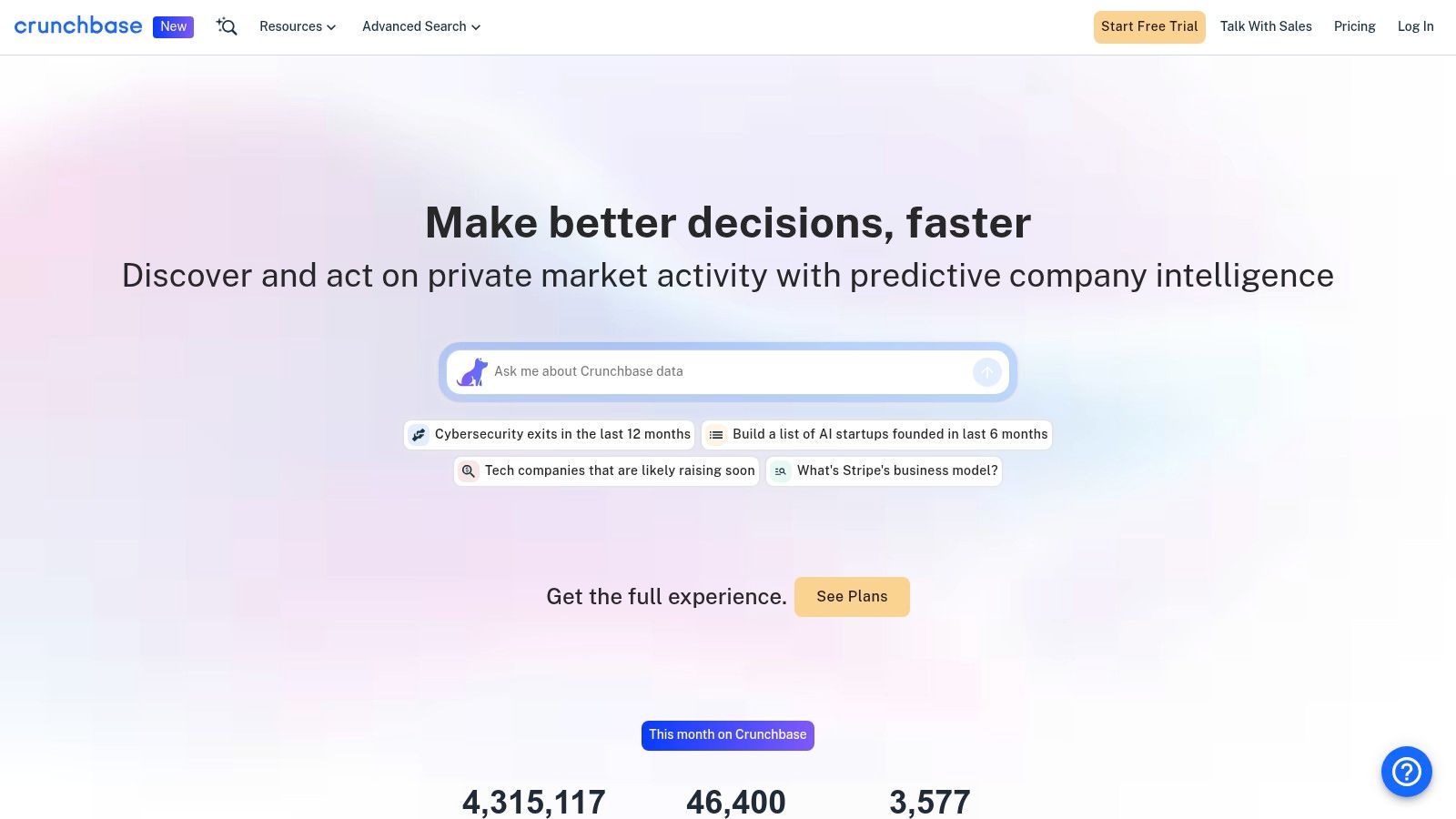
Crunchbase shifts the focus from digital marketing signals to the foundational business and financial data of companies, particularly within the startup and venture capital ecosystem. It serves as a powerful database for competitor landscaping, allowing you to track funding rounds, identify investors, and understand the M&A landscape. Its core strength is providing business-level intelligence that marketing-focused tools often miss, making it one of the best competitor analysis tools for strategic planning and market positioning.
For SaaS founders, Crunchbase is invaluable for building competitor sets based on funding stage, industry, and key personnel. The platform's alert system ensures you are immediately notified of significant events like a competitor's new funding round, giving you a crucial heads-up on their potential to scale marketing or product development. This financial context is essential for a complete competitive picture.
Key Features & Use Cases
- Company & Funding Data: Access detailed profiles on companies, including their funding history, investors, leadership team, and acquisition details.
- Advanced Search & Lists: Use granular filters to build and save dynamic lists of competitors, potential partners, or acquisition targets.
- Custom Alerts: Set up notifications for key signals, such as new funding rounds or leadership changes at companies you are tracking.
- Market Trend Analysis: Identify emerging industries, active investors, and overall market momentum to inform your business strategy.
| Best For | Pricing | Learning Curve |
|---|---|---|
| Founders tracking venture and funding landscapes | Starts at $49/user/month (Pro) | Low |
Pros:
- Strong coverage of startups and venture funding data.
- Easy to assemble and monitor competitor sets with alerts.
- Excellent for high-level strategic and financial analysis.
Cons:
- Less useful for mature private firms with few public signals.
- Free tier is limited; key features require a Pro subscription.
Website: https://www.crunchbase.com/
11. Apptopia
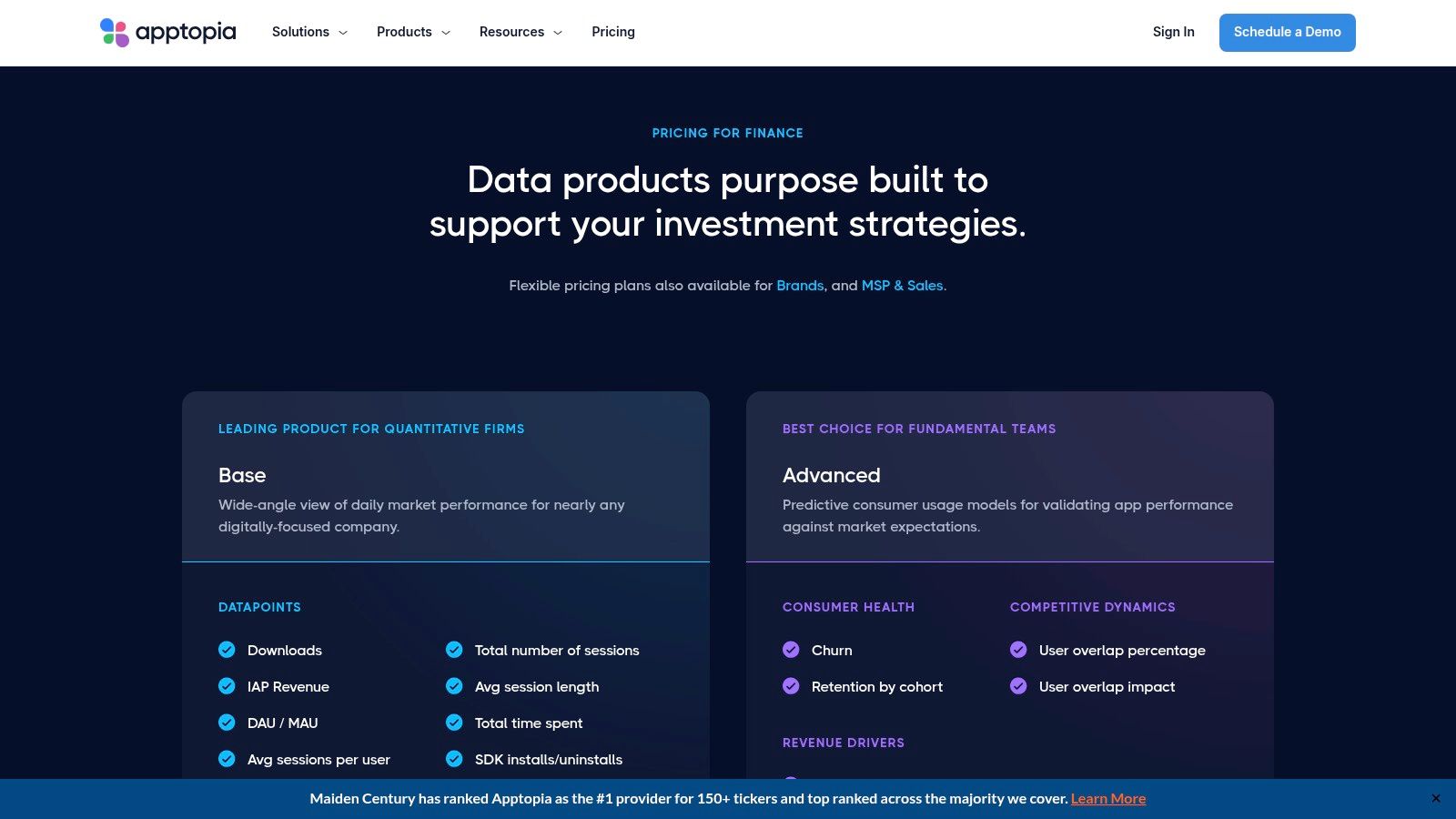
Apptopia provides a specialized lens into the mobile app economy, positioning itself as one of the best competitor analysis tools for any business operating in a mobile-first environment. It moves beyond typical web analytics to deliver critical intelligence on app performance, including download and revenue estimates, daily active users (DAU), and monetization strategies. This focus makes it indispensable for app publishers, mobile SDK developers, and even investors tracking market trends.
The platform's strength is its ability to reveal the underlying technology and user behavior driving a competitor's app success. By analyzing SDK installations, you can understand a competitor's tech stack, and by examining user overlap and retention cohorts, you can gain deep insights into audience loyalty and churn drivers. This granular, app-centric data is crucial for benchmarking performance and identifying competitive threats or partnership opportunities within the mobile ecosystem.
Key Features & Use Cases
- Performance Intelligence: Track key app metrics like downloads, revenue, DAU/MAU, session length, and retention rates for any major app.
- SDK Intelligence: Identify which SDKs (for advertising, analytics, etc.) are installed in competing apps to inform sales prospecting or tech stack decisions.
- Competitive Dynamics: Analyze user overlap between apps to understand your shared audience and evaluate market saturation.
- Review & Sentiment Analysis: Monitor user reviews and sentiment trends to identify feature requests, bugs, and points of dissatisfaction in competitor apps.
| Best For | Pricing | Learning Curve |
|---|---|---|
| Mobile app publishers and SDK sales teams | Custom enterprise pricing | Moderate |
Pros:
- Provides deep, mobile-specific data unavailable in web-focused tools.
- Extremely valuable for sales teams prospecting mobile app developers.
- Offers powerful insights into user engagement and retention.
Cons:
- Pricing is primarily enterprise-level and not accessible for small teams.
- Data accuracy can be less reliable for very niche or newly launched apps.
Website: https://apptopia.com/pricing
12. G2
G2 operates as a large-scale B2B software marketplace, serving as a meta-resource for evaluating other competitor analysis tools. Instead of providing direct analytics, its strength is aggregating verified user reviews, category rankings, and market data, allowing you to research how actual users experience various platforms. This makes it an essential first step for validating your tool shortlist and understanding the real-world pros and cons of potential solutions.
The platform's value lies in its structured comparison frameworks. Using the G2 Grid® for Competitive Intelligence, you can instantly see how different tools stack up based on market presence and user satisfaction. This is crucial for discovering high-momentum challengers or established leaders you might have missed. Beyond just evaluation, many SaaS founders leverage platforms like G2 as one of many websites to promote their own product, turning competitive research into a growth channel.
Key Features & Use Cases
- Verified User Reviews: Access detailed feedback from real users to understand a tool's strengths, weaknesses, and common use cases beyond marketing copy.
- G2 Grid® & Category Reports: Visualize the competitive landscape to identify market leaders, contenders, niche players, and high performers in specific categories.
- Side-by-Side Comparisons: Directly compare up to four products on features, pricing notes, and user satisfaction ratings to streamline decision-making.
- Alternatives Discovery: Each product listing suggests similar tools, helping you uncover direct and indirect competitors you hadn't considered.
| Best For | Pricing | Learning Curve |
|---|---|---|
| Teams validating their tool choices with user data | Free for buyers and researchers | Low |
Pros:
- Rich, fresh user feedback provides insights into real-world performance.
- Excellent for discovering new alternatives and category leaders.
- Side-by-side comparison feature simplifies the evaluation process.
Cons:
- Review sentiment can sometimes be skewed by power users or specific use cases.
- Requires due diligence beyond reviews to confirm a product's fit for your exact needs.
Website: https://www.g2.com/categories/competitive-intelligence
Top 12 Competitor Analysis Tools Comparison
| Tool | Core features ✨ | Standout 🏆 | Target audience 👥 | Quality ★ • Price/value 💰 |
|---|---|---|---|---|
| Semrush | SEO, PPC, backlinks, market intel, AI content ✨ | 🏆 All‑in‑one workflow & integrations | 👥 Founders, marketing teams | ★★★★☆ • 💰 Mid‑High (add‑ons) |
| Ahrefs | Backlink & keyword datasets, Site/Content Explorer, audits ✨ | 🏆 Industry‑leading backlink & keyword data | 👥 SEOs, analysts | ★★★★★ • 💰 Mid‑High (limits/add‑ons) |
| Similarweb | Traffic, engagement, channel mix, market sizing ✨ | 🏆 Top‑down market & category views | 👥 Analysts, product & marketing leads | ★★★★☆ • 💰 Premium |
| SpyFu | PPC/keyword history, ad spend estimates, SERP tracking ✨ | 🏆 Affordable historical ad & keyword insights | 👥 SMBs, startups, PPC teams | ★★★☆☆ • 💰 Budget‑friendly |
| BuzzSumo | Content analyzer, influencer tracking, alerts & PR tools ✨ | 🏆 Rapid content discovery & trend spotting | 👥 Content & PR teams | ★★★★☆ • 💰 Mid |
| BuiltWith | Tech stack lookups, switcher alerts, exports & API ✨ | 🏆 Massive coverage & exportable leads | 👥 GTM, sales, product teams | ★★★★☆ • 💰 Premium |
| Owler | Company profiles, competitor graphs, news alerts ✨ | 🏆 Community‑driven private company signals | 👥 Market watchers, small teams | ★★★☆☆ • 💰 Low‑Mid (opaque tiers) |
| Crayon | Central CI hub, battlecards, automated collection ✨ | 🏆 Purpose‑built CI with revenue impact focus | 👥 Product marketing, enablement teams | ★★★★☆ • 💰 Sales‑led (enterprise) |
| Klue | Battlecards, AI prioritization, embed across Slack/SF ✨ | 🏆 Sales‑first distribution & measurement | 👥 Enterprise sales & enablement | ★★★★☆ • 💰 Sales‑led (enterprise) |
| Crunchbase | Company/funding database, lists, alerts, API ✨ | 🏆 Strong startup & funding coverage | 👥 Investors, BD, researchers | ★★★★☆ • 💰 Freemium → Pro/Business |
| Apptopia | App KPIs, downloads/revenue estimates, SDK signals ✨ | 🏆 Mobile performance & monetization data | 👥 Mobile product teams & SDK sales | ★★★★☆ • 💰 Enterprise/custom |
| G2 | Review marketplace, Grids, side‑by‑side comparisons ✨ | 🏆 Verified user reviews for buyer research | 👥 Buyers, researchers | ★★★★☆ • 💰 Free for buyers; vendor plans paid |
From Insight to Impact: Activating Your Competitive Strategy
You've explored the landscape of the best competitor analysis tools, from SEO powerhouses like Semrush and Ahrefs to market intelligence platforms like Similarweb and Crayon. We've dissected their features, pricing, and ideal use cases, giving you a comprehensive blueprint for understanding your rivals. But the journey doesn't end with a data dashboard or a report. The true power of competitive intelligence lies not in what you know, but in what you do with that knowledge.
The ultimate goal is to transform raw data into a decisive strategic advantage. It's about taking the traffic estimates from Ahrefs, the content ideas from BuzzSumo, and the tech stack details from BuiltWith and synthesizing them into a coherent plan. This process moves you from passive observation to active competition, enabling you to build a product and a brand that stands out in a crowded market.
Synthesizing Your Findings: A Practical Framework
After spending hours diving into these platforms, you're likely sitting on a mountain of data. The key is to distill this information into actionable insights that directly influence your strategy. Don’t let analysis paralysis set in.
Focus on answering these core strategic questions with the data you've gathered:
- Positioning and Messaging: What market gaps have you identified? Use insights from G2 reviews and BuzzSumo's content analysis to find what customers love and hate about your competitors. This will help you craft a unique value proposition that resonates deeply with an underserved segment of the market.
- Product Roadmap: Where are your competitors' products falling short? Tools like Crayon and Klue can reveal feature complaints or missing functionalities. Feed this intelligence directly to your product team to prioritize features that solve real user pain points your rivals are ignoring.
- Marketing and Growth Channels: Which channels are driving the most success for your top competitors? SpyFu and Similarweb can expose their most profitable keywords and traffic sources. Instead of blindly copying their strategy, find the underserved channels or long-tail keywords they've overlooked.
- Launch Strategy: How do new players in your space get initial traction? By analyzing companies on Crunchbase and tracking their early mentions, you can reverse-engineer successful launch playbooks. This includes identifying key media outlets, influencers, and communities that are receptive to new products like yours.
Choosing the Right Tool Stack for Your Stage
No single tool is a silver bullet. The ideal approach is to build a "stack" that aligns with your budget, team size, and immediate strategic goals.
- For Early-Stage SaaS and Indie Makers: Start lean. A combination of a powerful SEO tool like Ahrefs (for backlink and keyword analysis) and a tech-focused tool like BuiltWith (to understand your competitors' infrastructure) provides a robust foundation without a massive investment. Supplement this with free versions of platforms like Owler for high-level company news.
- For Growth-Stage Companies: As your team and budget expand, you can layer on more specialized solutions. Integrating a dedicated market intelligence platform like Crayon or Klue becomes essential for tracking competitor moves in real-time and disseminating insights across sales and marketing teams. This is also the stage where a comprehensive tool like Semrush offers immense value through its all-in-one suite.
- For Enterprise and Market Leaders: At this level, a sophisticated, multi-tool approach is necessary. Combining the quantitative data from Similarweb and Apptopia with the deep competitive intelligence features of Klue and Crayon creates a 360-degree view of the market, empowering you to anticipate threats and seize opportunities proactively.
The most effective competitive analysis is a continuous process, not a one-time project. By integrating these tools into your regular workflow, you create a feedback loop that constantly informs your strategy, keeping you agile and ahead of the curve. The insights you gain are the foundation upon which you can build a truly differentiated product and a resilient business. This proactive stance is what separates market leaders from the rest of the pack.
Once you've used these tools to map the competitive terrain and refine your unique value proposition, the next critical step is getting seen. For new SaaS products, gaining initial visibility is half the battle. This is where SubmitMySaas comes in, helping you leverage your competitive insights by putting your product directly in front of thousands of potential customers, investors, and tech enthusiasts on over 40 curated platforms.
Don't let your launch be a shot in the dark. Visit SubmitMySaas to turn your competitive advantage into market momentum from day one.